Skip to main content Skip to main navigation
heart-solid My Visit Donate
Home Smithsonian Institution IK development site for ODI
Press Enter to activate a submenu, down arrow to access the items and Escape to close the submenu.
    • Overview
    • Museums and Zoo
    • Entry and Guidelines
    • Museum Maps
    • Dine and Shop
    • Accessibility
    • Visiting with Kids
    • Group Visits
    • Overview
    • Exhibitions
    • Online Events
    • All Events
    • IMAX & Planetarium
    • Overview
    • Topics
    • Collections
    • Research Resources
    • Stories
    • Podcasts
    • Overview
    • For Caregivers
    • For Educators
    • For Students
    • For Academics
    • For Lifelong Learners
    • Overview
    • Become a Member
    • Renew Membership
    • Make a Gift
    • Volunteer
    • Overview
    • Our Organization
    • Our Leadership
    • Reports and Plans
    • Newsdesk
heart-solid My Visit Donate
The entire image is awash in intricate clouds, and swathes of superheated gas.
  1. Home
  2. forward-slash
  3. Explore
  4. forward-slash
  5. Topics
  6. forward-slash
  7. Science & Nature
  8. forward-slash
  9. Mysteries of the Universe

Mysteries of the Universe

Explore Science & Nature

Beginning with studies of our sun in 1890, the Smithsonian has been answering questions about our atmosphere and beyond for more than a century. The Center for Astophysics | Harvard & Smithsonian advances our knowledge and understanding of the universe through research and education in astronomy and astrophysics. The Smithsonian's National Air and Space Museum maintains the world’s largest collection of historic aircraft and spacecraft and is a vital center for research with its Center for Earth and Planetary Studies.

Understanding Our Sun and Solar System

Our solar system, located in the Milky Way Galaxy, is our celestial neighborhood. Scientists at the Center for Astrophysics | Harvard & Smithsonian are studying our sun’s past, present, and future. The National Air and Space Museum’s Center for Planetary Studies  investigates the solar system’s past—and the possibility of life beyond Earth. The museum also features galleries and exhibitions focused on inspiring the world to think about our place in the solar system.
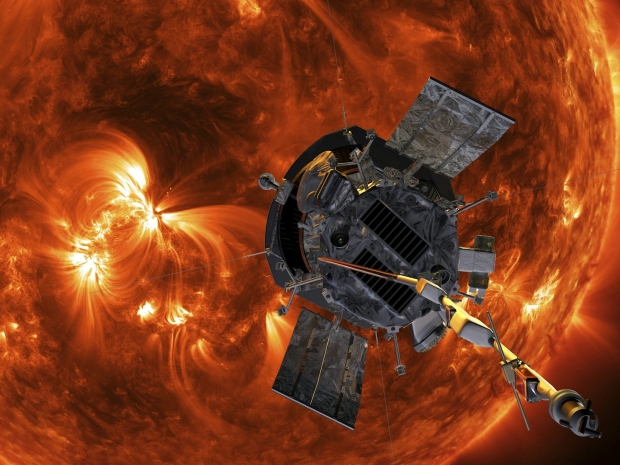
A metal craft with two solar pans on the sides shown against the Sun.

Smithsonian Story

Solar Probes Help Researchers Understand What Gives Solar Wind Its Energy arrow-right

The source of solar wind's energy hasn't been known—until now.
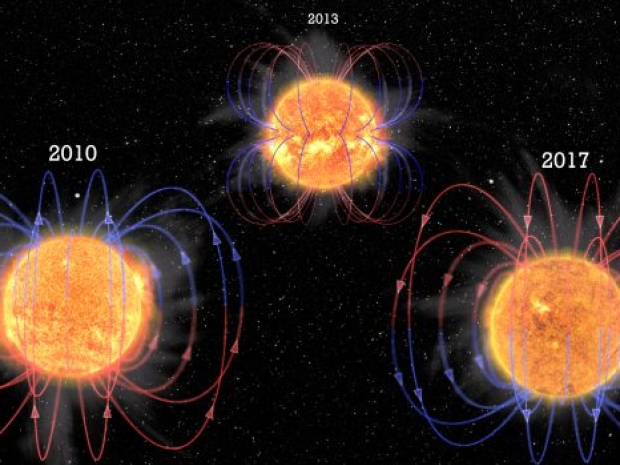
illustration of the 3 for 2010, 2013 and 2017

Smithsonian Story

Why Does the Sun Flip Its Magnetic Field Every 11 Years arrow-right

Scientists may now be able to explain why the Sun’s magnetic field reverses every eleven years.

This artists concept shows the planets in our Solar System

National Air and Space Museum

Our Solar System arrow-right

Discover our planetary neighborhood—as if from interstellar space, moving in toward our sun.
A gloved hand holds a metal container with a small dark mineral on top.

Smithsonian Voices

A Small Sample Tells a Big Story arrow-right
Samples of the asteroid will potentially answer dozens of questions about Earth’s deep history and the origins of the solar system. 
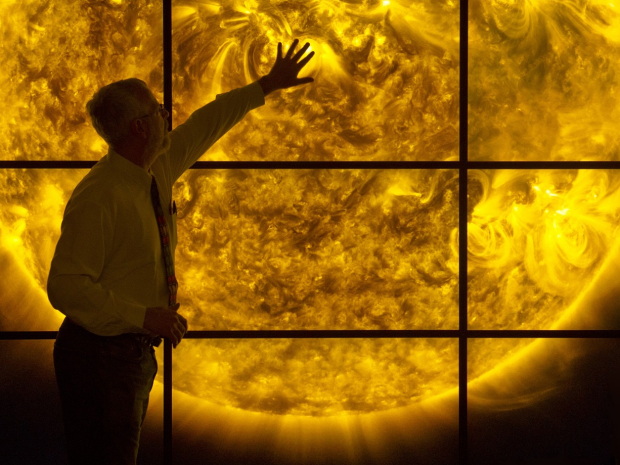
man in front of solar wall

Smithsonian Collection Spotlight

Our Star: Our Sun arrow-right

Smithsonian collections offer prismatic ways of understanding our relationship to the sun from art to astronomy to solar energy.
A chart containing early but accurate descriptions of planetary movements.

National Air and Space Museum

How Did We Discover the Planets? arrow-right

Centuries of research carried out by curious stargazers before us recognized these otherworldly objects.

Understanding the Nature of the Universe

What is the universe made of? How did it begin? How has it evolved over the 13.8 billion years since its origin? These are some of the questions addressed by cosmology, the study of the universe as a whole. Smithsonian astronomers and astrophysicists use observational and theoretical techniques to help us answer other "big questions" of the universe. What do black holes look like? Is there life on other planets? What are dark energy and dark matter?

Illustration of Chandra x-ray telescope in orbit.

Smithsonian Story

Meet Chandra arrow-right

You most likely have heard of the Hubble Space Telescope that orbits 332 miles above Earth, but what about Chandra? 

Black sky with red, blue, and white colliding galaxies surrounded by white stars.

Center for Astrophysics | Harvard & Smithsonian

Big Questions arrow-right
Explore humanity’s greatest unresolved questions about the nature of the universe and see how research is bringing us closer to answers than ever before.
imagining of the creation of the universe

Smithsonian Story

Probing the Beginning of the Universe arrow-right

Learn how observations we make today can give clues to the universe’s origin.

Xray image.

Smithsonian Astrophysical Observatory

Chandra Data Tests "Theory of Everything" arrow-right
Astronomers using NASA's Chandra X-ray Observatory have made one of the first experimental tests of string theory.
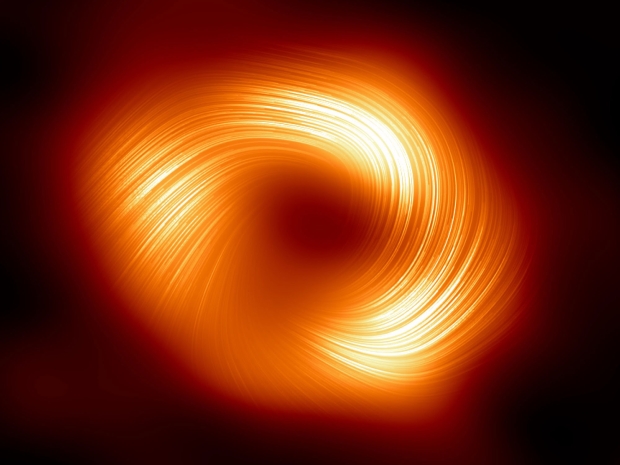
lines mark the orientation of polarization, which is related to the magnetic field around the shadow of the black hole

Smithsonian Story

A “Monster” in the Milky Way Galaxy arrow-right

Two new studies have produced the first polarized light image of the supermassive black hole at the heart of the Milky Way.
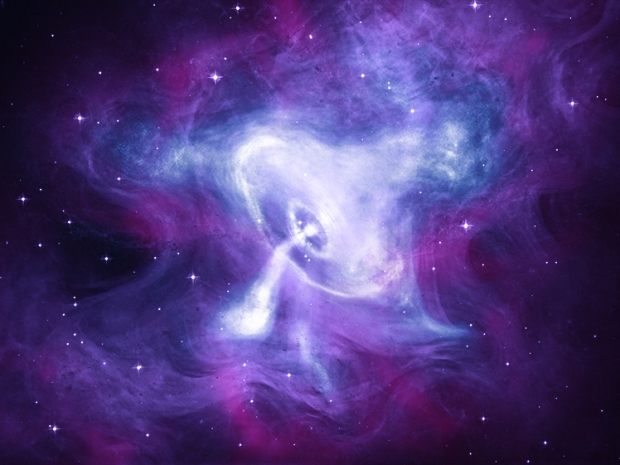
Purple, blue and white clouds on a dark sky with stars.

Smithsonian Story

What If You Could Hear Space? arrow-right

Learn how scientists are translating data captured by telescopes into sound. 

This artistic depiction shows what the Giant Magellan Telescope will look like when construction is completed. The finished GMT

Center for Astrophysics | Harvard & Smithsonian

Looking at Space arrow-right

The Center for Astrophysics participates in every aspect of the process: designing, building, and using advanced observatories and labs that lead to breakthrough science.
exoplanet

Center for Astrophysics | Harvard & Smithsonian

DIY Planet Search arrow-right

Take your own images of distant solar systems, interpret and share the data you gather, and become part of a community of planet hunters!

Exploring Space

In April 1961, Soviet cosmonaut Yuri Gagarin became the first human in space. Soon after in May 1961, Alan Shepard became the first American in space, when he piloted the Mercury spacecraft Freedom 7 on a suborbital flight. In July of 1969, the first human stepped on the surface of the Moon. The cosmic journey continues today with the International Space Station and developments in commercial spaceflight.
blue viking longship and the silhouette of a Viking lander against a topographical globe of Mars

National Air and Space Museum

Spacecraft arrow-right

Learn about different types of spacecraft, both crewed and uncrewed, used for space exploration.

Astronaut Ed White during the First American Spacewalk

National Air and Space Museum

Human Spaceflight arrow-right

In July of 1969, the first human stepped on the surface of the Moon. Today human spaceflight continues with programs such as the International Space Station.
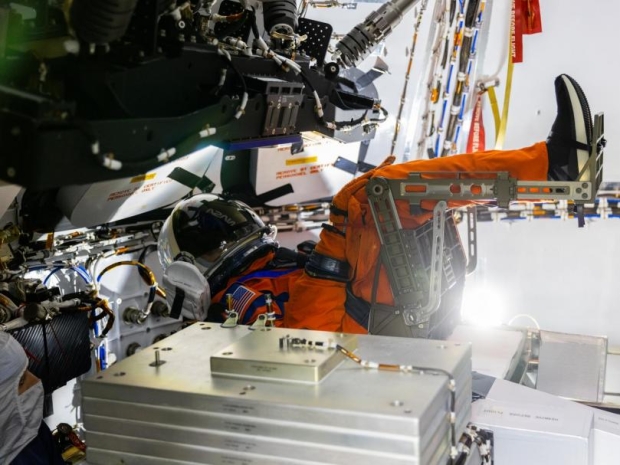
A view of Moonikin Campos secured in a seat inside the Artemis I Orion crew module.

National Air and Space Museum

5 Things On Board NASA's Artemis I Mission arrow-right

Although this mission didn't have any astronauts riding along, there were other items on board for the occasion.
moon lander and space walk illustration

Sidedoor Podcast

Space Jocks & Moon Rocks arrow-right

Sidedoor joins forces with the National Air and Space Museum to explore the mysteries of lunar science.
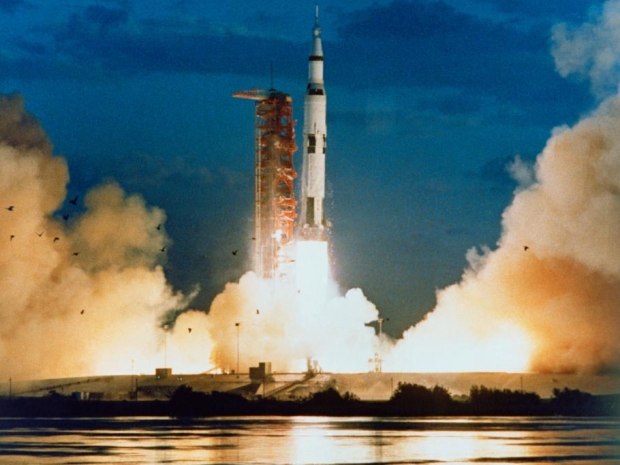
Apollo 4 launches into a dark blue sky amid smoke on the ground.

National Air and Space Museum

The Apollo Missions arrow-right

Learn more about the seventeen missions carried out during the Apollo Program.
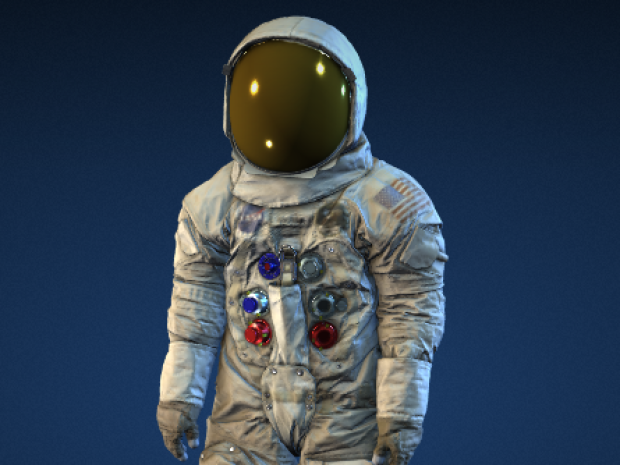
3D spacesuit scan.

Smithsonian 3D

Neil Armstrong's Space Suit arrow-right

Explore and download 3D models of Armstrong's spacesuit and other Apollo 11 objects.

Culture and the Cosmos

The Smithsonian’s resources lead us to connections across historical contexts, art movements, and cultural traditions to help us understand our place within space.

A set of Star Wars toys manufactured for the release of The Empire Strikes Back, 1980.

National Air and Space Museum

Science Fiction arrow-right
Take a deep dive into the intersection of culture and the cosmos through a science fiction lens.
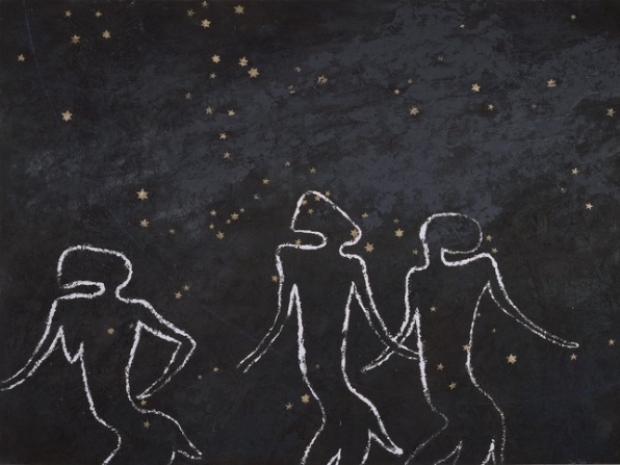
Painting of dancers

National Museum of African Art

Milky Way Myth arrow-right

Among the hunter-gatherers of sub-Saharan Africa known as the Khoisan, a myth has been passed on for generations.
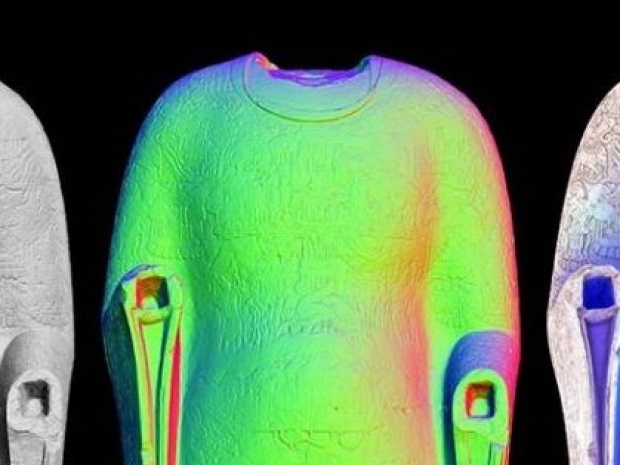
Rainbow colors on a sculpture.

National Museum of Asian Art

The Cosmic Buddha arrow-right

Explore a 3D rendering of the Cosmic Buddha, where you can zoom into depictions of a symbolic map of the Buddhist world.
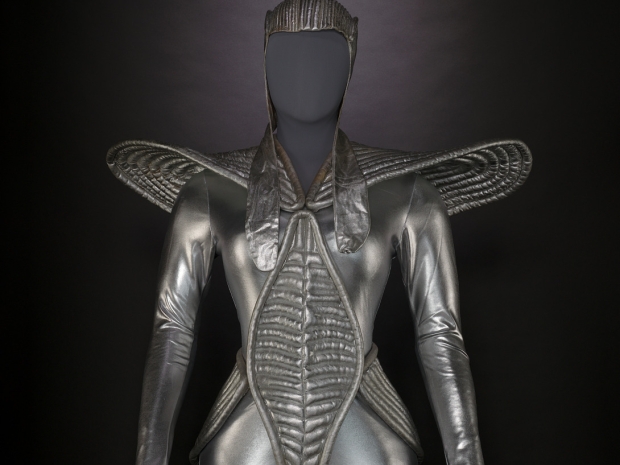
futuristic silver unitard

National Museum of African American History and Culture

Afrofuturism arrow-right

From artists to astronauts, the themes of Afrofuturism inform ways of seeing and being across time and space.

sun shining on pyramid

National Museum of the American Indian

Maya Skies: Calendars, Seasons, and Time arrow-right

The cycles of celestial bodies, particularly the Sun, form the basis of the Maya calendar. Celestial events on the Mayan calendar have been celebrated from ancient times to today.
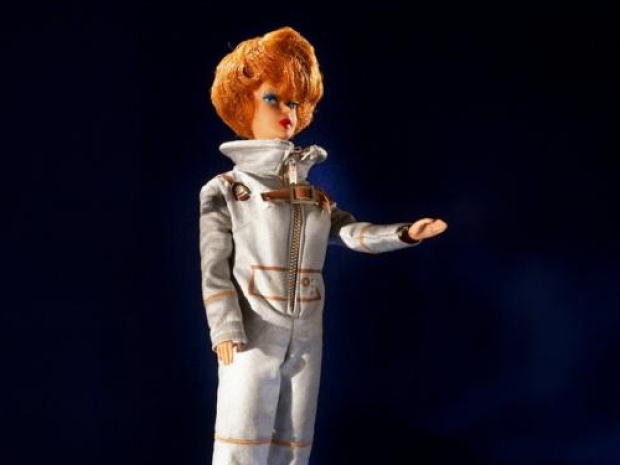
This Barbie doll dressed in the Miss Astronaut outfit (1965)

National Air and Space Museum

Barbie: An Astronaut for the Ages arrow-right

Learn about Barbie's long career as one of our nation's foremost space explorers. This 1965 Barbie was released 13 years before NASA accepted its first woman astronauts.

Cosmic Collections

Explore space through the lenses of art, history, culture, and science in the Smithsonian's collections.

Starry Indigo

1876 Ellen Harding Baker's "Solar System" Quilt

Chandra X-ray Observatory

Full scale model of roving vehicle. Rectangular, white box set on steel frame with six wheels. On the front is the articulated robotic arm, as well as the main camera that is attached to a mast.

Model, Mars Science Laboratory, Mars Rover Curiosity

Celestial Planisphere Called Astrolabe for Latitude 41

Lunar Rock Sample

Saturn from Voyager I

Card, Commemorative, TV Show, "Lost in Space"

Full-scale model of Wilkinson Microwave Anisotropy Probe, made up of a rectangular white box, dish-shaped reflectors, and gold mylar

Satellite, WMAP, Reconstructed Engineering Model

Raven Steals the Moon

Moon Landing

Beaded Artwork: "Night Sky"

Painting

Pattern of Stars Called the Milky Way

The Apparent Retrograde of the Planets from The beauty of the heavens : a pictorial display of the astronomical phenomena of the universe

Equatorial Armillary Sphere

Data Sonification: M51 (Whirlpool Galaxy) Infrared Only

T -Minus 3 Hours 30 Minutes and Counting

Aurora Borealis

Model, Pioneer Venus Orbiter, 1:24 Scale

Scene of Outer Space

Full view of a camera covered in gold foil sitting on a tripod. A green wire connects it to a small green box.

Camera, Lunar Surface Ultraviolet, Apollo 16

Data Sonification: V404 Cygni

Projectile trains for the Moon from From the Earth to the Moon : direct in ninety-seven hours and twenty minutes, and a trip round it.

Milky Way

Untitled #21

Apollo 8 Coming Home

Data Sonification: M104 (X-ray Only)

The Planetary System from The beauty of the heavens : a pictorial display of the astronomical phenomena of the universe

"Pigs in Space" Puppet

Poster for the film Space is the Place

Starburst

Tour: An Expanse of Light

Quilt

Earth and Sky

The Milky Way from The beauty of the heavens : a pictorial display of the astronomical phenomena of the universe

Vopel Compendium


  1. First page First
  2. Previous page Previous
  3. Page 1
  4. Current page 2
  5. Page 3
  6. Page 4
  7. Next page Next
  8. Last page Last
arrow-up Back to top
Home
  • Facebook facebook
  • Instagram instagram
  • LinkedIn linkedin
  • YouTube youtube

  • Contact Us
  • Get Involved
  • Shop Online
  • Job Opportunities
  • Equal Opportunity
  • Inspector General
  • Records Requests
  • Accessibility
  • Host Your Event
  • Press Room
  • Privacy
  • Terms of Use