Skip to main content Skip to main navigation
heart-solid My Visit Donate
Home Smithsonian Institution IK development site for ODI
Press Enter to activate a submenu, down arrow to access the items and Escape to close the submenu.
    • Overview
    • Museums and Zoo
    • Entry and Guidelines
    • Museum Maps
    • Dine and Shop
    • Accessibility
    • Visiting with Kids
    • Group Visits
    • Overview
    • Exhibitions
    • Online Events
    • All Events
    • IMAX & Planetarium
    • Overview
    • Topics
    • Collections
    • Research Resources
    • Stories
    • Podcasts
    • Overview
    • For Caregivers
    • For Educators
    • For Students
    • For Academics
    • For Lifelong Learners
    • Overview
    • Become a Member
    • Renew Membership
    • Make a Gift
    • Volunteer
    • Overview
    • Our Organization
    • Our Leadership
    • Reports and Plans
    • Newsdesk
heart-solid My Visit Donate
  1. Home
  2. forward-slash
  3. Explore
  4. forward-slash
  5. Stories
  6. forward-slash
  7. A “Monster” in the Milky Way Galaxy

Explore

  • Overview
  • Topics
    • Art & Design
    • History & Culture
    • Science & Nature
    • Tech & Innovation
  • Collections
    • Open Access
    • Smithsonian Snapshot
    • Collection Spotlights
  • Research Resources
    • Libraries
    • Archives
  • Stories
  • Podcasts
swirl of stars with colors of blue and red

Smithsonian

Mysteries of the Universe arrow-right

Journey with us from our closest star to the far reaches of the universe.
Smithsonian Story

A “monster” in the Milky Way Galaxy
March 27, 2024
Marilyn Scallan
lines mark the orientation of polarization, which is related to the magnetic field around the shadow of the black hole

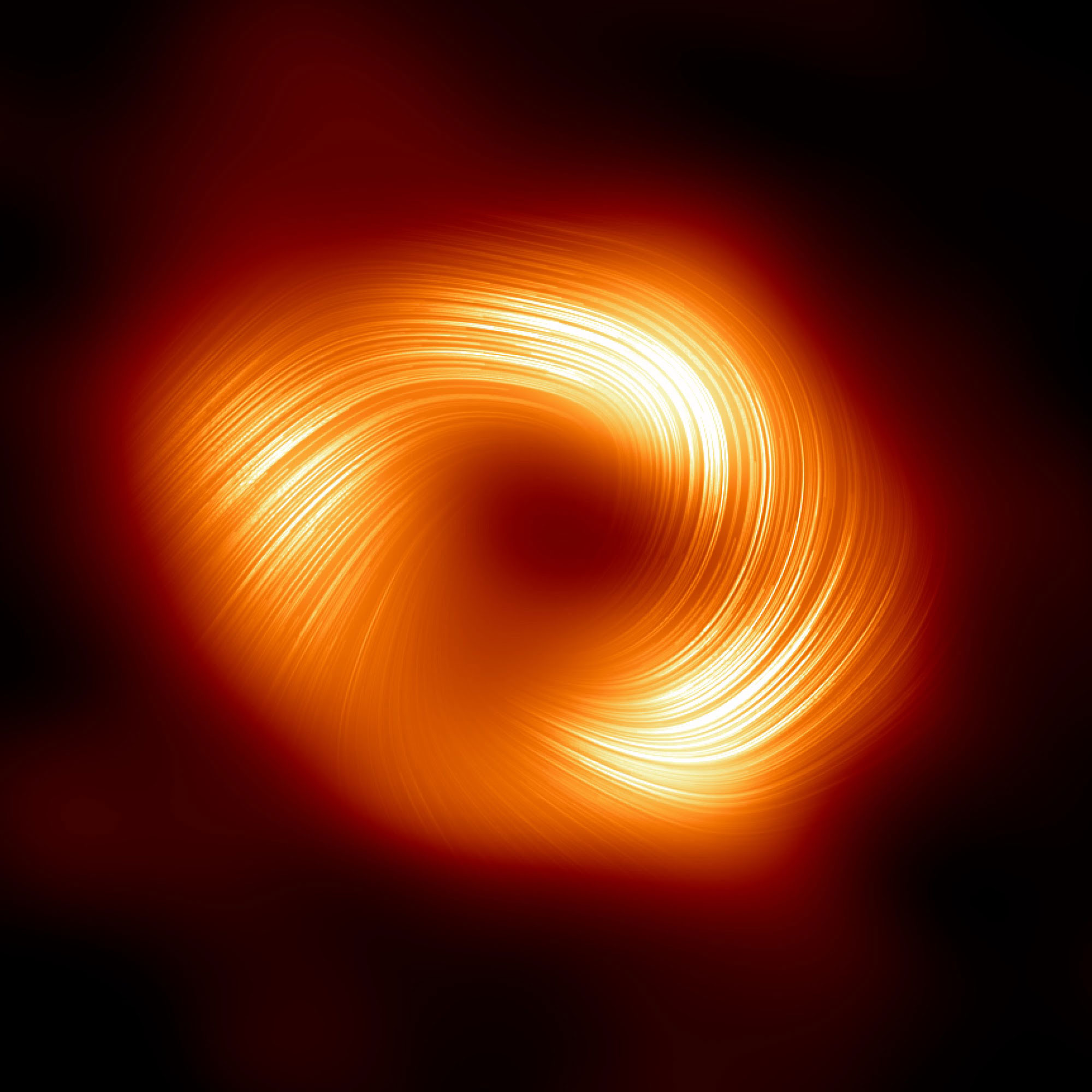
A polarized view of the Milky Way black hole, Sagittarius A*. The lines mark the orientation of polarization, which is related to the magnetic field around the shadow of the black hole. Credit: EHT Collaboration


The Event Horizon Telescope (EHT) collaboration, which includes scientists from the Center for Astrophysics | Harvard & Smithsonian (CfA), has captured a new view of the supermassive black hole at the center of the Milky Way Galaxy. This is the first time astronomers have been able to measure polarization, a signature of magnetic fields, this close to the edge of Sagittarius A* (pronounced "Sagittarius A star").

Scientists unveiled the first image of Sagittarius A* in 2022. Seen in polarized light, this new view of the monster black hole, Sagittarius A*, has revealed a magnetic field structure strikingly similar to that of the black hole at the center of the M87* galaxy, suggesting that strong magnetic fields may be common to all black holes.
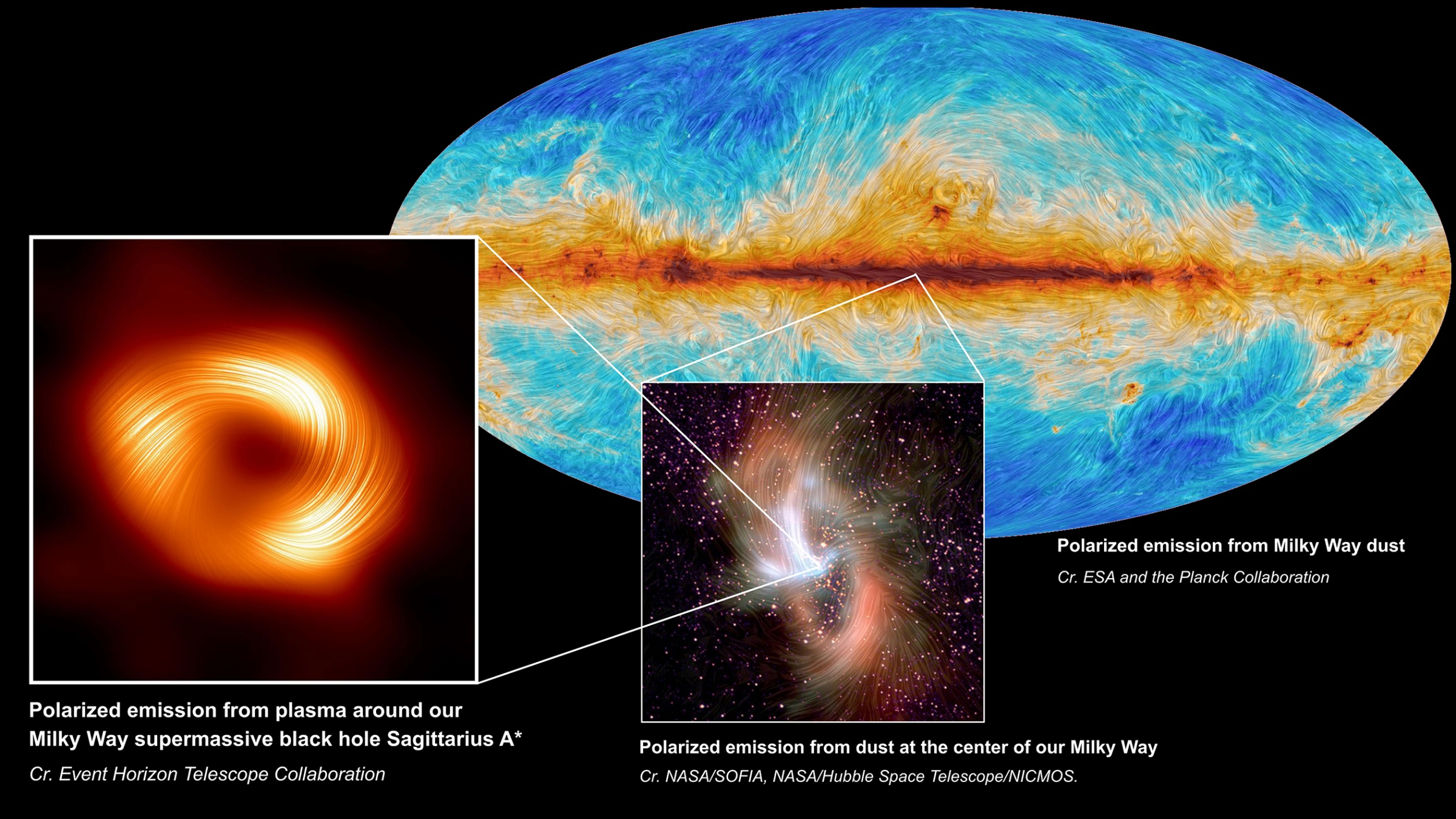
supermassive black hole at the center of the Milky Way Galaxy Sagittarius A* is seen in polarized light
The supermassive black hole at the center of the Milky Way Galaxy, Sagittarius A*, is seen in polarized light, the visible lines indicating the orientation of polarization, which is related to the magnetic field around the shadow of the black hole. At center, the polarized emission from the center of the Milky Way, as captured by SOFIA. At back right, the Planck Collaboration mapped polarized emission from dust across the Milky Way. 
Credit: S. Issaoun, EHT Collaboration

“What we're seeing now is that there are strong, twisted, and organized magnetic fields near the black hole at the center of the Milky Way Galaxy,” said Sara Issaoun, CfA NASA Hubble Fellowship Program Einstein Fellow, Smithsonian Astrophysical Observatory astrophysicist, and co-lead of the project. “Along with Sagittarius A* having a strikingly similar polarization structure to that seen in the much larger and more powerful M87* black hole, we’ve learned that strong and ordered magnetic fields are critical to how black holes interact with the gas and matter around them.”
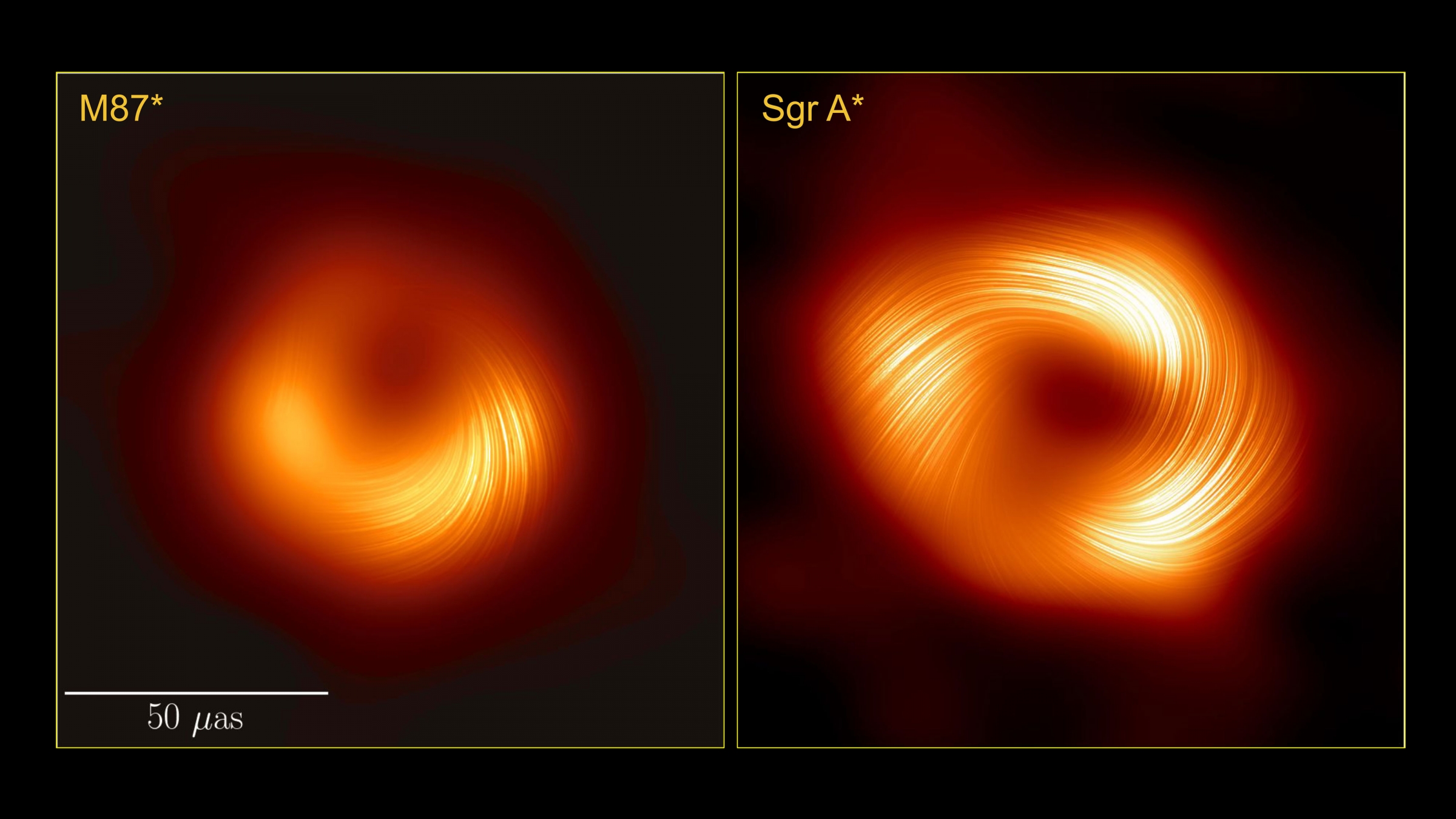
image showing similar black holes
Seen here in polarized light, this side-by-side image of the supermassive black holes M87* and Sagittarius A* indicates to scientists that these titans have similar magnetic field structures. This is significant because it suggests that the physical processes that govern how a black hole feeds and launches a jet may be universal features of supermassive black holes. Credit: EHT Collaboration

This research is a microcosm of the work Smithsonian does in collaboration with different entities across the nation and around the world. The nature of black holes is only a sample of the mysteries of the cosmos waiting to be unraveled.

Related Stories
black hole

Smithsonian Snapshot

First-Ever Image of a Black Hole arrow-right

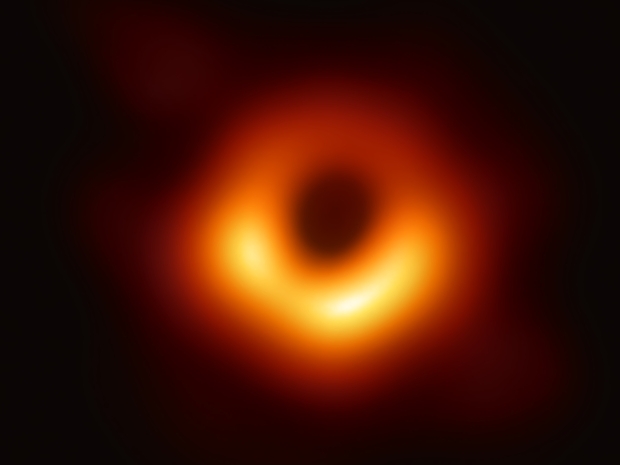
Captured by the Event Horizon Telescope, this image reveals the supermassive black hole at the center of Messier 87.

Supermassive Black Hole Magnetic Field

Smithsonian Snapshot

Harvard, Smithsonian Astonomers Help Capture Magnetic Fields Close to a Black Hole arrow-right

“Stay tuned for true black hole cinema.”

EHT Black Hole

Smithsonian Snapshot

Confirmation at Last of a Black Hole at the Center of the Milky Way arrow-right

Eight radio observatories across the planet formed a single “Earth-sized” virtual telescope to capture the image.

arrow-up Back to top
Home
  • Facebook facebook
  • Instagram instagram
  • LinkedIn linkedin
  • YouTube youtube

  • Contact Us
  • Get Involved
  • Shop Online
  • Job Opportunities
  • Equal Opportunity
  • Inspector General
  • Records Requests
  • Accessibility
  • Host Your Event
  • Press Room
  • Privacy
  • Terms of Use