Skip to main content Skip to main navigation
heart-solid My Visit Donate
Home Smithsonian Institution IK development site for ODI
Press Enter to activate a submenu, down arrow to access the items and Escape to close the submenu.
    • Overview
    • Museums and Zoo
    • Entry and Guidelines
    • Museum Maps
    • Dine and Shop
    • Accessibility
    • Visiting with Kids
    • Group Visits
    • Overview
    • Exhibitions
    • Online Events
    • All Events
    • IMAX & Planetarium
    • Overview
    • Topics
    • Collections
    • Research Resources
    • Stories
    • Podcasts
    • Overview
    • For Caregivers
    • For Educators
    • For Students
    • For Academics
    • For Lifelong Learners
    • Overview
    • Become a Member
    • Renew Membership
    • Make a Gift
    • Volunteer
    • Overview
    • Our Organization
    • Our Leadership
    • Reports and Plans
    • Newsdesk
heart-solid My Visit Donate
Blue and red colors mingle on top of a black background.
  1. Home

Cosmic Journey

Journey with us from the sun to the stars and beyond

Looking up, wondering what’s beyond, and exploring the mysteries of the cosmos have been human pursuits for thousands of years. This urge to know more continues, inspiring exploration, creativity, and scientific advancement. Join us on a cosmic journey that takes us from our closest star, the sun, to the far reaches of the universe with events and virtual resources from across the Smithsonian.
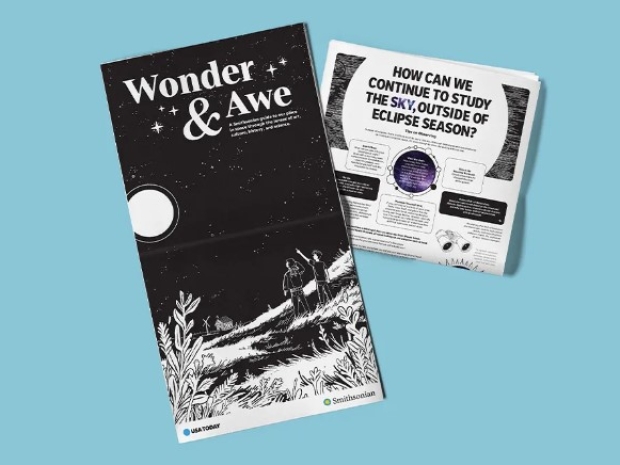
Wonder & Awe cover

Wonder & Awe arrow-right

This Smithsonian guide features stories and activities that connect us to our “place in space” through the lenses of art, culture, history, and science. The sky belongs to everyone—from the women who mapped the universe over a century ago, to the astronomers who captured the first picture of a black hole, to the artists who inspire us with celestial connections.

Our Closest Star and Planetary Neighborhood

The Smithsonian Astrophysical Observatory (SAO) was established in 1890 as a research unit of the Smithsonian concentrating on studies of solar radiance. Today SAO's areas of research include virtually all branches of astrophysics as well as areas of earth and planetary sciences. Learn about the tool SAO built to probe the sun as it makes its closest approach to the sun in 2024. The Smithsonian's National Air and Space Museum is also a home for Earth and planetary research and shares a wealth of information on our solar system and its history.
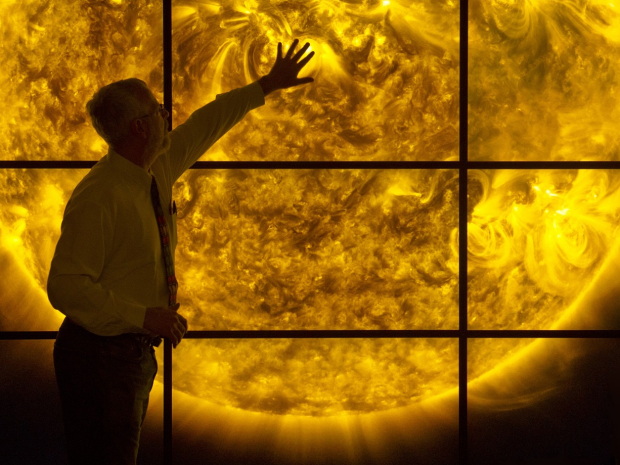
man in front of solar wall

Smithsonian Collection Spotlight

Our Star: Our Sun arrow-right
Smithsonian collections offer prismatic ways of understanding our relationship to the sun from art to astronomy to solar energy.
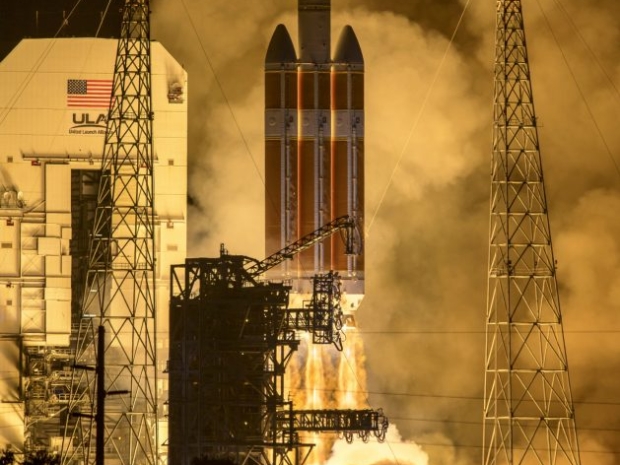
rocket with probe

Smithsonian Story

A Solar Probe Is on Its Way to Touch the Sun arrow-right

The journey will culminate in 2024 with its closest ever approach of 3.83 million miles.

This artists concept shows the planets in our Solar System

National Air and Space Museum

Our Solar System arrow-right

Discover our planetary neighborhood—as if from interstellar space, moving in toward our sun.
A chart containing early but accurate descriptions of planetary movements.

National Air and Space Museum

How Did We Discover the Planets? arrow-right

Centuries of research carried out by curious stargazers before us recognized these otherworldly objects.

Our Universe

The Smithsonian has been answering big questions about our atmosphere and beyond for more than a century at the Smithsonian Astrophysical Observatory. We continue to ask and answer questions through original research at the National Air and Space Museum and the Center for Astrophysics | Harvard & Smithsonian (CfA). Key areas of research at the CfA include exoplanets, the sun and solar weather, asteroids and comets, and "The Extreme Universe" that includes the study of black holes, pulsars, supernovae, white dwarfs, neutron stars, and magnetars.
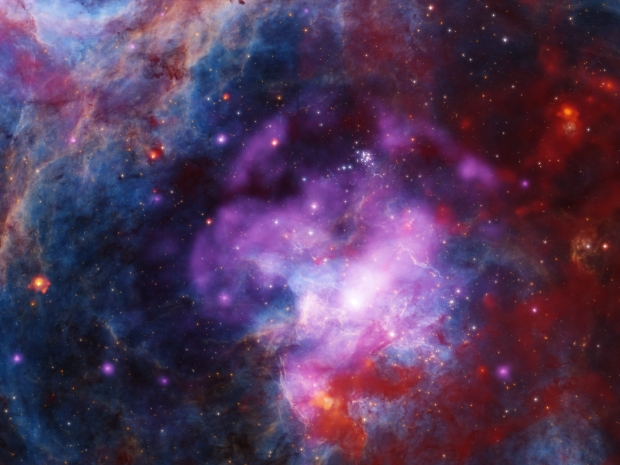
The entire image is awash in intricate clouds, and swathes of superheated gas.

Around the Smithsonian

Mysteries of the Universe arrow-right

Starting with solar studies in 1890, the Smithsonian has been exploring questions spanning from our atmosphere to deep space.
Illustration of Chandra x-ray telescope in orbit.

Smithsonian Story

Meet Chandra arrow-right

You most likely have heard of the Hubble Space Telescope that orbits 332 miles above Earth, but what about Chandra? 

Round purple circle with a blue filled in the center.

Models of Images Taken by Chandra arrow-right

Explore 3D models of stars at various stages of the stellar life cycle, created using images generated by the Chandra X-ray Observatory.
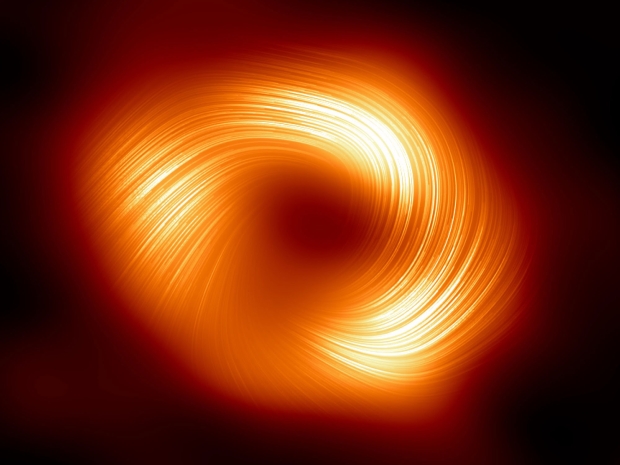
lines mark the orientation of polarization, which is related to the magnetic field around the shadow of the black hole

Smithsonian Story

A “Monster” in the Milky Way Galaxy arrow-right

Two new studies have produced the first polarized light image of the supermassive black hole at the heart of the Milky Way.

exoplanet

Center for Astrophysics | Harvard & Smithsonian

DIY Planet Search arrow-right

Take your own images of distant solar systems, interpret and share the data you gather, and become part of a community of planet hunters!
A 3d rendering of vela pulsar over the Washington DC skyline with text blocks surrounding it

Smithsonian Story

Four Amazing Chandra Instagram Experiences arrow-right

Bring these cosmic objects into your home with new augmented reality effects. 
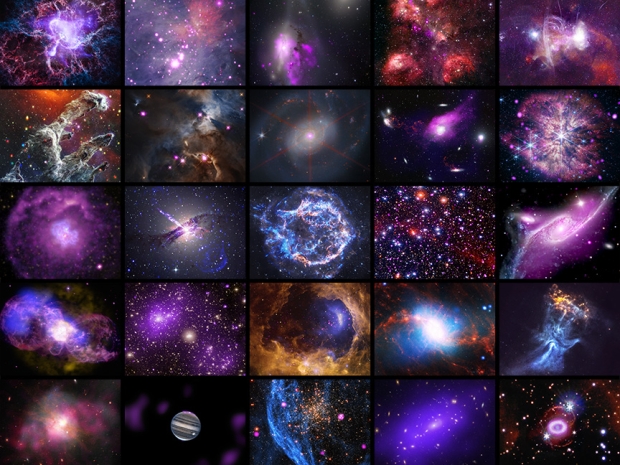
A collage of square images showing various brightly colored stars, nebulas and galaxies in space.

Smithsonian Story

Ten Amazing New Images of Space arrow-right

Never-before-seen images offer new ways of understanding our universe.

Culture and the Cosmos

The Smithsonian’s resources lead us to connections across historical contexts, art movements, and cultural traditions to help us understand our place within space.

A set of Star Wars toys manufactured for the release of The Empire Strikes Back, 1980.

National Air and Space Museum

Science Fiction arrow-right
Take a deep dive into the intersection of culture and the cosmos through a science fiction lens.
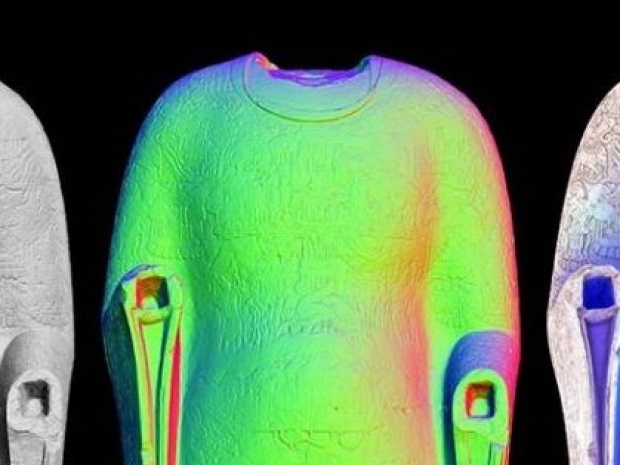
Rainbow colors on a sculpture.

The Cosmic Buddha arrow-right

Explore a 3D rendering of the Cosmic Buddha, where you can zoom into depictions of a symbolic map of the Buddhist world.
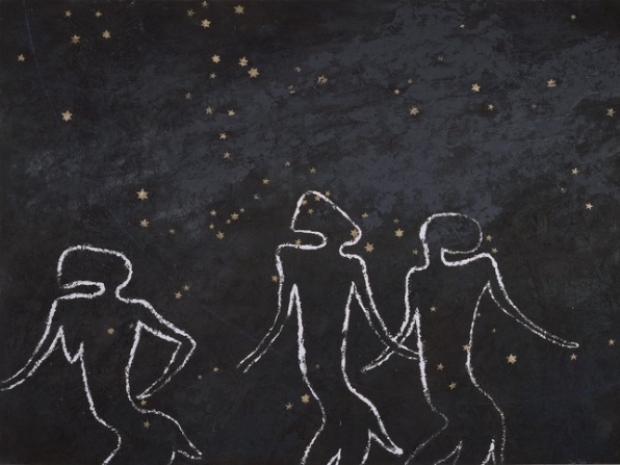
Painting of dancers

National Museum of African Art

Milky Way Myth arrow-right

Among the hunter-gatherers of sub-Saharan Africa known as the Khoisan, a myth has been passed on for generations.
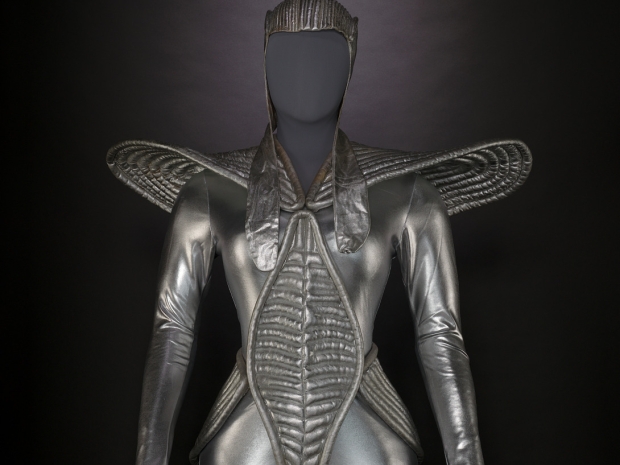
futuristic silver unitard

Afrofuturism arrow-right

From artists to astronauts, the themes of Afrofuturism inform ways of seeing and being across time and space.

sun shining on pyramid

Maya Skies: Calendars, Seasons, and Time arrow-right

The cycles of celestial bodies, particularly the Sun, form the basis of the Maya calendar. Celestial events on the Mayan calendar have been celebrated from ancient times to today.
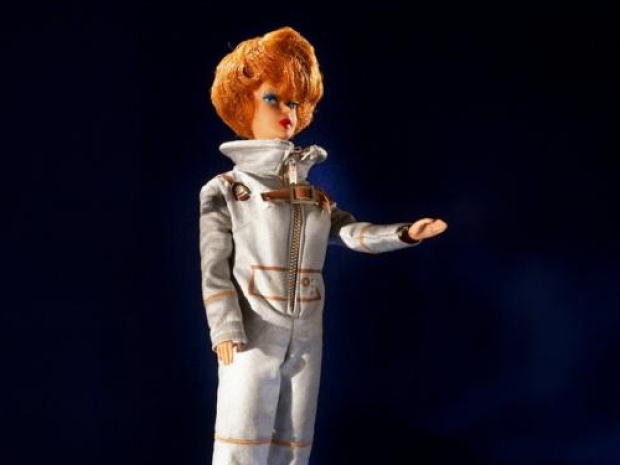
This Barbie doll dressed in the Miss Astronaut outfit (1965)

National Air and Space Museum

Barbie: An Astronaut for the Ages arrow-right

Learn about Barbie's long career as one of our nation's foremost space explorers. This 1965 Barbie was released 13 years before NASA accepted its first woman astronauts.

Human Spaceflight

In April 1961, Soviet cosmonaut Yuri Gagarin became the first human in space. Soon after in May 1961, Alan Shepard became the first American in space, when he piloted the Mercury spacecraft Freedom 7 on a suborbital flight. In July of 1969, the first human stepped on the surface of the Moon. The cosmic journey continues today with the International Space Station and developments in commercial spaceflight.

moon lander and space walk illustration

Sidedoor Podcast

Space Jocks & Moon Rocks arrow-right

Sidedoor joins forces with the National Air and Space Museum to explore the mysteries of lunar science.
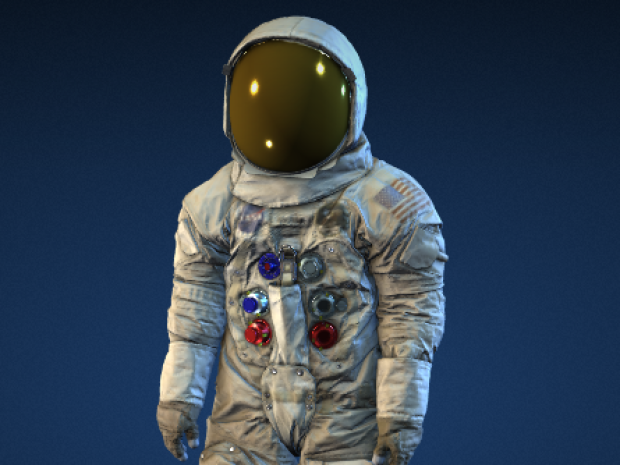
3D spacesuit scan.

Smithsonian 3D

Neil Armstrong's Space Suit arrow-right

Explore and download 3D models of Armstrong's spacesuit and other Apollo 11 objects.
Apollo 4 launches into a dark blue sky amid smoke on the ground.

The Apollo Missions arrow-right

Learn more about the seventeen missions carried out during the Apollo Program.

Cosmic Collections

Explore space through the lenses of art, history, culture, and science in the Smithsonian's collections.

Outer Space

Data Sonification: M104 (Infrared Only)

Card, Commemorative, TV Show, "Lost in Space"

Data Sonification: M51 (Whirlpool Galaxy) Optical Only

Visualizing the Cosmic Web

Cosmic Waves

Cosmic Colonies

Puzzle Wrapper, Buck Rogers

Cosmic Effort

Data Sonification: M104 (Multiwavelength)

Costume worn by Nona Hendryx of Labelle

Constellation

Comet Kohoutek

Data Sonification: Whirlpool Galaxy (M51)

Haley's Comet

Sculpture

Raven Steals the Sun

Toy, Spaceship

The Jetsons No. 7 comic book

Space Exploration

Data Sonification: Sagittarius A* Black Hole, Event Horizon Telescope Image

Purple star costume designed by Sun Ra and worn by Arkestra members

The Mothership

Blue Asteroid

Model, Starship Enterprise, Television Show, "Star Trek"

Photograph, Project Mercury Astronauts

A Cosmic View-1976

37c Constellations: Orion single

English Planispheric Astrolabe

Introduction to Astronomy from Smith's illustrated astronomy : designed for the use of the public or common schools in the United States.

Tour: Cosmic Harmonies: Sonifications From NASA Telescopes

Detector, Neutrino, Photomultiplier, Kamiokande II

Data Sonification: Cassiopeia A (Jet)

Gold plated disc with etched designs on the surface. At top left is a circle depicting the record. The dashes along the outer edge, in binary code, show the proper rotational speed for playing the record.

Record, Cover, Voyager (Duplicate)

Space Riders

Evolving Cosmos


  1. Current page 1
  2. Page 2
  3. Page 3
  4. Page 4
  5. Next page Next
  6. Last page Last
arrow-up Back to top
Home
  • Facebook facebook
  • Instagram instagram
  • LinkedIn linkedin
  • YouTube youtube

  • Contact Us
  • Get Involved
  • Shop Online
  • Job Opportunities
  • Equal Opportunity
  • Inspector General
  • Records Requests
  • Accessibility
  • Host Your Event
  • Press Room
  • Privacy
  • Terms of Use