Skip to main content Skip to main navigation
heart-solid My Visit Donate
Home Smithsonian Institution IK development site for ODI
Press Enter to activate a submenu, down arrow to access the items and Escape to close the submenu.
    • Overview
    • Museums and Zoo
    • Entry and Guidelines
    • Museum Maps
    • Dine and Shop
    • Accessibility
    • Visiting with Kids
    • Group Visits
    • Overview
    • Exhibitions
    • Online Events
    • All Events
    • IMAX & Planetarium
    • Overview
    • Topics
    • Collections
    • Research Resources
    • Stories
    • Podcasts
    • Overview
    • For Caregivers
    • For Educators
    • For Students
    • For Academics
    • For Lifelong Learners
    • Overview
    • Become a Member
    • Renew Membership
    • Make a Gift
    • Volunteer
    • Overview
    • Our Organization
    • Our Leadership
    • Reports and Plans
    • Newsdesk
heart-solid My Visit Donate
  1. Home
  2. forward-slash
  3. About
  4. forward-slash
  5. Newsdesk
  6. forward-slash
  7. Photos and Video
  8. forward-slash
  9. Anoplogaster 1b

About

  • Overview
  • Our Organization
    • Board of Regents
    • Museums and Zoo
    • Research Centers
    • Cultural Centers
    • Education Centers
    • General Counsel
    • Office of Human Resources
    • Office of Equal Opportunity
    • Office of Sponsored Projects
    • Office of Protection Services
  • Our Leadership
  • Reports and Plans
    • Annual Reports
    • Strategic Plan
    • Smithsonian Dashboard
  • Newsdesk
    • News Releases
    • Media Contacts
    • Photos and Video
    • Media Kits
    • Fact Sheets
    • Visitor Stats
    • Secretary and Admin Bios
    • Filming Requests

Anoplogaster 1b

Media Photo/Video

July 16, 2020

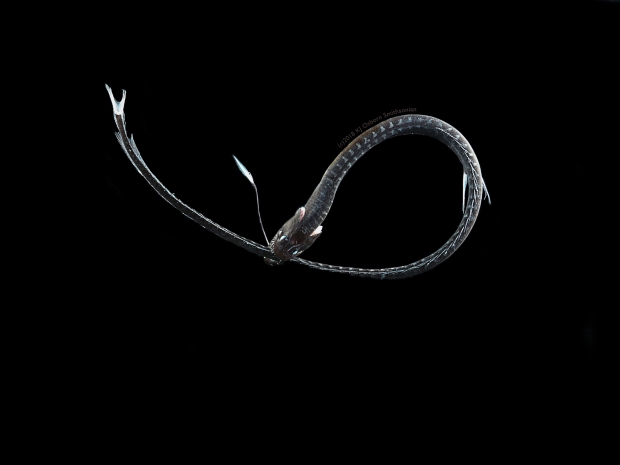
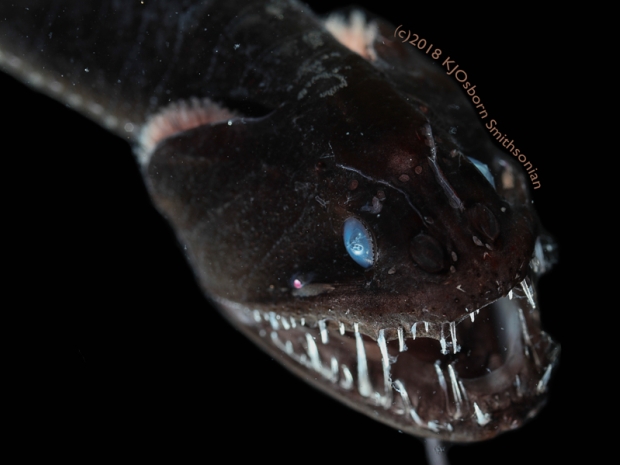
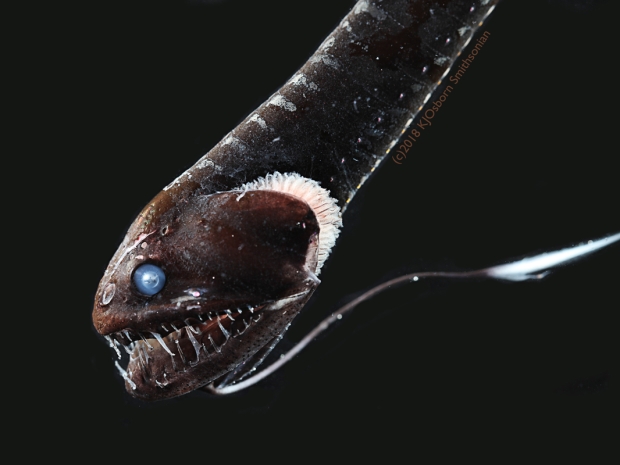
Deep-sea ultra black fish
download Download karen_-_anoplogaster1st_notkept_nm8n6-0593b_sm.jpg

One specimen of the ultra-black fish species Anoplogaster cornuta. This fish was so lively after being sampled and documented that the research team released it back to the deep via submarine the day after being caught in a trawl net.

In the July 16 issue of the journal Current Biology, a team of scientists led by Smithsonian’s National Museum of Natural History research zoologist Karen Osborn and Duke University biologist Sönke Johnsen report on how a unique arrangement of pigment-packed granules enables some fish to absorb nearly all of the light that hits their skin, so that as little as 0.05% of that light is reflected back.

Tags
Research News

Tags

  • Natural History Museum
  • Research News

Related Media

Deep-sea ultra black fish

Image

document

Idiacanthus 1a

07.16.2020

Image

document

Idiacanthus 1b

07.16.2020
Idiacanthus

Image

document

Idiacanthus 1c

07.16.2020

Related Content

  • Scientists Discover How Deep-Sea, Ultra-Black Fish Disappear

    Deep in the ocean, where sunlight barely reaches, Smithsonian scientists and a team of collaborators have discovered one of the blackest materials known: the skin of certain fish.

    • July 16, 2020
    • News Release
    • Natural History Museum
    • Research News
arrow-up Back to top
Home
  • Facebook facebook
  • Instagram instagram
  • LinkedIn linkedin
  • YouTube youtube

  • Contact Us
  • Get Involved
  • Shop Online
  • Job Opportunities
  • Equal Opportunity
  • Inspector General
  • Records Requests
  • Accessibility
  • Host Your Event
  • Press Room
  • Privacy
  • Terms of Use