Skip to main content Skip to main navigation
heart-solid My Visit Donate
Home Smithsonian Institution IK development site for ODI
Press Enter to activate a submenu, down arrow to access the items and Escape to close the submenu.
    • Overview
    • Museums and Zoo
    • Entry and Guidelines
    • Museum Maps
    • Dine and Shop
    • Accessibility
    • Visiting with Kids
    • Group Visits
    • Overview
    • Exhibitions
    • Online Events
    • All Events
    • IMAX & Planetarium
    • Overview
    • Topics
    • Collections
    • Research Resources
    • Stories
    • Podcasts
    • Overview
    • For Caregivers
    • For Educators
    • For Students
    • For Academics
    • For Lifelong Learners
    • Overview
    • Become a Member
    • Renew Membership
    • Make a Gift
    • Volunteer
    • Overview
    • Our Organization
    • Our Leadership
    • Reports and Plans
    • Newsdesk
heart-solid My Visit Donate

Crab Nebula

This media is in the public domain (free of copyright restrictions). You can copy, modify, and distribute this work without contacting the Smithsonian. For more information, visit the Smithsonian's Open Access page.
We also suggest that users: <ul> <li>Give attribution to the Smithsonian.</li> <li>Contribute back any modifications or improvements.</li> <li>Do not mislead others or misrepresent the datasets or its sources. </li> <li>Be responsible.</li> </ul>
International media Interoperability Framework
IIIF provides researchers rich metadata and media viewing options for comparison of works across cultural heritage collections. Visit the IIIF page to learn more.
View manifest View in Mirador Viewer

Object Details

Description

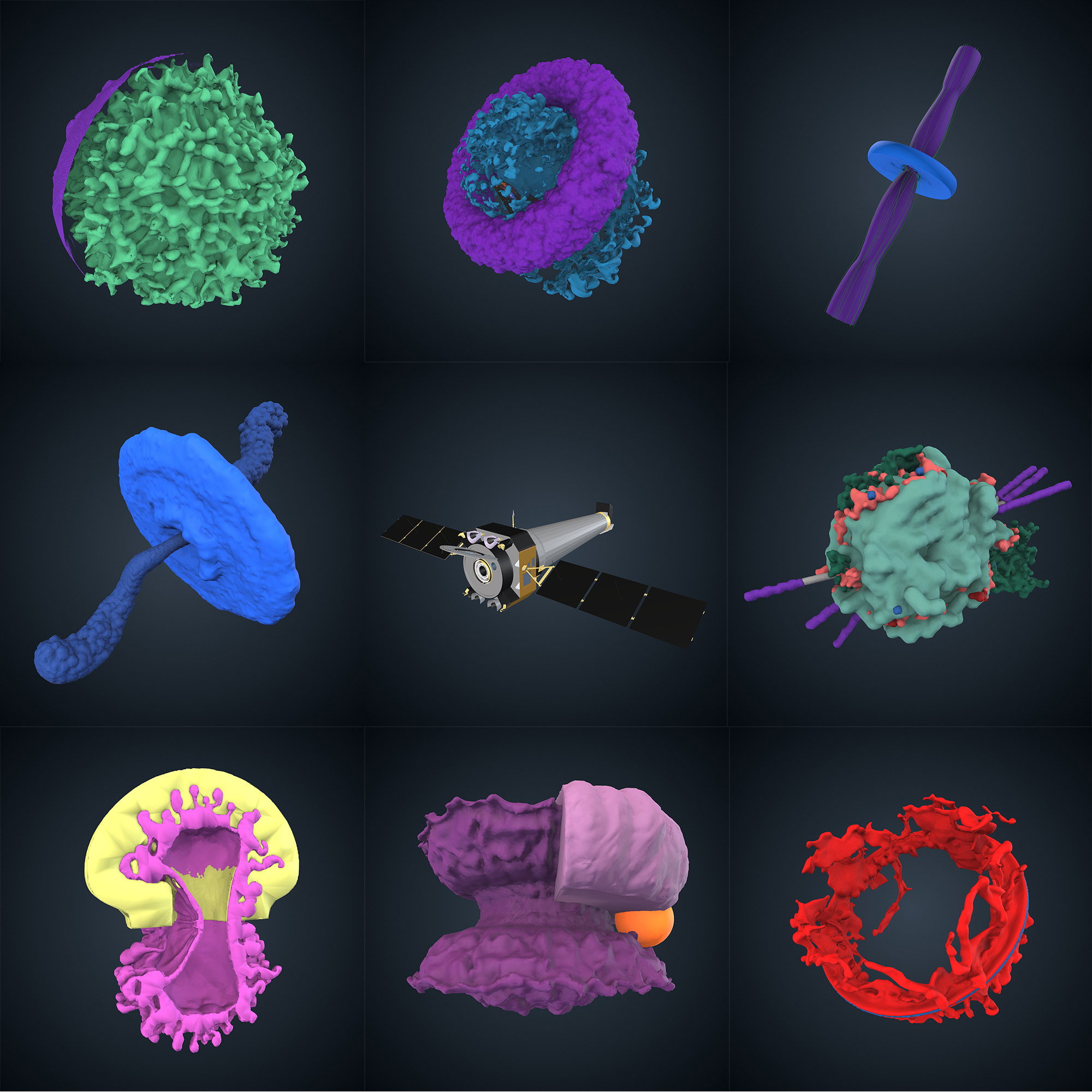
The Crab Nebula shows the remains of an exploded star located about 6,500 light years from Earth. The powerhouse “engine” energizing the Crab system is a pulsar, a rapidly spinning neutron star, shooting out pulses of radiation 30 times a second. X-ray information from NASA’s Chandra X-ray Observatory was used to create a three-dimensional representation of the Crab. The X-ray structure shows the pulsar and a ringed disk of energized material, with jets of particles that fire off from opposite ends of the energetic pulsar.

Notes

Description Credit: NASA/STScI/F.Summers, et al.; NASA/Caltech /IPAC/R.Hurt; NASA/CXC/SAO/N.Wolk, et al.; NASA/CXC/SAO/A.Jubett et al.

Data Source

Smithsonian Institution, Smithsonian Astrophysical Observatory

Metadata Usage

CC0

Record ID

dpo_3d_200117

Discover More

chandra x-ray thumbnail

Chandra X-ray Observatory

chandra x-ray thumbnail

Chandra X-ray Observatory

arrow-up Back to top
Home
  • Facebook facebook
  • Instagram instagram
  • LinkedIn linkedin
  • YouTube youtube

  • Contact Us
  • Get Involved
  • Shop Online
  • Job Opportunities
  • Equal Opportunity
  • Inspector General
  • Records Requests
  • Accessibility
  • Host Your Event
  • Press Room
  • Privacy
  • Terms of Use