Skip to main content Skip to main navigation
heart-solid My Visit Donate
Home Smithsonian Institution IK development site for ODI
Press Enter to activate a submenu, down arrow to access the items and Escape to close the submenu.
    • Overview
    • Museums and Zoo
    • Entry and Guidelines
    • Museum Maps
    • Dine and Shop
    • Accessibility
    • Visiting with Kids
    • Group Visits
    • Overview
    • Exhibitions
    • Online Events
    • All Events
    • IMAX & Planetarium
    • Overview
    • Topics
    • Collections
    • Research Resources
    • Stories
    • Podcasts
    • Overview
    • For Caregivers
    • For Educators
    • For Students
    • For Academics
    • For Lifelong Learners
    • Overview
    • Become a Member
    • Renew Membership
    • Make a Gift
    • Volunteer
    • Overview
    • Our Organization
    • Our Leadership
    • Reports and Plans
    • Newsdesk
heart-solid My Visit Donate
  1. Home
  2. forward-slash
  3. About
  4. forward-slash
  5. Newsdesk
  6. forward-slash
  7. Photos and Video
  8. forward-slash
  9. NMNH Surface Temp - Calcarata

About

  • Overview
  • Our Organization
    • Board of Regents
    • Museums and Zoo
    • Research Centers
    • Cultural Centers
    • Education Centers
    • General Counsel
    • Office of Human Resources
    • Office of Equal Opportunity
    • Office of Sponsored Projects
    • Office of Protection Services
  • Our Leadership
  • Reports and Plans
    • Annual Reports
    • Strategic Plan
    • Smithsonian Dashboard
  • Newsdesk
    • News Releases
    • Media Contacts
    • Photos and Video
    • Media Kits
    • Fact Sheets
    • Visitor Stats
    • Secretary and Admin Bios
    • Filming Requests

NMNH Surface Temp - Calcarata

Media Photo/Video

September 19, 2024

Brian Huber, Smithsonian.

download Download 7c_-_calcarata_cn02l-18e_copy.jpg

Microscopic, single-celled organisms called foraminifera have a fossil record that extends from today to more than 500 million years ago. Although each organism is just a single cell, they build complex shells around themselves from minerals in the seawater. These shells have accumulated in layers of sediment below the seafloor of the open ocean and in regions where the ocean once flooded the continents for millions of years. By examining the shell chemistry of these ancient organisms, scientists can learn about Earth’s climate long before humans ever walked the planet—and get insight into how climate changed in the past.

The research team compiled more than 150,000 published data points from five different geochemical archives (or “proxies”) for ancient ocean temperature that are preserved in fossilized shells and other types of ancient organic matter.

Tags
Research News

Tags

  • Natural History Museum
  • Research News

Related Media

Woman with long, light brown hair and sunglasses smiles, standing outdoors in front of mountain and river.

Image

document

NMNH Surface Temp - Emily Judd

09.19.2024
Three pieces of gray stone with imprint of leaf in half-moon shape with discernible straight leaves.

Image

document

NMNH Surface Temp - Fossil Palm Leaf

09.19.2024
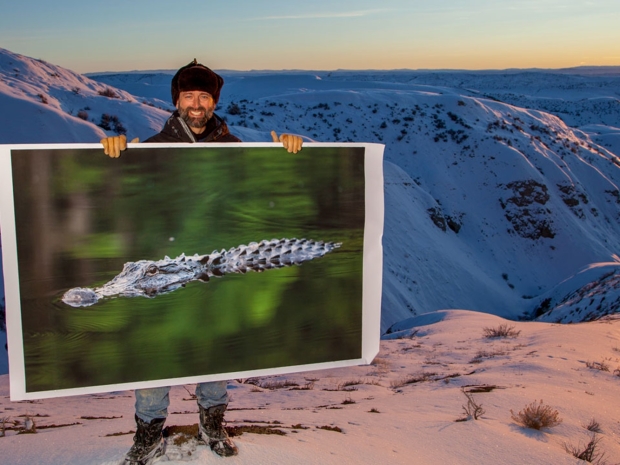
Man in a hat and jacket stands outdoors at top of snow covered mountains holding poster of alligator.

Image

document

NMNH Surface Temp - Scott Wing

09.19.2024
Woman in a white top, gray cardigan and purple scarf smiles outside a building with glass siding.

Image

document

NMNH Surface Temp - Jess Tierney

09.19.2024
Interior room with multiple storage drawers of natural history specimens and rocks.

Image

document

NMNH Surface Temp - Paleobiology Collection

09.19.2024
Man with short grayish-black hair smiles, standing on a boat with yellow handrail and wearing blue puffy jacket.

Image

document

NMNH Surface Temp - Brian Huber

09.19.2024

Image

document

NMNH Surface Temp - Falsostuarti

09.19.2024

Image

document

NMNH Surface Temp - Powelli

09.19.2024

Image

document

NMNH Surface Temp - Entrance to “David H. Koch Hall of Fossils— Deep Time"

09.19.2024

Image

document

NMNH Surface Temp - “David H. Koch Hall of Fossils— Deep Time"

09.19.2024

Related Content

  • Three pieces of gray stone with imprint of leaf in half-moon shape with discernible straight leaves.

    New Study Charts How Earth’s Global Temperature Has Drastically Changed Over the Past 485 Million Years, Driven by Carbon Dioxide

    A new study co-led by the Smithsonian and the University of Arizona offers the most detailed glimpse yet of how Earth’s surface temperature has changed over the past 485 million years.

    • September 19, 2024
    • News Release
    • Natural History Museum
    • Research News
arrow-up Back to top
Home
  • Facebook facebook
  • Instagram instagram
  • LinkedIn linkedin
  • YouTube youtube

  • Contact Us
  • Get Involved
  • Shop Online
  • Job Opportunities
  • Equal Opportunity
  • Inspector General
  • Records Requests
  • Accessibility
  • Host Your Event
  • Press Room
  • Privacy
  • Terms of Use