Skip to main content Skip to main navigation
heart-solid My Visit Donate
Home Smithsonian Institution IK development site for ODI
Press Enter to activate a submenu, down arrow to access the items and Escape to close the submenu.
    • Overview
    • Museums and Zoo
    • Entry and Guidelines
    • Museum Maps
    • Dine and Shop
    • Accessibility
    • Visiting with Kids
    • Group Visits
    • Overview
    • Exhibitions
    • Online Events
    • All Events
    • IMAX & Planetarium
    • Overview
    • Topics
    • Collections
    • Research Resources
    • Stories
    • Podcasts
    • Overview
    • For Caregivers
    • For Educators
    • For Students
    • For Academics
    • For Lifelong Learners
    • Overview
    • Become a Member
    • Renew Membership
    • Make a Gift
    • Volunteer
    • Overview
    • Our Organization
    • Our Leadership
    • Reports and Plans
    • Newsdesk
heart-solid My Visit Donate

Spectrograph, UV, V-2

Air and Space Museum

There are restrictions for re-using this image. For more information, visit the Smithsonian's Terms of Use page .
International media Interoperability Framework
IIIF provides researchers rich metadata and media viewing options for comparison of works across cultural heritage collections. Visit the IIIF page to learn more.
View manifest View in Mirador Viewer

    Object Details

    Manufacturer

    Baird Associates

    Summary

    Solar spectrograph designed to be flown on a V-2 rocket. A group at the Naval Research Laboratory (NRL) in Washington D.C. led by Richard Tousey created this rugged design to be flown initially in a V2 warhead and hopefully to survive the flight intact, for physical retrieval of photographic film. It utilizes a simple Rowland grating, and has two tiny spherical entrance apertures made of lithium fluoride. The rotation of the rocket during exposures was incorporated into the design to produce a crude slit-like spectrum. After World War II, captured German V2 rockets provided a means for sending scientific instruments above much of the Earth's atmosphere, which absorbs ultraviolet radiation. This instrument is one of about a dozen manufactured for NRL by Baird Associates of Cambridge MA. The first successful flight came on 10 October 1946. The solar spectra from the mission provided data on the pattern of UV absorption by ozone in the Earth's atmosphere. This example is most likely unflown. It was lent to the Smithsonian by NRL in August 1982 and transferred in 1983; it was exhibited in the Stars Gallery until October 1997. See also A198400181001.

    Credit Line

    Transferred from the Naval Research Laboratory

    Inventory Number

    A19840018000

    Restrictions & Rights

    Usage conditions apply

    Type

    INSTRUMENTS-Scientific

    Materials

    Welded steel and hardened steel components, glass grating, optical mirrors, fluorite lenses

    Dimensions

    3-D: 61 x 30.5cm (24 x 12 in.)

    Country of Origin

    United States of America

    See more items in

    National Air and Space Museum Collection

    Location

    Steven F. Udvar-Hazy Center in Chantilly, VA

    Hangar

    Boeing Aviation Hangar

    Data Source

    National Air and Space Museum

    Metadata Usage

    Not determined

    Link to Original Record

    http://n2t.net/ark:/65665/nv939434f55-20eb-4284-8a8c-df7aded60134

    Record ID

    nasm_A19840018000

    Discover More

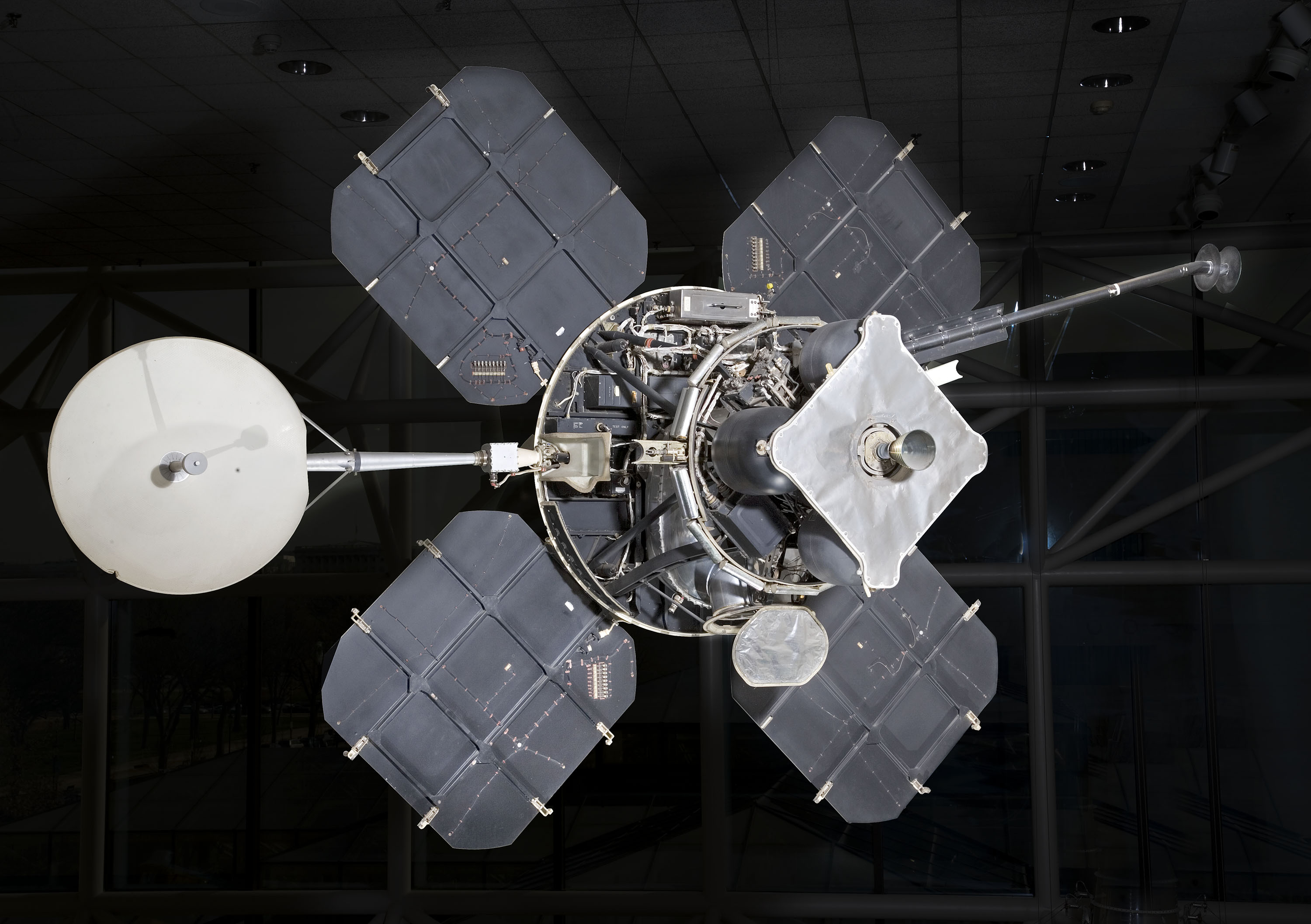
    Lunar orbiter on display

    Space Science

    Lunar orbiter on display

    Space Science

    arrow-up Back to top
    Home
    • Facebook facebook
    • Instagram instagram
    • LinkedIn linkedin
    • YouTube youtube

    • Contact Us
    • Get Involved
    • Shop Online
    • Job Opportunities
    • Equal Opportunity
    • Inspector General
    • Records Requests
    • Accessibility
    • Host Your Event
    • Press Room
    • Privacy
    • Terms of Use