Skip to main content Skip to main navigation
heart-solid My Visit Donate
Home Smithsonian Institution IK development site for ODI
Press Enter to activate a submenu, down arrow to access the items and Escape to close the submenu.
    • Overview
    • Museums and Zoo
    • Entry and Guidelines
    • Museum Maps
    • Dine and Shop
    • Accessibility
    • Visiting with Kids
    • Group Visits
    • Overview
    • Exhibitions
    • Online Events
    • All Events
    • IMAX & Planetarium
    • Overview
    • Topics
    • Collections
    • Research Resources
    • Stories
    • Podcasts
    • Overview
    • For Caregivers
    • For Educators
    • For Students
    • For Academics
    • For Lifelong Learners
    • Overview
    • Become a Member
    • Renew Membership
    • Make a Gift
    • Volunteer
    • Overview
    • Our Organization
    • Our Leadership
    • Reports and Plans
    • Newsdesk
heart-solid My Visit Donate

Langley Aerodrome A Pusher Propeller, fixed-pitch, two-blade, wood

Air and Space Museum

There are restrictions for re-using this image. For more information, visit the Smithsonian's Terms of Use page .
International media Interoperability Framework
IIIF provides researchers rich metadata and media viewing options for comparison of works across cultural heritage collections. Visit the IIIF page to learn more.
View manifest View in Mirador Viewer

Object Details

Designer

Samuel P. Langley

Manufacturer

Samuel P. Langley

Physical Description

Type: Two-blade, fixed pitch, wood, metal and fabric
Diameter: 250.2 cm (98.5 in.)
Chord: 67.3 cm (26.5 in.)
Engine Application: 39 kw (52-hp), five cylinder, radial, gasoline, water-cooled, geared transmission

Summary

Samuel P. Langley's successful 1896 flights of model Aerodromes Numbers 5 and 6 led to plans to build a larger, human-carrying airplane. However, his simple scaling of these earlier small aircraft to the required larger size proved unsuccessful. Despite an excellent engine, the larger Aerodrome A met with disastrous results, crashing twice on takeoff in late-1903. This ended Langley's aeronautical work, and he died in 1906.
Tests showed Langley that helical propellers made from solid wood were more efficient than blades constructed with a frame over which cloth was tightly drawn. However, it was found that cost and ease of repair made the latter type more practical. Furthermore, at the size required for Langley's Aerodrome A, solid wood propellers were too heavy. The design of this propeller, having a unit pitch ratio and 30-degree blade, was arrived at following tests both in a closed room and open air, and with various wood and steel frames.

Credit Line

Transferred from the Smithsonian Institution

Date

ca. 1903

Inventory Number

A19320022000

Restrictions & Rights

Usage conditions apply

Type

PROPULSION-Propellers & Impellers

Materials

Wood, Steel, Brass, Textile, Original Varnish, Paper, Adhesive

Dimensions

Rotor/Propeller: 250.2 × 68.6 × 3.2 × 40.6cm (98 1/2 × 27 × 1 1/4 × 16 in.)
Storage (aluminum pallet and frame with fabric cover): 250.2 × 121.9 × 105.4cm, 111.1kg (98 1/2 × 48 × 41 1/2 in., 245lb.)

Country of Origin

United States of America

See more items in

National Air and Space Museum Collection

Data Source

National Air and Space Museum

Metadata Usage

Not determined

Link to Original Record

http://n2t.net/ark:/65665/nv9bb1b8ea9-e6bc-4e6e-8656-5b10a61013ed

Record ID

nasm_A19320022000

Discover More

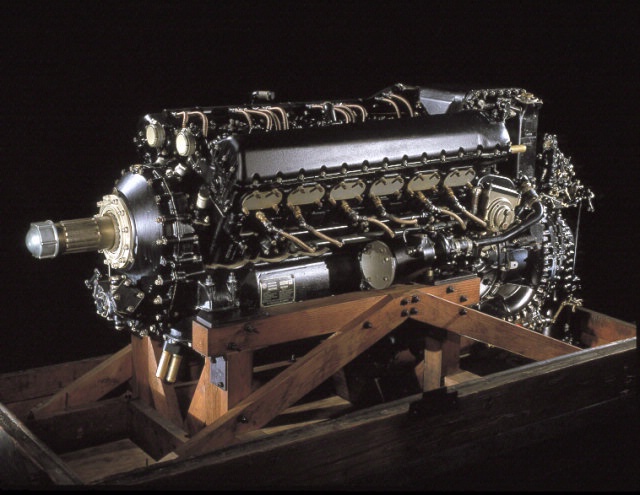
Image of Packard Merlin V-1650-7 engine

Propulsion

Image of Packard Merlin V-1650-7 engine

Propulsion

arrow-up Back to top
Home
  • Facebook facebook
  • Instagram instagram
  • LinkedIn linkedin
  • YouTube youtube

  • Contact Us
  • Get Involved
  • Shop Online
  • Job Opportunities
  • Equal Opportunity
  • Inspector General
  • Records Requests
  • Accessibility
  • Host Your Event
  • Press Room
  • Privacy
  • Terms of Use