
Object Details
maker
Drake, David
Description
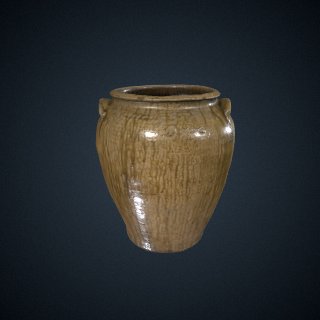
This large alkaline-glazed stoneware jar was made in 1862 by David Drake, an enslaved black potter working on Lewis Miles’ plantation pottery in the Edgefield District of South Carolina. In a state that outlawed literacy among people who were enslaved, Dave defiantly proclaimed his ability to read and write by signing his name and sometimes inscribing poetry on the stoneware vessels he made.
One of the most distinctive aspects of ante-bellum Edgefield was the presence of a large number of skilled people who were enslaved working as potters. Edgefield was one of only two areas in the United States known to have relied heavily on enslaved labor to manufacture utilitarian stoneware in large-scale potteries. Edgefield potteries furnished the large local plantations with the vessels needed for the preparation and storage of food for the planters and for the thousands of enslaved people working as agricultural and skilled laborers.
While some of the enslaved people performed unskilled jobs in the potteries—such as digging and preparing clay and loading kilns—most were “turners,” performing the highly skilled work of forming ware on a potter’s wheel. At least 40 enslaved potters and pottery laborers are known to have worked in potteries in Edgefield between about 1815 and 1880. Some scholars believe over a hundred more may some day be identified.
David Drake is the only enslaved potter known to have signed and dated his work. He was educated by his first enslaver, stoneware maker and newspaper editor Abner Landrum, and may have worked at Landrum’s newspaper, the Edgefield Hive, as a typesetter. When Landrum left the Edgefield area in 1831, Dave was sold to Lewis Miles, another large-scale pottery owner.
Dave was a master potter, regularly producing massive storage jars and jugs that required enormous skill and strength. About twenty surviving Dave pieces are inscribed with Dave’s original two line poems—wonderful and sometimes cryptic ruminations on topics as diverse as pots, love, money, spirituality, life as a slave, and the afterlife. The poems reflect Dave’s intelligence, creativity, and wit.
The poem on this jar, “I made this jar all of cross, If you don[’]t repent you will be lost,” may be a reference to the Bible, Acts 2: 14-42, Peter’s speech at Pentecost in the temple of Herod at Jerusalem. This jar, the last known poem piece, emphasizes the importance of religion and the afterlife in the daily life of many slaves. John Michael Vlach highlights this jar in The Afro-American Tradition in Decorative Arts, conjecturing that its “highly poignant verse” reflects "Dave’s combined feelings about slavery and religion.” On the reverse side, the jar is inscribed “May 3, 1862/ LM Dave.”
Location
Currently not on view
date made
1862-05-03
ID Number
1996.0344.01
catalog number
1996.0344.01
accession number
1996.0344
Object Name
jar
Physical Description
ceramic (overall material)
stoneware (overall material)
wheel thrown (overall production method/technique)
Measurements
average spatial: 20 1/2 in x 18 in; 52.07 cm x 45.72 cm
Place Made
United States: South Carolina, Lewis Miles Plantation
Related Publication
Kendrick, Kathleen M. and Peter C. Liebhold. Smithsonian Treasures of American History
See more items in
Home and Community Life: Ceramics and Glass
Cultures & Communities
National Treasures exhibit
Religion
Domestic Furnishings
Data Source
National Museum of American History
Subject
Slavery
Link to Original Record
Record ID
nmah_1181785