Skip to main content Skip to main navigation
heart-solid My Visit Donate
Home Smithsonian Institution IK development site for ODI
Press Enter to activate a submenu, down arrow to access the items and Escape to close the submenu.
    • Overview
    • Museums and Zoo
    • Entry and Guidelines
    • Museum Maps
    • Dine and Shop
    • Accessibility
    • Visiting with Kids
    • Group Visits
    • Overview
    • Exhibitions
    • Online Events
    • All Events
    • IMAX & Planetarium
    • Overview
    • Topics
    • Collections
    • Research Resources
    • Stories
    • Podcasts
    • Overview
    • For Caregivers
    • For Educators
    • For Students
    • For Academics
    • For Lifelong Learners
    • Overview
    • Become a Member
    • Renew Membership
    • Make a Gift
    • Volunteer
    • Overview
    • Our Organization
    • Our Leadership
    • Reports and Plans
    • Newsdesk
heart-solid My Visit Donate

Image Sensor, Vidicon, SIT

Air and Space Museum

There are restrictions for re-using this image. For more information, visit the Smithsonian's Terms of Use page .
International media Interoperability Framework
IIIF provides researchers rich metadata and media viewing options for comparison of works across cultural heritage collections. Visit the IIIF page to learn more.
View manifest View in Mirador Viewer

    Object Details

    Manufacturer

    RCA Corp.

    Summary

    This is a silicon intensified phototube (SIT) used by James Westphal and his group as an astronomical imaging tube. Manufactured by RCA, it is a Vidicon imaging tube modified by the addition of a silicon photodiode. The electrons that are released from the conventional photosensitive coating on the face of the tube are accelerated onto the silicon photodiode by an electrostatic field. The back of this target is scanned by beam of electrons; these create a current when they meet an area of the target that has been exposed to light. This current is then converted electronically into an image. Astromers were astonished by the SIT's very high sensitivity on its first use on the 200 inch Mt. Palomar telescope. The tape that accompanies this artifact is a record of that image in digital form. This SIT tube is about 2000 times more sensitive than the SIVIT tube that was used before. It was used extensively in studies of the stars.
    The California Institute of Technology donated this object to the Museum in 1983.

    Credit Line

    Gift of the California Institute of Technology

    Inventory Number

    A19840036000

    Restrictions & Rights

    Usage conditions apply

    Type

    EQUIPMENT-Electronics

    Materials

    Glass
    Steel
    Copper Alloy
    Ceramic
    Synthetic

    Dimensions

    3-D: 19 × 3.8 × 3.8cm (7 1/2 × 1 1/2 × 1 1/2 in.)

    Country of Origin

    United States of America

    See more items in

    National Air and Space Museum Collection

    Data Source

    National Air and Space Museum

    Metadata Usage

    Not determined

    Link to Original Record

    http://n2t.net/ark:/65665/nv98621b273-1bf7-446a-afda-ced853971f0c

    Record ID

    nasm_A19840036000

    Discover More

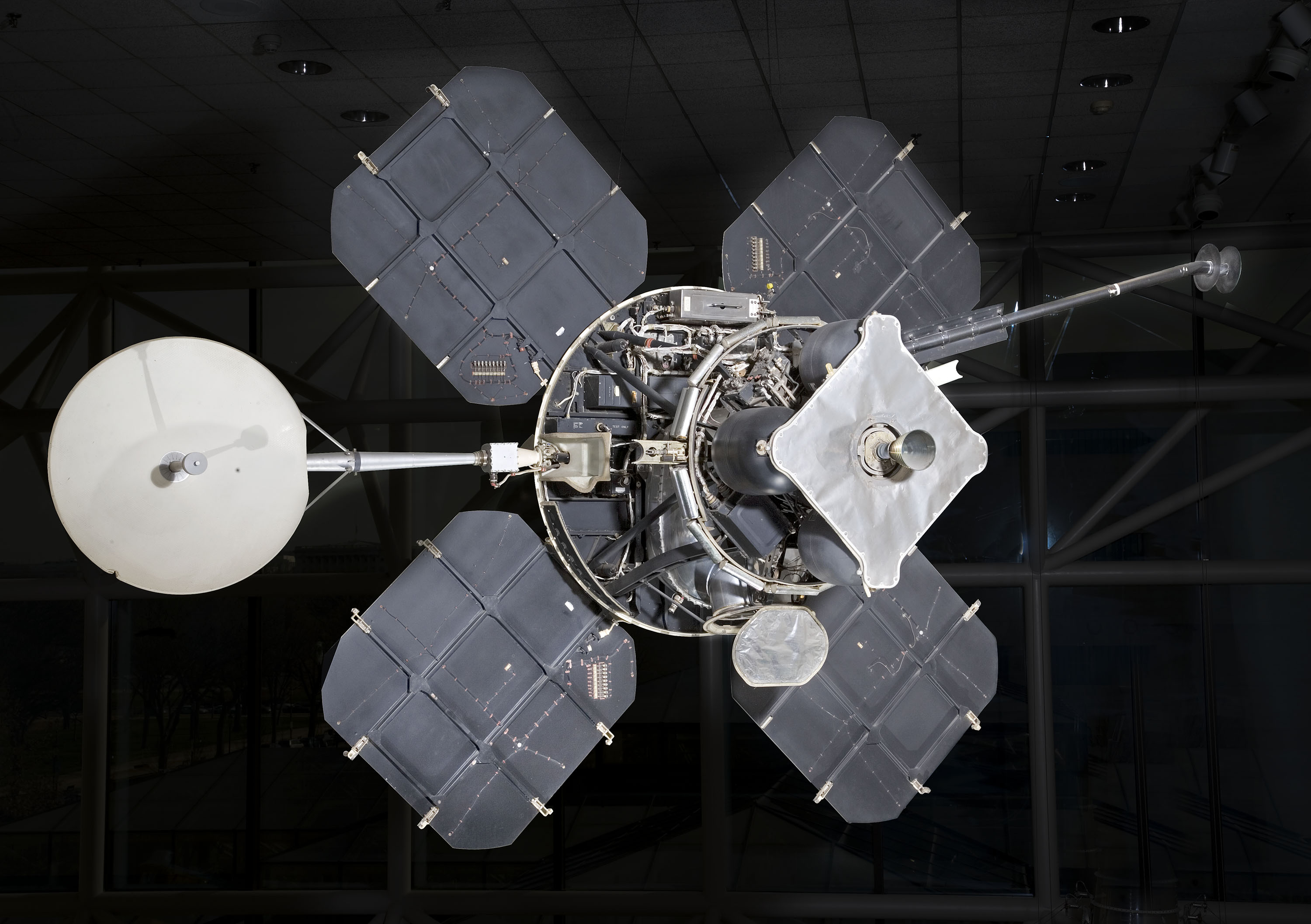
    Lunar orbiter on display

    Space Science

    Lunar orbiter on display

    Space Science

    arrow-up Back to top
    Home
    • Facebook facebook
    • Instagram instagram
    • LinkedIn linkedin
    • YouTube youtube

    • Contact Us
    • Get Involved
    • Shop Online
    • Job Opportunities
    • Equal Opportunity
    • Inspector General
    • Records Requests
    • Accessibility
    • Host Your Event
    • Press Room
    • Privacy
    • Terms of Use