Skip to main content Skip to main navigation
heart-solid My Visit Donate
Home Smithsonian Institution IK development site for ODI
Press Enter to activate a submenu, down arrow to access the items and Escape to close the submenu.
    • Overview
    • Museums and Zoo
    • Entry and Guidelines
    • Museum Maps
    • Dine and Shop
    • Accessibility
    • Visiting with Kids
    • Group Visits
    • Overview
    • Exhibitions
    • Online Events
    • All Events
    • IMAX & Planetarium
    • Overview
    • Topics
    • Collections
    • Research Resources
    • Stories
    • Podcasts
    • Overview
    • For Caregivers
    • For Educators
    • For Students
    • For Academics
    • For Lifelong Learners
    • Overview
    • Become a Member
    • Renew Membership
    • Make a Gift
    • Volunteer
    • Overview
    • Our Organization
    • Our Leadership
    • Reports and Plans
    • Newsdesk
heart-solid My Visit Donate

Fuel Cell, Gemini, Cutaway

Air and Space Museum

This media is in the public domain (free of copyright restrictions). You can copy, modify, and distribute this work without contacting the Smithsonian. For more information, visit the Smithsonian's Open Access page.
International media Interoperability Framework
IIIF provides researchers rich metadata and media viewing options for comparison of works across cultural heritage collections. Visit the IIIF page to learn more.
View manifest View in Mirador Viewer
  • Black label with General Electric logo and "Gemini Fuel Cell Section"
  • Cutaway of steel cylinder with connections and mounting brackets

    Object Details

    Manufacturer

    General Electric Co. (Lynn, MA)

    Summary

    This fuel cell is a cutaway version of the electric-power generating device used on the two-astronaut Gemini spacecraft during ten missions in 1965-66. A fuel cell is like a battery, in that it uses a chemical reaction to create an electrical current. Unlike a battery, a fuel cell will continue to generate a current as long as the reactants are supplied. The Gemini fuel cell used liquid oxygen and liquid hydrogen to generate electricity, with water as a byproduct. Oxygen and hydrogen molecules reacted and combined across a "proton exchange membrane," a thin permeable polymer sheet coated with a platinum catalyst.
    The Gemini program pioneered the use of fuel cells in space, and this technology was subsequently used in the Apollo Service Module and the Space Shuttle Orbiter. General Electric, the manufacturer of Gemini fuel cells, gave this artifact to the Smithsonian in 1966.

    Credit Line

    Gift of General Electric Company

    Inventory Number

    A19660647000

    Restrictions & Rights

    CC0

    Type

    SPACECRAFT-Crewed-Electrical Power

    Materials

    Stainless steel, other metals

    Dimensions

    3-D: 61 × 40 × 46cm (24 × 15 3/4 × 18 1/8 in.)

    Country of Origin

    United States of America

    See more items in

    National Air and Space Museum Collection

    Data Source

    National Air and Space Museum

    Metadata Usage

    CC0

    Link to Original Record

    http://n2t.net/ark:/65665/nv94a795903-d82b-40a6-828d-a0b9bfb5494c

    Record ID

    nasm_A19660647000

    Discover More

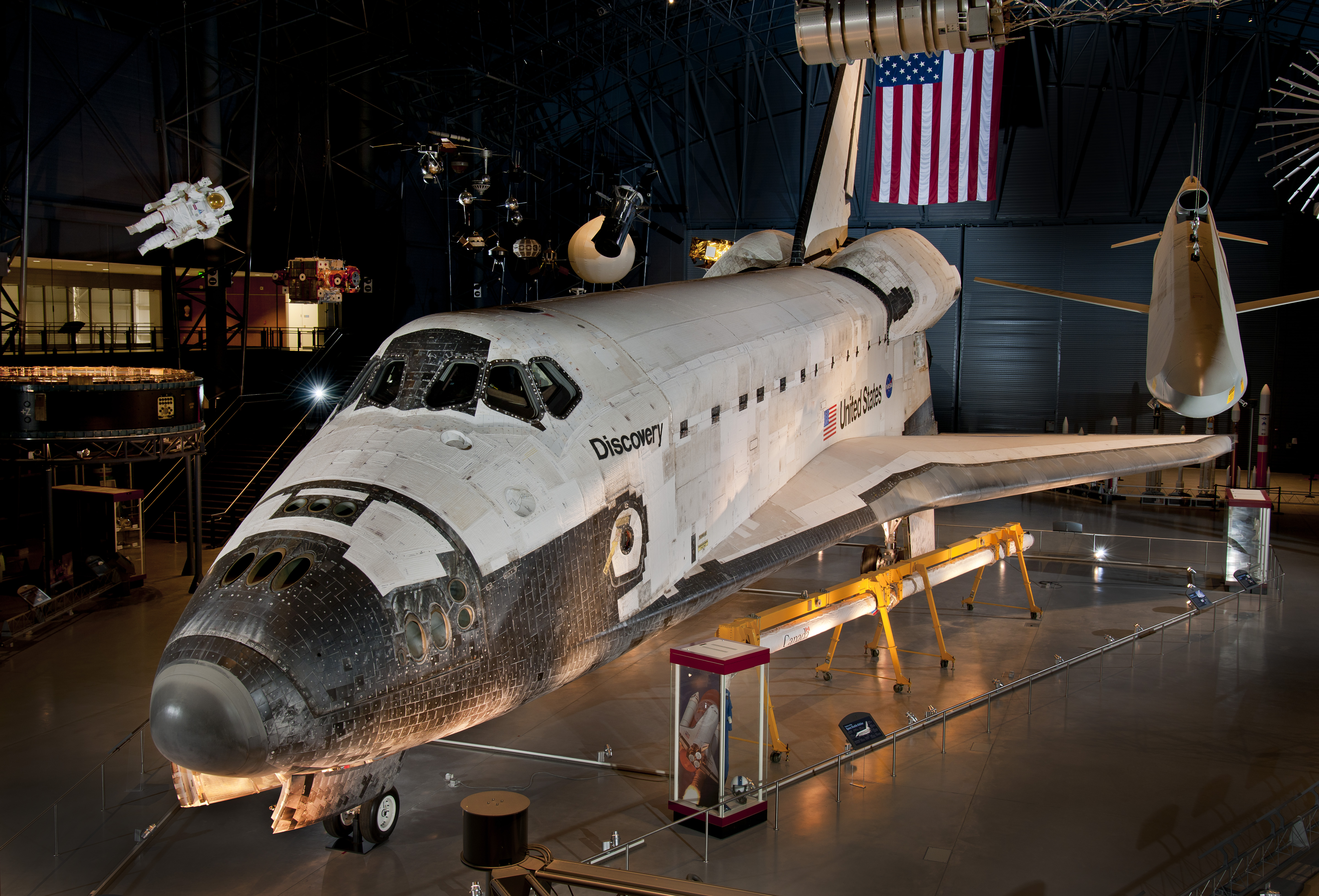
    Space Shuttle orbiter Discovery on display in the McDonnell Space Hangar at the Steven F. Udvar-Hazy Center

    Human Spaceflight

    Space Shuttle orbiter Discovery on display in the McDonnell Space Hangar at the Steven F. Udvar-Hazy Center

    Human Spaceflight

    arrow-up Back to top
    Home
    • Facebook facebook
    • Instagram instagram
    • LinkedIn linkedin
    • YouTube youtube

    • Contact Us
    • Get Involved
    • Shop Online
    • Job Opportunities
    • Equal Opportunity
    • Inspector General
    • Records Requests
    • Accessibility
    • Host Your Event
    • Press Room
    • Privacy
    • Terms of Use