
Object Details
Manufacturer
Nakajima Hikoki K. K.
Physical Description
Type: Reciprocating, 18 cylinders, 2 rows, radial, air-cooled
Power rating: 1,357 kW (1,820 hp) at 2,900 rpm
Displacement: 35.9 L (2,195 cu in)
Bore and Stroke: 130 mm (5.1 in.) x 150 mm (5.9 in.)
Weight: 830 kg (1,830 lb)
Summary
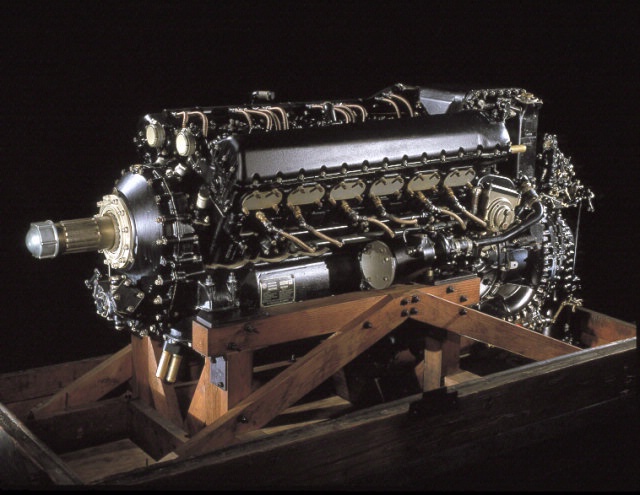
This Japanese Navy and Air Force engine is the type that powered World War II Allied Code Names George, Sam, Rita, and Frank aircraft. After overcoming some initial reliability problems including vibration and difficult servicing, the Nakajima Homare became the most important 18-cylinder Japanese engine toward the end of the war. Between 1941 and 1945, a total of 8,771 engines of all models of the Homare 10 and 20 series were manufactured.
A very compact design, it had a very high specific output, but had difficulty providing rated power at altitude. For the first time in a Japanese engine, it incorporated a steel crankcase, dynamic balancers, a dual magneto with a remote distributor (on the nose), and a nose sump pump. Its supercharger drive followed the Wright Aeronautical design, with a planetary reduction gear in series with the high gear for obtaining a lower compression ratio, and was equipped with water-methanol injection.
Credit Line
Transferred from the U.S. Navy, Naval Supply Center, Cheatham Annex, Williamsburg, Virginia
Date
Circa World War II
Inventory Number
A19731552000
Restrictions & Rights
Usage conditions apply
Type
PROPULSION-Reciprocating & Rotary
Materials
Aluminum
Steel
Natural Fabric
Copper Alloy
Cadmium Plating
Phenolic Resin
Plastic
Paint
Magnesium Alloy
Dimensions
Approximate: 148.6 × 195.6 × 246.4cm (58 1/2 × 77 × 97 in.)
Storage: 292.1 × 139.7 × 152.4cm (115 × 55 × 60 in.)
Overall: 46 7/16in., 1829.8lb. (118cm, 830kg)
Other: 46 7/16 x 70 1/4in. (118 x 178.5cm)
Country of Origin
Japan
See more items in
National Air and Space Museum Collection
Data Source
National Air and Space Museum
Link to Original Record
Record ID
nasm_A19731552000