Skip to main content Skip to main navigation
heart-solid My Visit Donate
Home Smithsonian Institution IK development site for ODI
Press Enter to activate a submenu, down arrow to access the items and Escape to close the submenu.
    • Overview
    • Museums and Zoo
    • Entry and Guidelines
    • Museum Maps
    • Dine and Shop
    • Accessibility
    • Visiting with Kids
    • Group Visits
    • Overview
    • Exhibitions
    • Online Events
    • All Events
    • IMAX & Planetarium
    • Overview
    • Topics
    • Collections
    • Research Resources
    • Stories
    • Podcasts
    • Overview
    • For Caregivers
    • For Educators
    • For Students
    • For Academics
    • For Lifelong Learners
    • Overview
    • Become a Member
    • Renew Membership
    • Make a Gift
    • Volunteer
    • Overview
    • Our Organization
    • Our Leadership
    • Reports and Plans
    • Newsdesk
heart-solid My Visit Donate

Engine, Kugisho Ne-20, Naval Air Technical Arsenal Turbojet

Air and Space Museum

There are restrictions for re-using this image. For more information, visit the Smithsonian's Terms of Use page .
International media Interoperability Framework
IIIF provides researchers rich metadata and media viewing options for comparison of works across cultural heritage collections. Visit the IIIF page to learn more.
View manifest View in Mirador Viewer

Object Details

Physical Description

Type: Turbojet
Thrust: 4,657 N (1,047 lb) at 11,000 rpm
Compressor: 8-stage axial
Combustor: Annular
Turbine: Single-stage axial
Weight: 470 kg (1,035 lb)

Summary

The Naval Air Technical Arsenal, Kugisho, designed and manufactured the Ne-20 for Japan's first jet aircraft capable of taking off under its own power, the Nakajima Kikka (Orange Blossom). The project was a hurried response to Japan's loss of air superiority at the 1944 Battle of the Marianas. The Ne-20 was an indigenous design, but the German BMW 003 turbojet engine was a major influence.
The first flight of the twin-engine Kikka was on August 7, 1945. Test pilots attempted a second flight before the Japanese surrender on August 15. Only a few of the engines under construction were saved. This one was removed from the second aircraft prototype, which was confiscated by American forces at the end of World War II.

Credit Line

Transferred from the U.S. Navy

Date

1945

Inventory Number

A19610121003

Restrictions & Rights

Usage conditions apply

Type

PROPULSION-Turbines (Jet)

Materials

Steel
Aluminum
Rubber
Plywood
Fabric
Paint
Unknown Coating or Plating

Dimensions

3-D (engine on stand): 337.5 × 88.9 × 121.9cm (11 ft. 7/8 in. × 35 in. × 48 in.)
Storage: 88.9 × 337.5 × 134.6cm (35 in. × 11 ft. 7/8 in. × 53 in.)

Country of Origin

Japan

See more items in

National Air and Space Museum Collection

Data Source

National Air and Space Museum

Metadata Usage

Not determined

Link to Original Record

http://n2t.net/ark:/65665/nv908d420b4-56f7-43ef-8643-37614802eb89

Record ID

nasm_A19610121003

Discover More

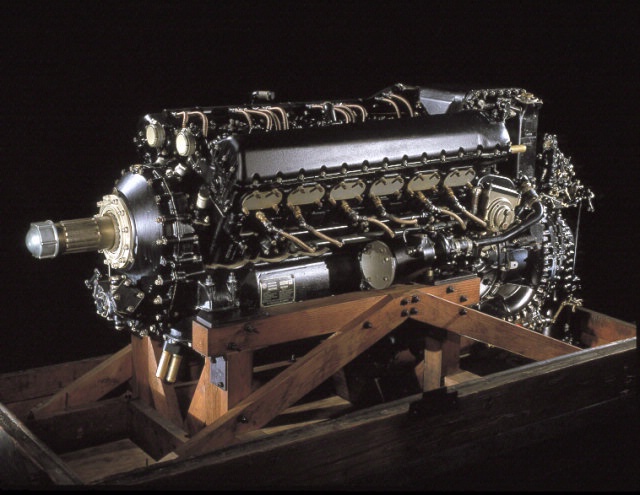
Image of Packard Merlin V-1650-7 engine

Propulsion

Image of Packard Merlin V-1650-7 engine

Propulsion

arrow-up Back to top
Home
  • Facebook facebook
  • Instagram instagram
  • LinkedIn linkedin
  • YouTube youtube

  • Contact Us
  • Get Involved
  • Shop Online
  • Job Opportunities
  • Equal Opportunity
  • Inspector General
  • Records Requests
  • Accessibility
  • Host Your Event
  • Press Room
  • Privacy
  • Terms of Use