
Object Details
Manufacturer
Radio Corporation of America
Summary
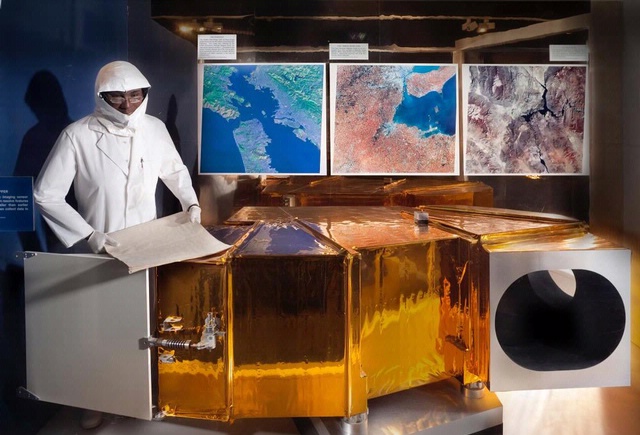
TIROS (Television Infrared Observation Satellite) I, launched in April 1960, was the world's first weather satellite. TIROS imaged large swaths of the Earth's surface, allowing forecasters and scientists to see directly for the first time the large-scale features of our planet's weather systems. Operating for three months, the satellite transmitted thousands of images of cloud patterns and other phenomena to ground stations.
This is an engineering model assembled from spare components of the magnetic tape data recorder flown on Tiros I, the first weather satellite. The instrument was designed to record television images gathered by the satellite's sensors and later, as the spacecraft passed over Earth ground stations, play back the data. This technology provided the first television images from space.
Lockheed Martin donated this artifact to the Museum in 1998.
Credit Line
Gift of Lockheed Martin
Inventory Number
A19980293000
Restrictions & Rights
Usage conditions apply
Type
SPACECRAFT-Uncrewed-Instruments & Payloads
Materials
Overall: aluminum, ceramics, palstics, copper
Dimensions
Overall: 7 in. tall (17.8cm)
Other: 13 in. diameter x 7 in. tall (33 x 17.8cm)
Country of Origin
United States of America
See more items in
National Air and Space Museum Collection
Location
Steven F. Udvar-Hazy Center in Chantilly, VA
Hangar
James S. McDonnell Space Hangar
Data Source
National Air and Space Museum
Link to Original Record
Record ID
nasm_A19980293000