Skip to main content Skip to main navigation
heart-solid My Visit Donate
Home Smithsonian Institution IK development site for ODI
Press Enter to activate a submenu, down arrow to access the items and Escape to close the submenu.
    • Overview
    • Museums and Zoo
    • Entry and Guidelines
    • Museum Maps
    • Dine and Shop
    • Accessibility
    • Visiting with Kids
    • Group Visits
    • Overview
    • Exhibitions
    • Online Events
    • All Events
    • IMAX & Planetarium
    • Overview
    • Topics
    • Collections
    • Research Resources
    • Stories
    • Podcasts
    • Overview
    • For Caregivers
    • For Educators
    • For Students
    • For Academics
    • For Lifelong Learners
    • Overview
    • Become a Member
    • Renew Membership
    • Make a Gift
    • Volunteer
    • Overview
    • Our Organization
    • Our Leadership
    • Reports and Plans
    • Newsdesk
heart-solid My Visit Donate

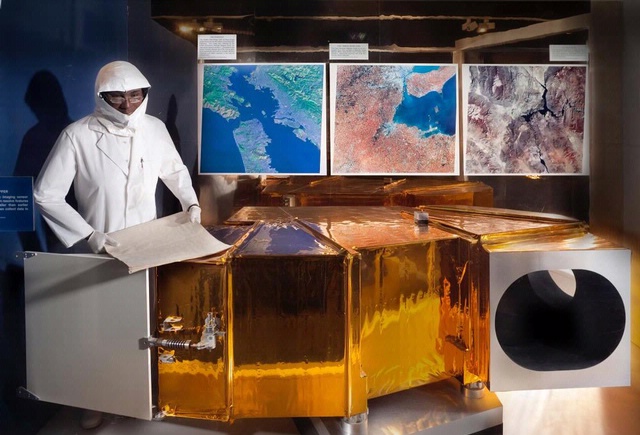
Communications Satellite, Courier

Air and Space Museum

There are restrictions for re-using this image. For more information, visit the Smithsonian's Terms of Use page .
International media Interoperability Framework
IIIF provides researchers rich metadata and media viewing options for comparison of works across cultural heritage collections. Visit the IIIF page to learn more.
View manifest View in Mirador Viewer

    Object Details

    Manufacturer

    Philco Corp.

    Summary

    The Courier program was one of the first attempts to evaluate the possibility of communications via satellite. Managed by the Army Signal Research and Development Laboratory, Courier was the successor to that agency's 1958 Score satellite, the first communications spacecraft.
    Courier had one launch failure before a successful mission in October 1960, lasting 17 days. The satellite's primary purpose was to test basic techniques in communications. Courier could actively receive and transmit signals, or, using tape recorders, it could "store-and-dump" information as the satellite passed from one ground station to the next as it proceeded along its orbit.
    The Museum's artifact is a prototype and was transferred from the U.S. Army to the Smithsonian in 1965. Notice the solar cells (the blue rectangles) on the exterior of the satellite--they helped to provide power essential for satellite operations. The exterior is partially cut away to reveal the satellite's electronics.

    Credit Line

    Transferred from the United States Army

    Inventory Number

    A19960018000

    Restrictions & Rights

    Usage conditions apply

    Type

    SPACECRAFT-Uncrewed

    Materials

    Phenolic Resin
    Photovoltaic Panels
    Aluminum
    Wood
    Paint
    Steel
    Copper Alloy
    Plastic
    Rubber
    Paper
    Ink
    Adhesive

    Dimensions

    3-D (On base minus antennas): 144.8 × 132.1 × 154.9cm (57 × 52 × 61 in.)
    Storage (Housed in Artex wooden crate): 167 × 151.1 × 183.5cm, 449.1kg (65 3/4 × 59 1/2 × 72 1/4 in., 990lb.)

    Country of Origin

    United States of America

    See more items in

    National Air and Space Museum Collection

    Data Source

    National Air and Space Museum

    Metadata Usage

    Not determined

    Link to Original Record

    http://n2t.net/ark:/65665/nv9e8bc0636-e1a3-45e7-af9b-b4e2262e0006

    Record ID

    nasm_A19960018000

    Discover More

    Civilian Application Satellites Object Group

    Civilian Application Satellites

    Civilian Application Satellites Object Group

    Civilian Application Satellites

    arrow-up Back to top
    Home
    • Facebook facebook
    • Instagram instagram
    • LinkedIn linkedin
    • YouTube youtube

    • Contact Us
    • Get Involved
    • Shop Online
    • Job Opportunities
    • Equal Opportunity
    • Inspector General
    • Records Requests
    • Accessibility
    • Host Your Event
    • Press Room
    • Privacy
    • Terms of Use