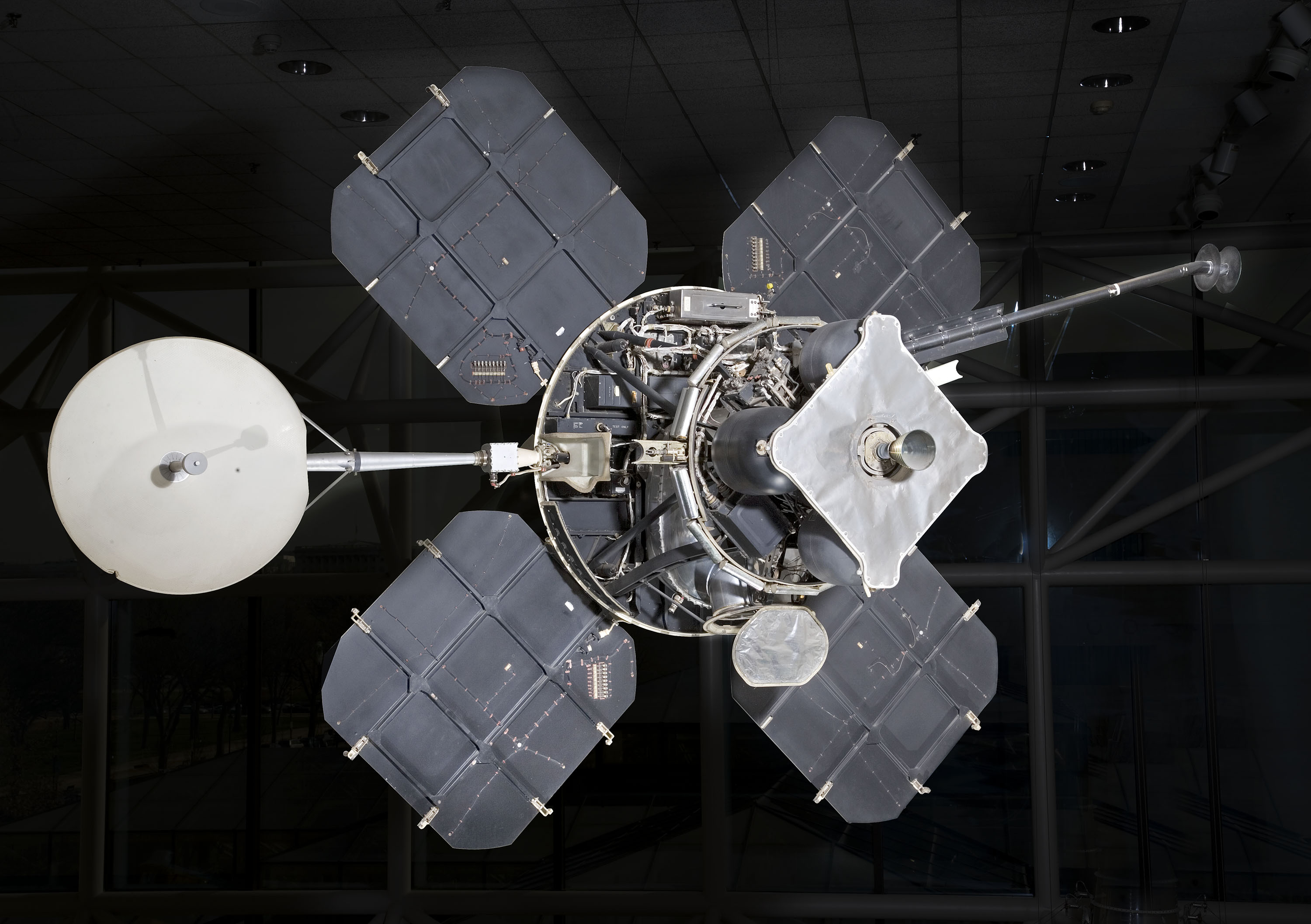
Object Details
Manufacturer
Lockheed Martin Missile and Space Corporation
Summary
Stardust was the first U.S. space mission dedicated solely to returning extraterrestrial material from beyond the Moon. It collected samples from Comet Wild 2 and interstellar dust. Launched in 1999, it returned to Earth seven years later, parachuting to a landing in the Utah desert in 2006.
The Stardust return system has six major components: a heat shield, back shell, sample canister, sample collector grids, parachute system, and avionics. The canister containing the samples was sealed in an exterior shell that protected them from the heat of reentering Earth's atmosphere. The material Stardust returned may date from the formation of the solar system. Scientific studies of the samples are altering our understanding of the universe. One major discovery is that ice-rich comets, the coldest and most distant bodies in the solar system, also contain fragments of materials.
NASA transferred Stardust to the Museum in 2008.
Long Description
Stardust
Comet Sample Return Capsule
Stardust was the first U.S. space mission dedicated solely to returning extraterrestrial material from outside the Earth-Moon orbit. Its main goal was to collect samples from Comet Wild 2 and interstellar dust. Launched on February 7, 1999, Stardust flew nearly 3 billion miles before returning to Earth and parachuting to a landing in the Utah desert on January 15, 2006.
The Stardust return system has six major components: a heat shield, backshell, sample canister, sample collector grid with aerogel (shown here deployed for flight as it passed through cometary clouds and rotated 180 degrees for display with the dust impact side facing toward the viewer ), parachute system, and avionics. The samples were sealed in an aluminum canister encased in an exterior shell composed of ablative materials to protect them from the heat of re-entry into the Earth's atmosphere. Stardust made the fastest atmospheric entry of a human-made object at about 29,000 miles per hour.
Stardust also carried several other science packages that remain in space aboard the central vehicle. The sample return capsule brought back material that may date from the formation of the solar system. Those cometary and interstellar dust samples have gone to scientists worldwide, and results from their study are altering our understanding of the universe. One of the major scientific findings of the mission is that ice-rich comets also contain fragments of high temperature materials.
Transferred from NASA
Alternate Name
Stardust Capsule
Key Accomplishment(s)
First Comet Sample Return Mission
Brief Description
Stardust was the first U.S. space mission dedicated solely to returning extraterrestrial material from beyond the Moon. It collected samples from Comet Wild 2 and interstellar dust. Launched in 1999, it returned to Earth seven years later, landing in the Utah desert in 2006.
Credit Line
Transferred from NASA, Lyndon B. Johnson Space Center.
Inventory Number
A20080417000
Restrictions & Rights
CC0
Type
SPACECRAFT-Uncrewed
Materials
Aluminum, ablative aeroshell, electronics
Dimensions
Overall: 86.36 x 157.48 x 81.28cm, 45.8kg (2ft 10in. x 5ft 2in. x 2ft 8in., 101lb.)
Country of Origin
United States of America
See more items in
National Air and Space Museum Collection
Location
National Air and Space Museum in Washington, DC
Exhibition
Kenneth C. Griffin Exploring the Planets Gallery
Data Source
National Air and Space Museum
Link to Original Record
Record ID
nasm_A20080417000