Skip to main content Skip to main navigation
heart-solid My Visit Donate
Home Smithsonian Institution IK development site for ODI
Press Enter to activate a submenu, down arrow to access the items and Escape to close the submenu.
    • Overview
    • Museums and Zoo
    • Entry and Guidelines
    • Museum Maps
    • Dine and Shop
    • Accessibility
    • Visiting with Kids
    • Group Visits
    • Overview
    • Exhibitions
    • Online Events
    • All Events
    • IMAX & Planetarium
    • Overview
    • Topics
    • Collections
    • Research Resources
    • Stories
    • Podcasts
    • Overview
    • For Caregivers
    • For Educators
    • For Students
    • For Academics
    • For Lifelong Learners
    • Overview
    • Become a Member
    • Renew Membership
    • Make a Gift
    • Volunteer
    • Overview
    • Our Organization
    • Our Leadership
    • Reports and Plans
    • Newsdesk
heart-solid My Visit Donate

Capsule, Mercury #14

Air and Space Museum

There are restrictions for re-using this image. For more information, visit the Smithsonian's Terms of Use page .
International media Interoperability Framework
IIIF provides researchers rich metadata and media viewing options for comparison of works across cultural heritage collections. Visit the IIIF page to learn more.
View manifest View in Mirador Viewer

    Object Details

    Manufacturer

    McDonnell Aircraft Corp.

    Summary

    Mercury capsule #14 was one of twenty spacecraft built for the first American human spaceflight program. It was launched twice by Little Joe rockets to simulate escapes from failed boosters. On the first launch (LJ-5A) from Wallops Island, VA, on March 18, 1961, the launch escape tower fired prematurely and failed to carry the craft away from the rocket. A backup system using the retrorockets separated the craft from the booster. A second attempt (LJ-5B) was conducted on April 28, 1961, and the launch escape system functioned as planned even though the trajectory was too low and the aerodynamic pressures were higher than planned.
    The spacecraft was subsequently used for explosive-hatch and parachute-system tests from 1961 to 1963. Beginning around 1968 it was exhibited on a Little Joe booster near the NASA Langley Research Center for many years. In 1971 NASA transferred title to the Smithsonian.

    Credit Line

    Transferred from the National Aeronautics and Space Administration

    Inventory Number

    A19711521000

    Restrictions & Rights

    Usage conditions apply

    Type

    SPACECRAFT-Crewed-Test Vehicles

    Materials

    Skin & Structure: Titanium, Beryllium tiles on nose
    Shingles: Nickel-steel alloy; Beryllium shingles removed
    Ablation Shield: Glass fibers, resin

    Dimensions

    Overall: 90 in. tall (228.6cm)
    Support (at base): 76 in. diameter(193.1cm)
    Other: 90in. (228.6cm)

    Country of Origin

    United States of America

    See more items in

    National Air and Space Museum Collection

    Data Source

    National Air and Space Museum

    Metadata Usage

    Not determined

    Link to Original Record

    http://n2t.net/ark:/65665/nv9e953649b-2920-4b83-8169-f4ee7e0fe123

    Record ID

    nasm_A19711521000

    Discover More

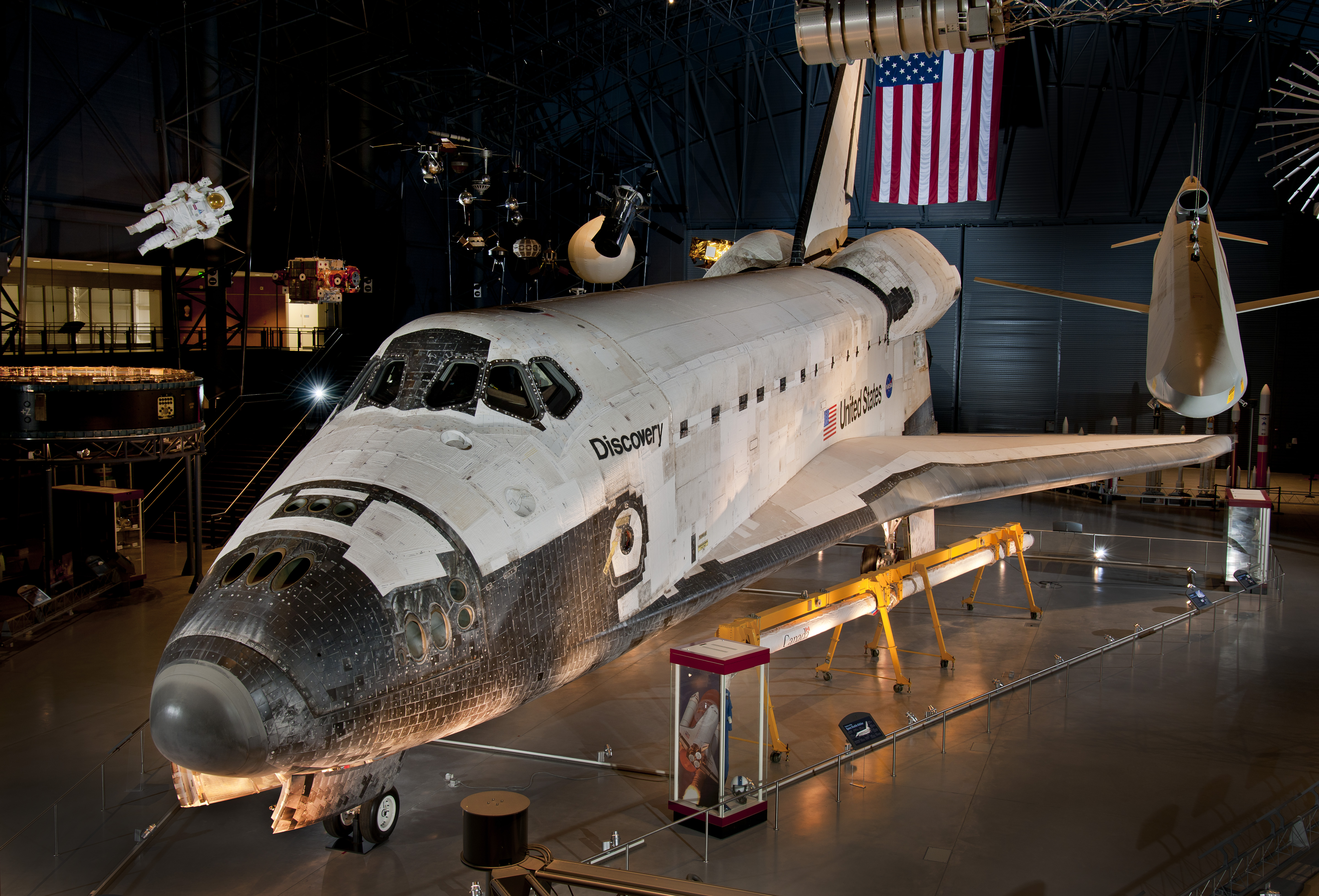
    Space Shuttle orbiter Discovery on display in the McDonnell Space Hangar at the Steven F. Udvar-Hazy Center

    Human Spaceflight

    Space Shuttle orbiter Discovery on display in the McDonnell Space Hangar at the Steven F. Udvar-Hazy Center

    Human Spaceflight

    arrow-up Back to top
    Home
    • Facebook facebook
    • Instagram instagram
    • LinkedIn linkedin
    • YouTube youtube

    • Contact Us
    • Get Involved
    • Shop Online
    • Job Opportunities
    • Equal Opportunity
    • Inspector General
    • Records Requests
    • Accessibility
    • Host Your Event
    • Press Room
    • Privacy
    • Terms of Use