Skip to main content Skip to main navigation
heart-solid My Visit Donate
Home Smithsonian Institution IK development site for ODI
Press Enter to activate a submenu, down arrow to access the items and Escape to close the submenu.
    • Overview
    • Museums and Zoo
    • Entry and Guidelines
    • Museum Maps
    • Dine and Shop
    • Accessibility
    • Visiting with Kids
    • Group Visits
    • Overview
    • Exhibitions
    • Online Events
    • All Events
    • IMAX & Planetarium
    • Overview
    • Topics
    • Collections
    • Research Resources
    • Stories
    • Podcasts
    • Overview
    • For Caregivers
    • For Educators
    • For Students
    • For Academics
    • For Lifelong Learners
    • Overview
    • Become a Member
    • Renew Membership
    • Make a Gift
    • Volunteer
    • Overview
    • Our Organization
    • Our Leadership
    • Reports and Plans
    • Newsdesk
heart-solid My Visit Donate

ATM, Coronagraph

Air and Space Museum

There are restrictions for re-using this image. For more information, visit the Smithsonian's Terms of Use page .
International media Interoperability Framework
IIIF provides researchers rich metadata and media viewing options for comparison of works across cultural heritage collections. Visit the IIIF page to learn more.
View manifest View in Mirador Viewer

Object Details

Manufacturer

Ball Aerospace Systems Division

Summary

This is the flight design verification unit (FDVU) of the white light coronagraph, one of the principal Apollo Telescope Mount (ATM) instruments on Skylab. It studied the sun's outer atmosphere, its corona. The coronagraph photographically monitored the brightness of the solar corona over a wavelength range from 3500 to 7000 Angstroms. Prior to building the actual flight unit, Ball Aerospace Systems of Boulder, Colorado, constructed two working models of the telescope, an engineering prototype and the FDVU. The FDVU was used at the High Altitude Observatory (HAO) at the National Center for Atmospheric Research to test new instrument concepts. It may have flown once in a balloon-borne test. In 1982 the engineering prototype was transferred from the Marshall Space Flight Center to HAO. The latter then transferred the FDVU to NASM in March 1983.

Credit Line

Transferred from the National Center for Atmospheric Research

Inventory Number

A19830169000

Restrictions & Rights

Usage conditions apply

Type

INSTRUMENTS-Scientific

Materials

HAZMAT: Possible Cadmium Plating
Mixed lightweight metals, glass, electronic components; Aluminum, Copper, Epoxy, Kapton (Polymide), Rubber (silicone), Plastic, Steel, Gold Plating, Glass, Acrylic (Plexiglas)

Dimensions

3-D (Aluminum Pallet Storage): 366.4 × 121.9 × 144.8cm, 321.6kg (12 ft. 1/4 in. × 4 ft. × 4 ft. 9 in., 709lb.)
3-D (Container, Coronagraph ATM): 349.9 × 83.8 × 129.5cm, 237.7kg (11 ft. 5 3/4 in. × 2 ft. 9 in. × 4 ft. 3 in., 524lb.)
3-D (Weight includes original container): 315 × 53.3 × 55.9cm, 617.8kg (10 ft. 4 in. × 1 ft. 9 in. × 1 ft. 10 in., 1362lb.)

Country of Origin

United States of America

See more items in

National Air and Space Museum Collection

Data Source

National Air and Space Museum

Metadata Usage

Not determined

Link to Original Record

http://n2t.net/ark:/65665/nv99d26349d-19dd-44ca-b5d0-e83e407b2246

Record ID

nasm_A19830169000

Discover More

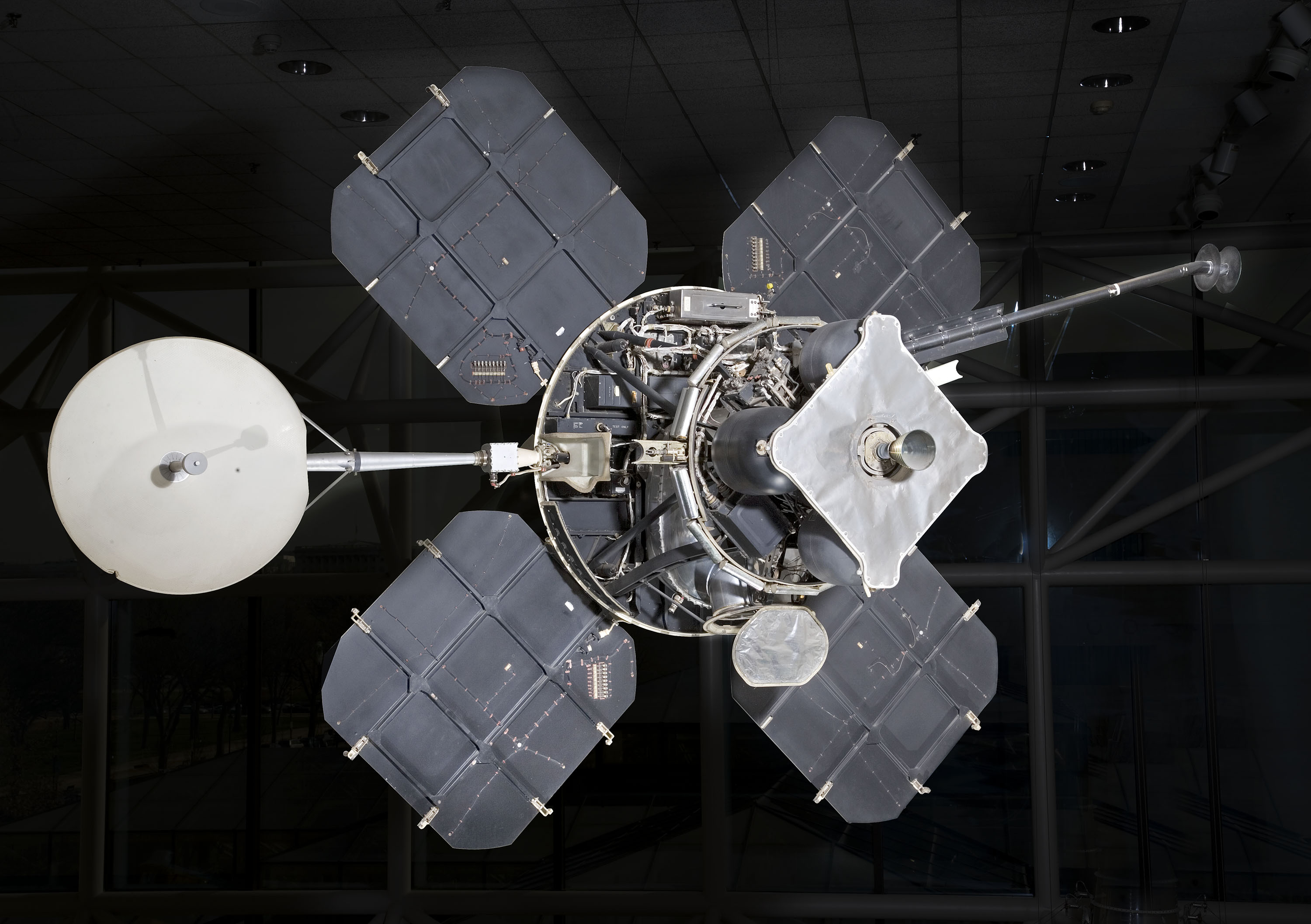
Lunar orbiter on display

Space Science

solar wall

Our Star: Our Sun

Lunar orbiter on display

Space Science

arrow-up Back to top
Home
  • Facebook facebook
  • Instagram instagram
  • LinkedIn linkedin
  • YouTube youtube

  • Contact Us
  • Get Involved
  • Shop Online
  • Job Opportunities
  • Equal Opportunity
  • Inspector General
  • Records Requests
  • Accessibility
  • Host Your Event
  • Press Room
  • Privacy
  • Terms of Use