
Object Details
Manufacturer
TRW
Summary
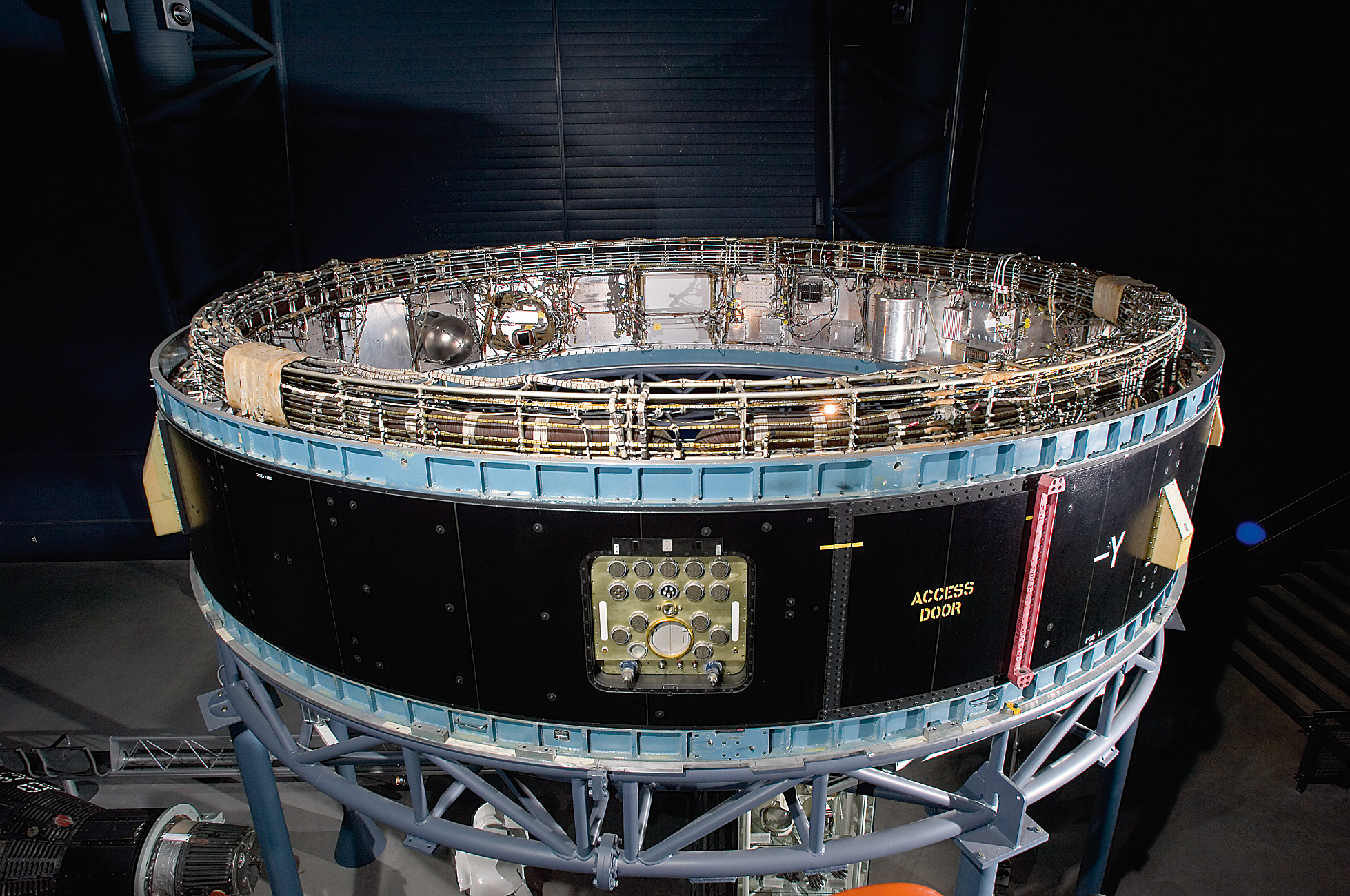
This is an unflown example of the computer used in the backup system, built by TRW, for guidance and control of the Lunar Module. The system was dedicated to the minimum guidance and control functions required in case of a landing abort or failure of the primary system. However, as the Apollo program evolved, the system became more versatile, and the astronauts were able to communicate with it through a display located on the right side of the LM cockpit. The AES was one of the first spacecraft systems to use "strapdown" gyroscope technology.
Because this computer was specified for Apollo a few years after the main Apollo Guidance Computer design was frozen, it was in some ways a more advanced machine, although it was never ingtended to have the general capabilities of the main AGC. Its designers were able to take advantage of the rapid advances in microelectronics then being developed in the region south of San Francisco later known as "Silicon Valley." For example, it was able to use a more advanced type of integrated circuit, supplied by the Signetics Corporation of Sunnyvale, CA.
This unit, stored in its custom-designed handling fixture, is identical to those installed on flown Lunar Modules. Because of the design of Apollo missions, no flown systems returned to Earth.
Transferred from the National Aeronautics and Space Administration.
Credit Line
Transferred from National Aeronautics and Space Administration
Inventory Number
A19850016000
Restrictions & Rights
Usage conditions apply
Type
SPACECRAFT-Crewed-Guidance & Control
Materials
Aluminum, Plastic, Paint, Rubber (Silicone), Steel, Stainless Steel, Brass, Paper, Gold Plating, Teflon, Glass
Dimensions
Storage (Rehoused on an aluminum pallet): 122.6 × 122.6 × 88.9cm, 88.5kg (48 1/4 × 48 1/4 × 35 in., 195lb.)
Country of Origin
United States of America
See more items in
National Air and Space Museum Collection
Data Source
National Air and Space Museum
Link to Original Record
Record ID
nasm_A19850016000