
Lesser Kudu Dies at Smithsonian’s National Zoo
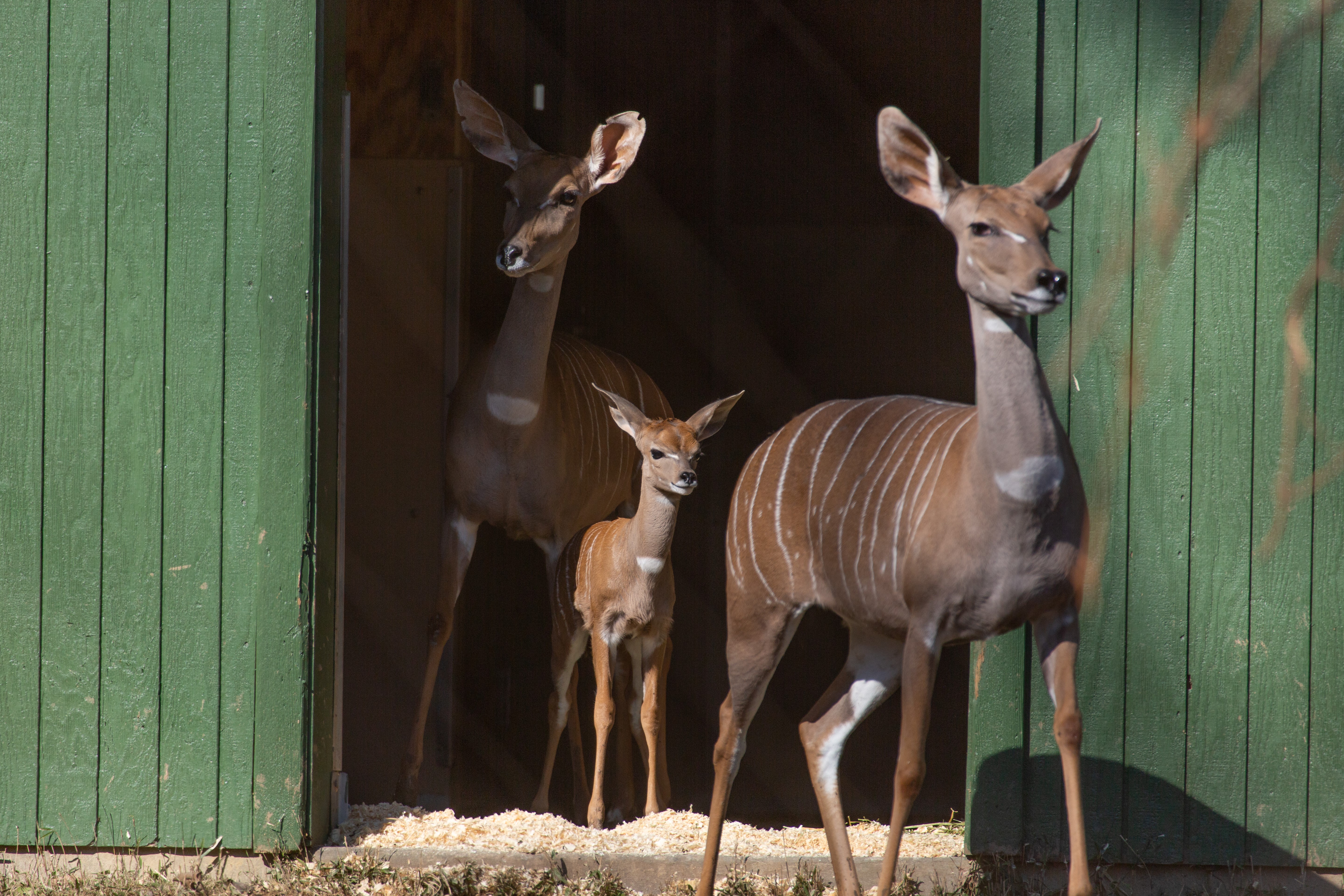
Lesser kudu Shirley (right) with her grandson, Kushukuru (middle), and daughter, Rogue (left).
Credit: Roshan Patel, Smithsonian’s National Zoo
Media Contact
Jen Zoon
Cheetah Conservation Station keepers at the Smithsonian’s National Zoo are mourning the loss of a female lesser kudu named Shirley, who died Sept. 28 following complications during the birthing process. She was 9 years old. In human care, the median life expectancy of female lesser kudus is around 5 years but can be as long as 18 years; in the wild, the median life expectancy of this species is unknown. A full pathology report will provide more information in the coming weeks.
Upon their arrival at the Zoo Saturday morning, Sept. 28, keepers noticed that Shirley was exhibiting signs of labor. They monitored her closely throughout the morning and became concerned when they observed her pass part of the birth sack, but the delivery did not follow. Keepers called the Zoo’s veterinarians, who anesthetized Shirley so they could determine the health status of the calf. Initial evaluation revealed that the calf was deceased and improperly positioned for birthing—its head was flexed backwards over its back. Veterinarians repositioned the stillborn calf and delivered it through the birth canal. Shortly after delivery, Shirley experienced cardiac arrest. Despite attempts to resuscitate Shirley, the veterinary team was unfortunately unable to revive her.
Shirley arrived at the Zoo in October 2016 from the St. Louis Zoo in Missouri. Most of the Zoo’s animals participate in the Association of Zoos and Aquariums’ Species Survival Plan (SSP). The SSP scientists determine which animals to breed by considering their genetic makeup, nutritional and social needs, temperament and overall health. Shirley had a recommendation to breed with the Zoo’s adult male lesser kudu, Garrett. Although she became pregnant twice, both fetuses unfortunately died in utero following eight-month-long (full-term) gestations. In addition to Garrett, she shared her exhibit with her eldest offspring, a female named Rogue, and her grandson, Kushukuru.
Keepers fondly remember Shirley, the matriarch of the herd, as an excellent mother and grandmother who exhibited a calm demeanor—a unique characteristic for these antelopes, which tend to be quite skittish. She served as an educational animal ambassador, illustrating the social nature and behavior of lesser kudus to scientists, keepers and Zoo visitors.
Visitors can view Garrett, Rogue and Kushukuru at the Cheetah Conservation Station, along with two Abyssinian ground hornbills that share their habitat.
Native to arid and semi-arid areas of northeastern Africa, including parts of Ethiopia, Somalia, Kenya, Sudan, Uganda and Tanzania, lesser kudus are listed as near threatened by the International Union for Conservation of Nature. Lesser kudus number about 100,000 in the wild, but the population is decreasing due to habitat loss from human and livestock expansion, hunting and disease.
# # #
SI-390-2019