
Giant Panda Mei Xiang Is Not Pregnant
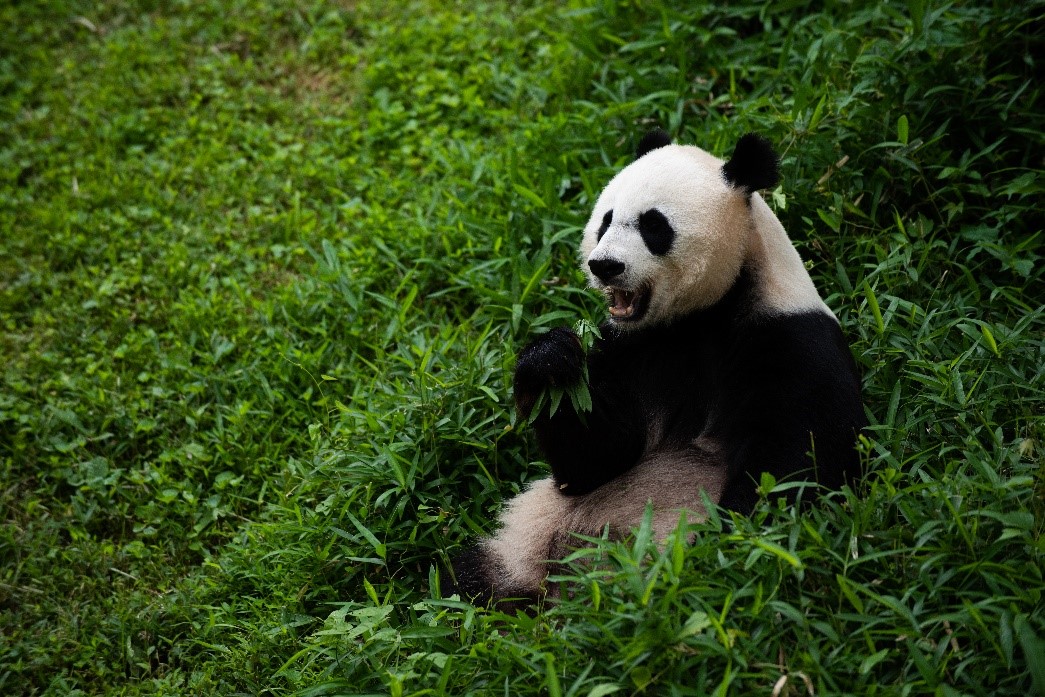
Giant panda Mei Xiang at the Smithsonian’s National Zoo.
Photo: Connor Mallon/Smithsonian’s National Zoo
Reproductive scientists, veterinarians and animal keepers at the Smithsonian’s National Zoo and Conservation Biology Institute have determined that giant panda Mei Xiang (may-SHONG) will not give birth this year. She has been experiencing a pseudopregnancy over the past several months.
Giant pandas’ behavior and hormones mimic a pregnancy even if they are experiencing a pseudopregnancy. Reproductive scientists had been tracking Mei Xiang’s hormones since she was artificially inseminated March 28. Her levels of urinary progesterone began to rise in July indicating that she would give birth to a cub or experience the final stages of a pregnancy within six to eight weeks. Her hormone levels are at baseline levels, and her behavior is slowly returning to normal. Veterinarians have also not detected a developing fetus on any ultrasounds.
The panda team has tracked Mei Xiang’s behavior closely during the past several weeks. Specially trained volunteers with Friends of the National Zoo started monitoring her overnight via the panda cams in late August, watching for specific behaviors associated with pregnancy and pseudopregnancy. She started showing behavioral changes Aug. 7, including sensitivity to noise, which prompted the panda team to close the panda house. Veterinarians conducted ultrasounds twice each week to track changes in Mei Xiang’s uterus and to try to detect a developing fetus.
Giant panda pregnancies and pseudopregnancies can last between three and six months. Mei Xiang’s denning behaviors will decrease, and keepers expect her to return to her normal routine within a few weeks.
The panda house will return to normal operating hours of 9 a.m. to 6 p.m. today, Sept. 11. Visitors are also able to see the pandas on the panda cams, which are live on the Zoo’s website 24 hours a day, seven days a week.
Mei Xiang has given birth to three surviving panda cubs with Tian Tian, all of which were born at the National Zoo. Her first cub, Tai Shan (tie-SHON), was born July 9, 2005, and now lives in China. Her second cub, Bao Bao (BOW-BOW), was born Aug. 23, 2013. Bao Bao moved to China in February 2017. On Aug. 22, 2015, Mei Xiang gave birth to her third cub, Bei Bei (BAY-BAY), who will move to China sometime in the coming months. The Zoo’s Giant Panda Cooperative Research and Breeding Agreement with the China Wildlife Conservation Association stipulates that all panda cubs born at the Zoo move to China when they are 4 years old, and the agreement for giant pandas Mei Xiang and Tian Tian is in effect until Dec. 7, 2020.
The Zoo received approval for its breeding plans from the China Wildlife Conservation Association and the U.S. Fish and Wildlife Service, which monitors giant panda research programs in the United States.
Giant pandas are listed as “vulnerable” in the wild by the International Union for Conservation of Nature. There are an estimated 1,800 in the wild. Scientists and animal care specialists at the Smithsonian’s National Zoo and Conservation Biology Institute work with scientists in China studying giant panda reproduction and cub health, habitat and disease.
The Zoo will continue to provide updates on the pandas on Facebook, Instagram and Twitter using #PandaStory and the Giant Panda e-newsletter.
# # #
SI-359-2019