Skip to main content Skip to main navigation
heart-solid My Visit Donate
Home Smithsonian Institution IK development site for ODI
Press Enter to activate a submenu, down arrow to access the items and Escape to close the submenu.
    • Overview
    • Museums and Zoo
    • Entry and Guidelines
    • Museum Maps
    • Dine and Shop
    • Accessibility
    • Visiting with Kids
    • Group Visits
    • Overview
    • Exhibitions
    • Online Events
    • All Events
    • IMAX & Planetarium
    • Overview
    • Topics
    • Collections
    • Research Resources
    • Stories
    • Podcasts
    • Overview
    • For Caregivers
    • For Educators
    • For Students
    • For Academics
    • For Lifelong Learners
    • Overview
    • Become a Member
    • Renew Membership
    • Make a Gift
    • Volunteer
    • Overview
    • Our Organization
    • Our Leadership
    • Reports and Plans
    • Newsdesk
heart-solid My Visit Donate
  1. Home
  2. forward-slash
  3. About
  4. forward-slash
  5. Newsdesk
  6. forward-slash
  7. Photos and Video
  8. forward-slash
  9. Woolly mammoth (Mammuthus primigenius)

About

  • Overview
  • Our Organization
    • Board of Regents
    • Museums and Zoo
    • Research Centers
    • Cultural Centers
    • Education Centers
    • General Counsel
    • Office of Human Resources
    • Office of Equal Opportunity
    • Office of Sponsored Projects
    • Office of Protection Services
  • Our Leadership
  • Reports and Plans
    • Annual Reports
    • Strategic Plan
    • Smithsonian Dashboard
  • Newsdesk
    • News Releases
    • Media Contacts
    • Photos and Video
    • Media Kits
    • Fact Sheets
    • Visitor Stats
    • Secretary and Admin Bios
    • Filming Requests

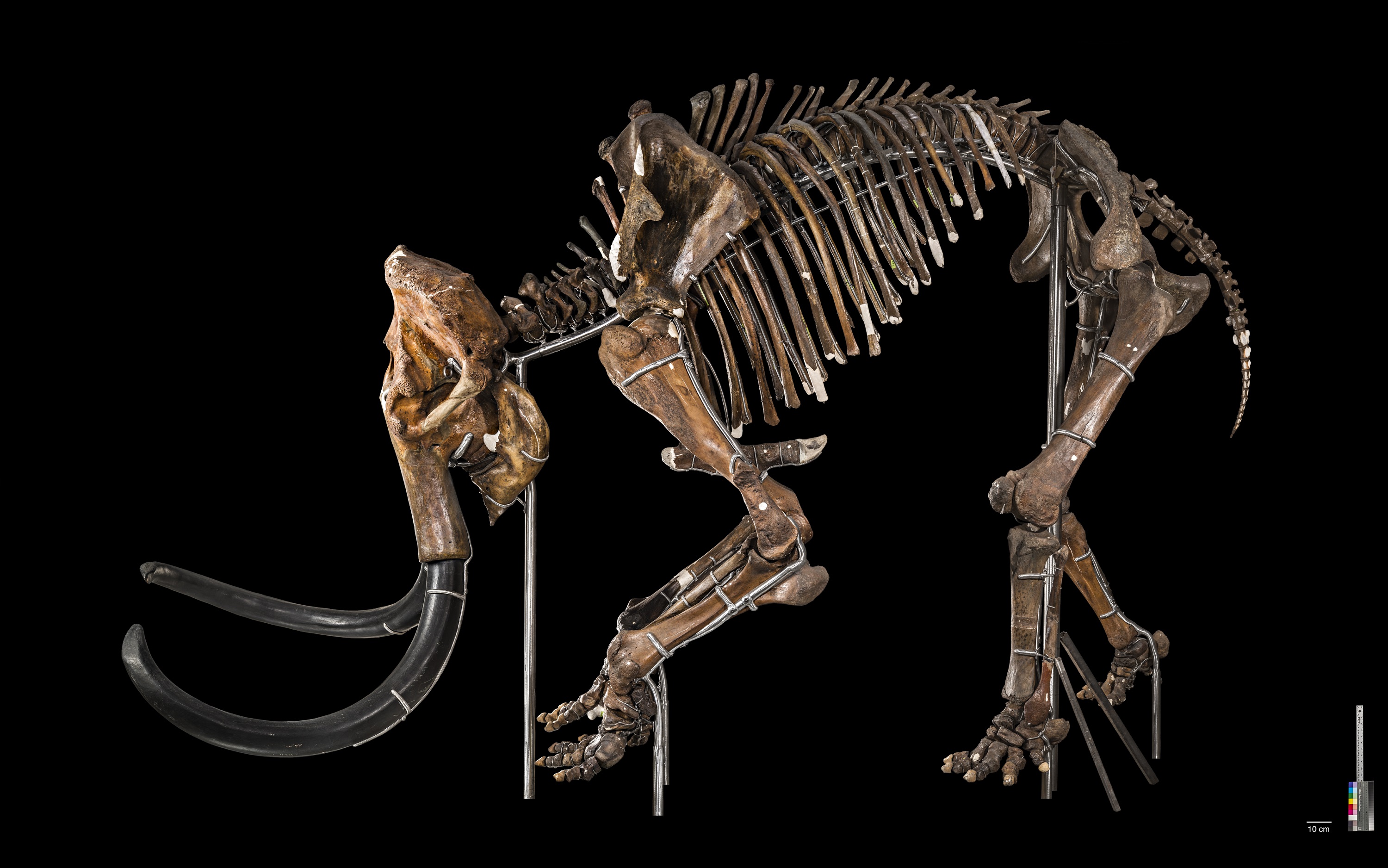
Woolly mammoth (Mammuthus primigenius)
Media Photo/Video

May 16, 2019

Woolly mammoth (Mammuthus primigenius)
download Download nhb2017-00046.jpg

Woolly mammoths (Mammuthus primigenius), perhaps the best-known mammals of the ice ages, went extinct due to a combination of shifting climate, changing food sources and a new predator—humans. Even without other factors, rapid changes in climate can drive species toward extinction. This mammoth skeleton will be on display alongside more than 700 specimens in “The David H. Koch Hall of Fossils—Deep Time."

Credit: Smithsonian Institution


Related Media

the “Irish Elk,” Megaloceros giganteus

Image

document

“Irish Elk,” Megaloceros giganteus

05.16.2019

Image

document

Fossil Palm Leaf (Sabalites sp.)

05.16.2019
Allosaurus fragilis

Image

document

Allosaurus fragilis

05.16.2019
Smilosuchus gregorii

Image

document

Smilosuchus gregorii

05.16.2019
Eurypterus remipes

Image

document

Eurypterus remipes

05.16.2019
the “Irish Elk,” Megaloceros giganteus

Image

document

“Irish Elk,” Megaloceros giganteus

05.16.2019
Allosaurus fragilis

Image

document

Allosaurus fragilis

05.16.2019
Smilosuchus gregorii

Image

document

Smilosuchus gregorii

05.16.2019
Eurypterus remipes

Image

document

Eurypterus remipes

05.16.2019

Image

document

Fossil Palm Leaf (Sabalites sp.)

05.16.2019

Related Content

  • t-rex fossil

    “The David H. Koch Hall of Fossils—Deep Time”


    The Smithsonian’s National Museum of Natural History will reopen its dinosaur and fossil hall Saturday, June 8.

    • May 16, 2019
    • Media Kit
    • Natural History Museum
    • Exhibitions
  • t-rex fossil

    National Fossil Hall To Reopen June 8 at the National Museum of Natural History

    The Smithsonian’s National Museum of Natural History will reopen its dinosaur and fossil hall Saturday, June 8.

    • May 16, 2019
    • News Release
    • Smithsonian Channel
    • Natural History Museum
    • Exhibitions
arrow-up Back to top
Home
  • Facebook facebook
  • Instagram instagram
  • LinkedIn linkedin
  • YouTube youtube

  • Contact Us
  • Get Involved
  • Shop Online
  • Job Opportunities
  • Equal Opportunity
  • Inspector General
  • Records Requests
  • Accessibility
  • Host Your Event
  • Press Room
  • Privacy
  • Terms of Use