Skip to main content Skip to main navigation
heart-solid My Visit Donate
Home Smithsonian Institution IK development site for ODI
Press Enter to activate a submenu, down arrow to access the items and Escape to close the submenu.
    • Overview
    • Museums and Zoo
    • Entry and Guidelines
    • Museum Maps
    • Dine and Shop
    • Accessibility
    • Visiting with Kids
    • Group Visits
    • Overview
    • Exhibitions
    • Online Events
    • All Events
    • IMAX & Planetarium
    • Overview
    • Topics
    • Collections
    • Research Resources
    • Stories
    • Podcasts
    • Overview
    • For Caregivers
    • For Educators
    • For Students
    • For Academics
    • For Lifelong Learners
    • Overview
    • Become a Member
    • Renew Membership
    • Make a Gift
    • Volunteer
    • Overview
    • Our Organization
    • Our Leadership
    • Reports and Plans
    • Newsdesk
heart-solid My Visit Donate
  1. Home
  2. forward-slash
  3. About
  4. forward-slash
  5. Newsdesk
  6. forward-slash
  7. Photos and Video
  8. forward-slash
  9. Tectonics Study: Zircons

About

  • Overview
  • Our Organization
    • Board of Regents
    • Museums and Zoo
    • Research Centers
    • Cultural Centers
    • Education Centers
    • General Counsel
    • Office of Human Resources
    • Office of Equal Opportunity
    • Office of Sponsored Projects
    • Office of Protection Services
  • Our Leadership
  • Reports and Plans
    • Annual Reports
    • Strategic Plan
    • Smithsonian Dashboard
  • Newsdesk
    • News Releases
    • Media Contacts
    • Photos and Video
    • Media Kits
    • Fact Sheets
    • Visitor Stats
    • Secretary and Admin Bios
    • Filming Requests

Tectonics Study: Zircons
Media Photo/Video

May 14, 2021

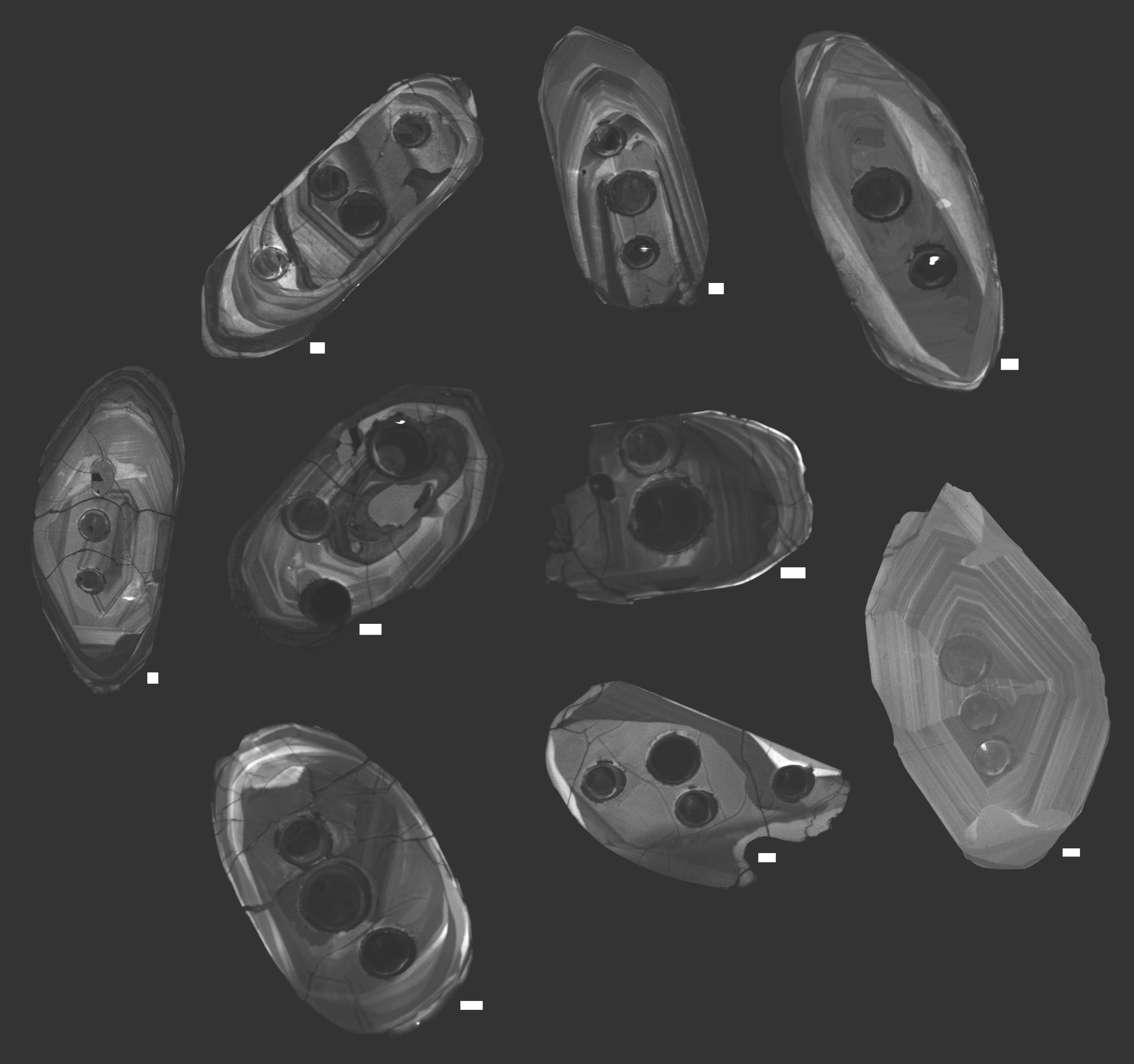
Interior of crystals seen through electron microscope
download Download a_-_6_zircons.png

Zircons studied by the research team, photographed using cathodoluminescence, a technique that allowed the team to visualize the interiors of the crystals using a specialized scanning electron microscope. Dark circles on the zircons are the cavities left by the laser that was used to analyze the age and chemistry of the zircons.

Scientists led by Michael Ackerson, a research geologist at the Smithsonian’s National Museum of Natural History, provide new evidence that modern plate tectonics, a defining feature of Earth and its unique ability to support life, emerged roughly 3.6 billion years ago. The study, published May 14 in the journal Geochemical Perspective Letters, uses zircons, the oldest minerals ever found on Earth, to peer back into the planet’s ancient past.

The team tested more than 3,500 zircons, each just a couple of human hairs wide, by blasting them with a laser and then measuring their chemical composition with a mass spectrometer. These tests revealed the age and underlying chemistry of each zircon. Of the thousands tested, about 200 were fit for study due to the ravages of the billions of years these minerals endured since their creation.

Tags
Research News

Tags

  • Natural History Museum
  • Research News

Related Media

Image

document

Tectonics Study: Jack Hills

05.14.2021

Image

document

Tectonics Study: Polished Rock

05.14.2021

Image

document

Tectonics Study: Quartz

05.14.2021

Related Content

  • Interior of crystals seen through electron microscope

    Earth’s Oldest Minerals Date Onset of Plate Tectonics to 3.6 Billion Years Ago

    Scientists led by Michael Ackerson, a research geologist at the Smit

    • May 14, 2021
    • News Release
    • Natural History Museum
    • Research News
arrow-up Back to top
Home
  • Facebook facebook
  • Instagram instagram
  • LinkedIn linkedin
  • YouTube youtube

  • Contact Us
  • Get Involved
  • Shop Online
  • Job Opportunities
  • Equal Opportunity
  • Inspector General
  • Records Requests
  • Accessibility
  • Host Your Event
  • Press Room
  • Privacy
  • Terms of Use