Skip to main content Skip to main navigation
heart-solid My Visit Donate
Home Smithsonian Institution IK development site for ODI
Press Enter to activate a submenu, down arrow to access the items and Escape to close the submenu.
    • Overview
    • Museums and Zoo
    • Entry and Guidelines
    • Museum Maps
    • Dine and Shop
    • Accessibility
    • Visiting with Kids
    • Group Visits
    • Overview
    • Exhibitions
    • Online Events
    • All Events
    • IMAX & Planetarium
    • Overview
    • Topics
    • Collections
    • Research Resources
    • Stories
    • Podcasts
    • Overview
    • For Caregivers
    • For Educators
    • For Students
    • For Academics
    • For Lifelong Learners
    • Overview
    • Become a Member
    • Renew Membership
    • Make a Gift
    • Volunteer
    • Overview
    • Our Organization
    • Our Leadership
    • Reports and Plans
    • Newsdesk
heart-solid My Visit Donate
  1. Home
  2. forward-slash
  3. About
  4. forward-slash
  5. Newsdesk
  6. forward-slash
  7. Photos and Video
  8. forward-slash
  9. The Rise of Continents: ExperimentRUTVP20

About

  • Overview
  • Our Organization
    • Board of Regents
    • Museums and Zoo
    • Research Centers
    • Cultural Centers
    • Education Centers
    • General Counsel
    • Office of Human Resources
    • Office of Equal Opportunity
    • Office of Sponsored Projects
    • Office of Protection Services
  • Our Leadership
  • Reports and Plans
    • Annual Reports
    • Strategic Plan
    • Smithsonian Dashboard
  • Newsdesk
    • News Releases
    • Media Contacts
    • Photos and Video
    • Media Kits
    • Fact Sheets
    • Visitor Stats
    • Secretary and Admin Bios
    • Filming Requests

The Rise of Continents: ExperimentRUTVP20

Media Photo/Video

May 4, 2023

Microscopic slide showing garnet and glass
download Download c_-_elizabeth_cottrell_-_experimentrutvp20-copy.png

A microscope image from an experiment conducted for this study. The image contains glass (brown), large garnets (pink) and other small mineral crystals. The field of view is 410 microns wide, about size of a sugar crystal.

A study, published today in Science, uses laboratory experiments to show that the iron-depleted, oxidized chemistry typical of Earth’s continental crust likely did not come from crystallization of the mineral garnet, as a popular explanation proposed in 2018. The iron-poor composition of continental crust is a major reason why vast portions of the Earth’s surface stand above sea level as dry land, making terrestrial life possible today.

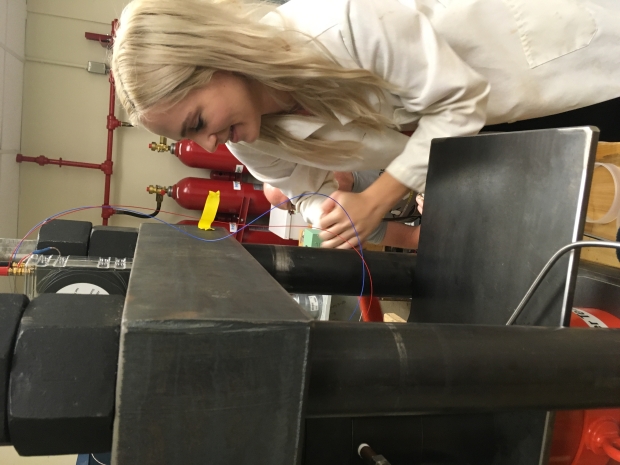
In 13 different experiments, the research team grew samples of garnet from molten rock inside a piston-cylinder press, a device designed to simulate pressure and temperature conditions inside magma chambers deep in Earth’s crust. The pressures used in the experiments ranged from 1.5 to 3 gigapascals—that is roughly 15,000 to 30,000 Earth atmospheres of pressure or 8,000 times more pressure than inside a can of soda. Temperatures ranged from 950 to 1,230 degrees Celsius, which is hot enough to melt rock.

Tags
Research News

Tags

  • Natural History Museum
  • Research News

Related Media

Earth rise photo of planet Earth on the horizon of the moon

Image

document

The Rise of Continents: Earth Rise

05.04.2023
Elizabeth Cottrell loads an experiment in her lab at Natural History

Image

document

The Rise of Continents: Elizabeth Cottrell in the lab

05.04.2023
Megan Holycross in the laboratory

Image

document

The Rise of Continents: Megan Holycross

05.04.2023
Megan Holycross in the laboratory

Image

document

The Rise of Continents: Megan Holycross-E1

05.04.2023
Holycross maneuvers an X-ray beam onto garnet samples for analysis.

Image

document

The Rise of Continents: Megan Holycross-E2

05.04.2023

Related Content

  • Earth rise photo of planet Earth on the horizon of the moon

    Study Presents New Clues About the Rise of Earth’s Continents

    Continents are part of what makes Earth uniquely habitable for life among the planets of the solar system, yet surprisingly little is understood about what gave rise to these huge pieces of the pla

    • May 4, 2023
    • News Release
    • Natural History Museum
    • Research News
arrow-up Back to top
Home
  • Facebook facebook
  • Instagram instagram
  • LinkedIn linkedin
  • YouTube youtube

  • Contact Us
  • Get Involved
  • Shop Online
  • Job Opportunities
  • Equal Opportunity
  • Inspector General
  • Records Requests
  • Accessibility
  • Host Your Event
  • Press Room
  • Privacy
  • Terms of Use