Skip to main content Skip to main navigation
heart-solid My Visit Donate
Home Smithsonian Institution IK development site for ODI
Press Enter to activate a submenu, down arrow to access the items and Escape to close the submenu.
    • Overview
    • Museums and Zoo
    • Entry and Guidelines
    • Museum Maps
    • Dine and Shop
    • Accessibility
    • Visiting with Kids
    • Group Visits
    • Overview
    • Exhibitions
    • Online Events
    • All Events
    • IMAX & Planetarium
    • Overview
    • Topics
    • Collections
    • Research Resources
    • Stories
    • Podcasts
    • Overview
    • For Caregivers
    • For Educators
    • For Students
    • For Academics
    • For Lifelong Learners
    • Overview
    • Become a Member
    • Renew Membership
    • Make a Gift
    • Volunteer
    • Overview
    • Our Organization
    • Our Leadership
    • Reports and Plans
    • Newsdesk
heart-solid My Visit Donate
  1. Home
  2. forward-slash
  3. About
  4. forward-slash
  5. Newsdesk
  6. forward-slash
  7. Photos and Video
  8. forward-slash
  9. Planet with Two Moons Orbiting a Red Dwarf Star

About

  • Overview
  • Our Organization
    • Board of Regents
    • Museums and Zoo
    • Research Centers
    • Cultural Centers
    • Education Centers
    • General Counsel
    • Office of Human Resources
    • Office of Equal Opportunity
    • Office of Sponsored Projects
    • Office of Protection Services
  • Our Leadership
  • Reports and Plans
    • Annual Reports
    • Strategic Plan
    • Smithsonian Dashboard
  • Newsdesk
    • News Releases
    • Media Contacts
    • Photos and Video
    • Media Kits
    • Fact Sheets
    • Visitor Stats
    • Secretary and Admin Bios
    • Filming Requests

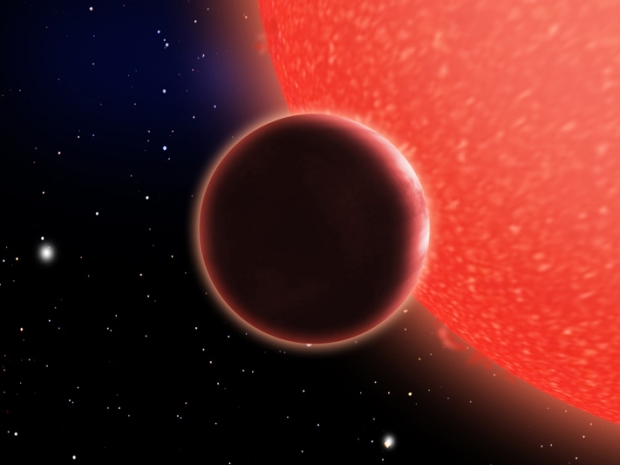
Planet with Two Moons Orbiting a Red Dwarf Star

Media Photo/Video

February 6, 2013

download Download red_dwarf_planet_cfa.jpg

This artist's conception shows a hypothetical habitable planet with two
moons orbiting a red dwarf star. Astronomers have found that 6 percent of all red dwarf stars have an Earth-sized planet in the habitable zone, which is warm enough for liquid water on the planet's surface. Since red dwarf stars are so common, then statistically the closest Earth-like planet should be only 13 light-years away.

Tags

  • Astrophysical Observatory

Related Media

Image

document

Red Dwarf Star Erupting

02.06.2013

Related Content

  • Planet Orbiting a Red Dwarf Star

    Earth-like Planets Are Right Next Door

    Using publicly available data from NASA's Kepler space telescope, astronomers at the Harvard-Smithsonian Center for Astrophysics (CfA) have found that six percent of red dwarf stars have habitable, Earth-sized planets.
    • February 6, 2013
    • News Release
    • Astrophysical Observatory
arrow-up Back to top
Home
  • Facebook facebook
  • Instagram instagram
  • LinkedIn linkedin
  • YouTube youtube

  • Contact Us
  • Get Involved
  • Shop Online
  • Job Opportunities
  • Equal Opportunity
  • Inspector General
  • Records Requests
  • Accessibility
  • Host Your Event
  • Press Room
  • Privacy
  • Terms of Use