Skip to main content Skip to main navigation
heart-solid My Visit Donate
Home Smithsonian Institution IK development site for ODI
Press Enter to activate a submenu, down arrow to access the items and Escape to close the submenu.
    • Overview
    • Museums and Zoo
    • Entry and Guidelines
    • Museum Maps
    • Dine and Shop
    • Accessibility
    • Visiting with Kids
    • Group Visits
    • Overview
    • Exhibitions
    • Online Events
    • All Events
    • IMAX & Planetarium
    • Overview
    • Topics
    • Collections
    • Research Resources
    • Stories
    • Podcasts
    • Overview
    • For Caregivers
    • For Educators
    • For Students
    • For Academics
    • For Lifelong Learners
    • Overview
    • Become a Member
    • Renew Membership
    • Make a Gift
    • Volunteer
    • Overview
    • Our Organization
    • Our Leadership
    • Reports and Plans
    • Newsdesk
heart-solid My Visit Donate
  1. Home
  2. forward-slash
  3. About
  4. forward-slash
  5. Newsdesk
  6. forward-slash
  7. Photos and Video
  8. forward-slash
  9. Pelican Spiders

About

  • Overview
  • Our Organization
    • Board of Regents
    • Museums and Zoo
    • Research Centers
    • Cultural Centers
    • Education Centers
    • General Counsel
    • Office of Human Resources
    • Office of Equal Opportunity
    • Office of Sponsored Projects
    • Office of Protection Services
  • Our Leadership
  • Reports and Plans
    • Annual Reports
    • Strategic Plan
    • Smithsonian Dashboard
  • Newsdesk
    • News Releases
    • Media Contacts
    • Photos and Video
    • Media Kits
    • Fact Sheets
    • Visitor Stats
    • Secretary and Admin Bios
    • Filming Requests

Pelican Spiders

Media Photo/Video

January 11, 2018

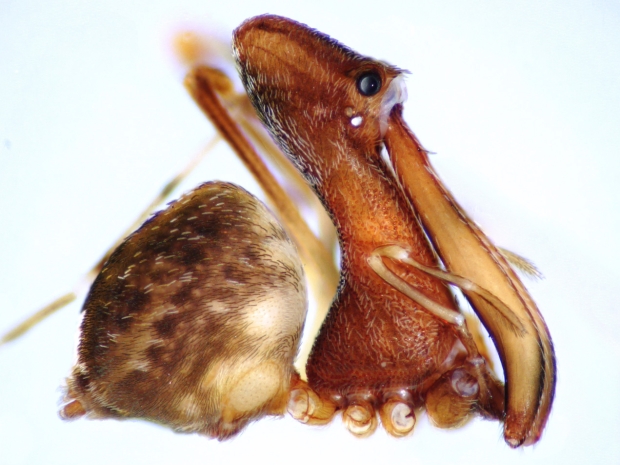
image of pelican spider to scale
download Download hannah_wood_-_bourgini_south_9001207_f_lat_cf4p3_01_stack.jpg

Eriauchenius bourgini (pictured above) is a pelican spider from Madagascar recently redescribed by the scientists. This species occurs in the central eastern part of Madagascar, but its closest relative, E. zirafy, a new species of pelican spider described by the scientists, only occurs far away in the northeastern rainforests. The distributions of these two sister species suggests that a long time ago their ancestor was widespread, then a climatic or geologic change resulted in populations becoming isolated. As time passed, these isolated populations, subject to different environments and evolutionary pressures, eventually became two separate species.

Image by Hannah Wood


Tags

  • Natural History Museum

Related Media

Close up of Pelican Spider

Image

document

Pelican Spiders

01.11.2018
Researcher Hannah Wood holds jar with specimens

Image

document

Pelican Spiders

01.11.2018
composite image of pelican spider

Image

document

Pelican Spiders

01.11.2018
composite image of pelican spider

Image

document

Pelican Spiders

01.11.2018
Mating spiders

Image

document

Pelican Spiders

01.11.2018
Male pelican spider

Image

document

Pelican Spiders

01.11.2018
Male Pelican Spider

Image

document

Pelican Spiders

01.11.2018
spider with jaws shaped like a pelican beak

Image

document

Pelican Spiders

01.11.2018

Related Content

  • Mating spiders

    Scientists Discover 18 New Spider-Hunting Pelican Spiders in Madagascar

    In 1854, a curious-looking spider was found preserved in 50 million-year-old amber. With an elongated neck-like structure and long mouthparts that protruded from the “head” like an angled beak, the arachnid bore a striking resemblance to a tiny pelican.
    • January 11, 2018
    • News Release
    • Natural History Museum
arrow-up Back to top
Home
  • Facebook facebook
  • Instagram instagram
  • LinkedIn linkedin
  • YouTube youtube

  • Contact Us
  • Get Involved
  • Shop Online
  • Job Opportunities
  • Equal Opportunity
  • Inspector General
  • Records Requests
  • Accessibility
  • Host Your Event
  • Press Room
  • Privacy
  • Terms of Use