Skip to main content Skip to main navigation
heart-solid My Visit Donate
Home Smithsonian Institution IK development site for ODI
Press Enter to activate a submenu, down arrow to access the items and Escape to close the submenu.
    • Overview
    • Museums and Zoo
    • Entry and Guidelines
    • Museum Maps
    • Dine and Shop
    • Accessibility
    • Visiting with Kids
    • Group Visits
    • Overview
    • Exhibitions
    • Online Events
    • All Events
    • IMAX & Planetarium
    • Overview
    • Topics
    • Collections
    • Research Resources
    • Stories
    • Podcasts
    • Overview
    • For Caregivers
    • For Educators
    • For Students
    • For Academics
    • For Lifelong Learners
    • Overview
    • Become a Member
    • Renew Membership
    • Make a Gift
    • Volunteer
    • Overview
    • Our Organization
    • Our Leadership
    • Reports and Plans
    • Newsdesk
heart-solid My Visit Donate
  1. Home
  2. forward-slash
  3. About
  4. forward-slash
  5. Newsdesk
  6. forward-slash
  7. Photos and Video
  8. forward-slash
  9. Female acorn woodpecker

About

  • Overview
  • Our Organization
    • Board of Regents
    • Museums and Zoo
    • Research Centers
    • Cultural Centers
    • Education Centers
    • General Counsel
    • Office of Human Resources
    • Office of Equal Opportunity
    • Office of Sponsored Projects
    • Office of Protection Services
  • Our Leadership
  • Reports and Plans
    • Annual Reports
    • Strategic Plan
    • Smithsonian Dashboard
  • Newsdesk
    • News Releases
    • Media Contacts
    • Photos and Video
    • Media Kits
    • Fact Sheets
    • Visitor Stats
    • Secretary and Admin Bios
    • Filming Requests

Female acorn woodpecker
Media Photo/Video

August 17, 2021

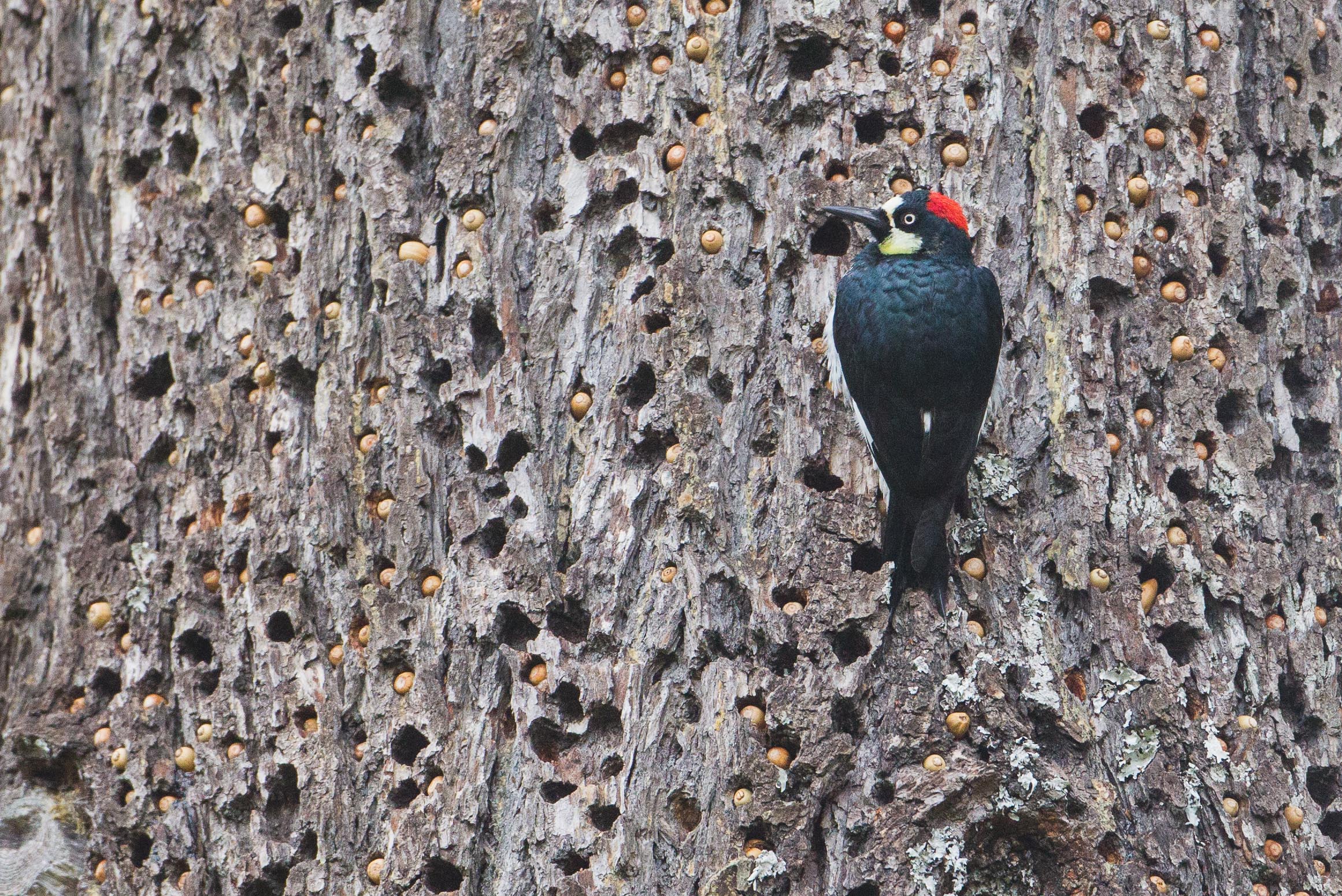
Woodpecker on a tree
download Download acwo4.jpg

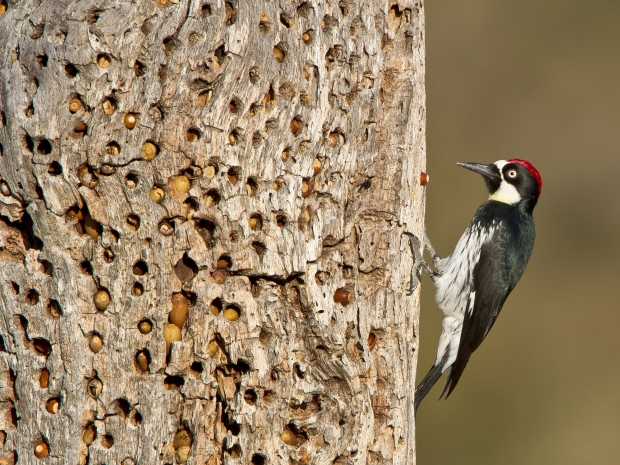
Female acorn woodpecker on an acorn granary.

A new study published today in the journal Proceedings of the Royal Society B suggests that even complex cooperative breeding strategies may offer direct evolutionary benefits over an animal’s lifetime, and perhaps offers clues into how social behavior first evolved in humans and other animals.

The research team’s analysis revealed that individual acorn woodpecker males that bred as co-breeding duos and trios left behind 1.5-times more direct offspring than single-breeding males. They also found that these co-breeding males tend to spend two to three extra years as breeders compared to their paired-up counterparts, which may be responsible for the increased reproductive success over the co-breeding birds’ lifetimes. Female woodpecker duos and single-breeders each left behind roughly the same number of young over their lifetimes, but those that bred as trios produced 2.5 fewer chicks.
Tags
Research News

Tags

  • Natural History Museum
  • Research News

Related Media

Three woodpeckers on a branch

Image

document

Woodpeckers: Spread-wing display

08.17.2021

Image

document

Sahas Barve

08.17.2021

Image

document

Sahas Barve

08.17.2021
Woodpecker on a tree

Image

document

Male acorn woodpecker

08.17.2021
Woodpecker on a tree

Image

document

Male acorn woodpecker

08.17.2021
Two woodpeckers on a branch

Image

document

Acorn woodpeckers

08.17.2021
Two woodpeckers on a branch

Image

document

Acorn woodpeckers

08.17.2021

Related Content

  • Sharing the Love Helps Male Acorn Woodpeckers Father More Chicks

    A new long-term study led by Sahas Barve, a Peter Buck Fellow at the Smit

    • August 17, 2021
    • News Release
    • Natural History Museum
    • Research News
arrow-up Back to top
Home
  • Facebook facebook
  • Instagram instagram
  • LinkedIn linkedin
  • YouTube youtube

  • Contact Us
  • Get Involved
  • Shop Online
  • Job Opportunities
  • Equal Opportunity
  • Inspector General
  • Records Requests
  • Accessibility
  • Host Your Event
  • Press Room
  • Privacy
  • Terms of Use