Skip to main content Skip to main navigation
heart-solid My Visit Donate
Home Smithsonian Institution IK development site for ODI
Press Enter to activate a submenu, down arrow to access the items and Escape to close the submenu.
    • Overview
    • Museums and Zoo
    • Entry and Guidelines
    • Museum Maps
    • Dine and Shop
    • Accessibility
    • Visiting with Kids
    • Group Visits
    • Overview
    • Exhibitions
    • Online Events
    • All Events
    • IMAX & Planetarium
    • Overview
    • Topics
    • Collections
    • Research Resources
    • Stories
    • Podcasts
    • Overview
    • For Caregivers
    • For Educators
    • For Students
    • For Academics
    • For Lifelong Learners
    • Overview
    • Become a Member
    • Renew Membership
    • Make a Gift
    • Volunteer
    • Overview
    • Our Organization
    • Our Leadership
    • Reports and Plans
    • Newsdesk
heart-solid My Visit Donate
  1. Home
  2. forward-slash
  3. About
  4. forward-slash
  5. Newsdesk
  6. forward-slash
  7. Photos and Video
  8. forward-slash
  9. Dan Rasmussen and Terry Plank collect samples of volcanic ash

About

  • Overview
  • Our Organization
    • Board of Regents
    • Museums and Zoo
    • Research Centers
    • Cultural Centers
    • Education Centers
    • General Counsel
    • Office of Human Resources
    • Office of Equal Opportunity
    • Office of Sponsored Projects
    • Office of Protection Services
  • Our Leadership
  • Reports and Plans
    • Annual Reports
    • Strategic Plan
    • Smithsonian Dashboard
  • Newsdesk
    • News Releases
    • Media Contacts
    • Photos and Video
    • Media Kits
    • Fact Sheets
    • Visitor Stats
    • Secretary and Admin Bios
    • Filming Requests

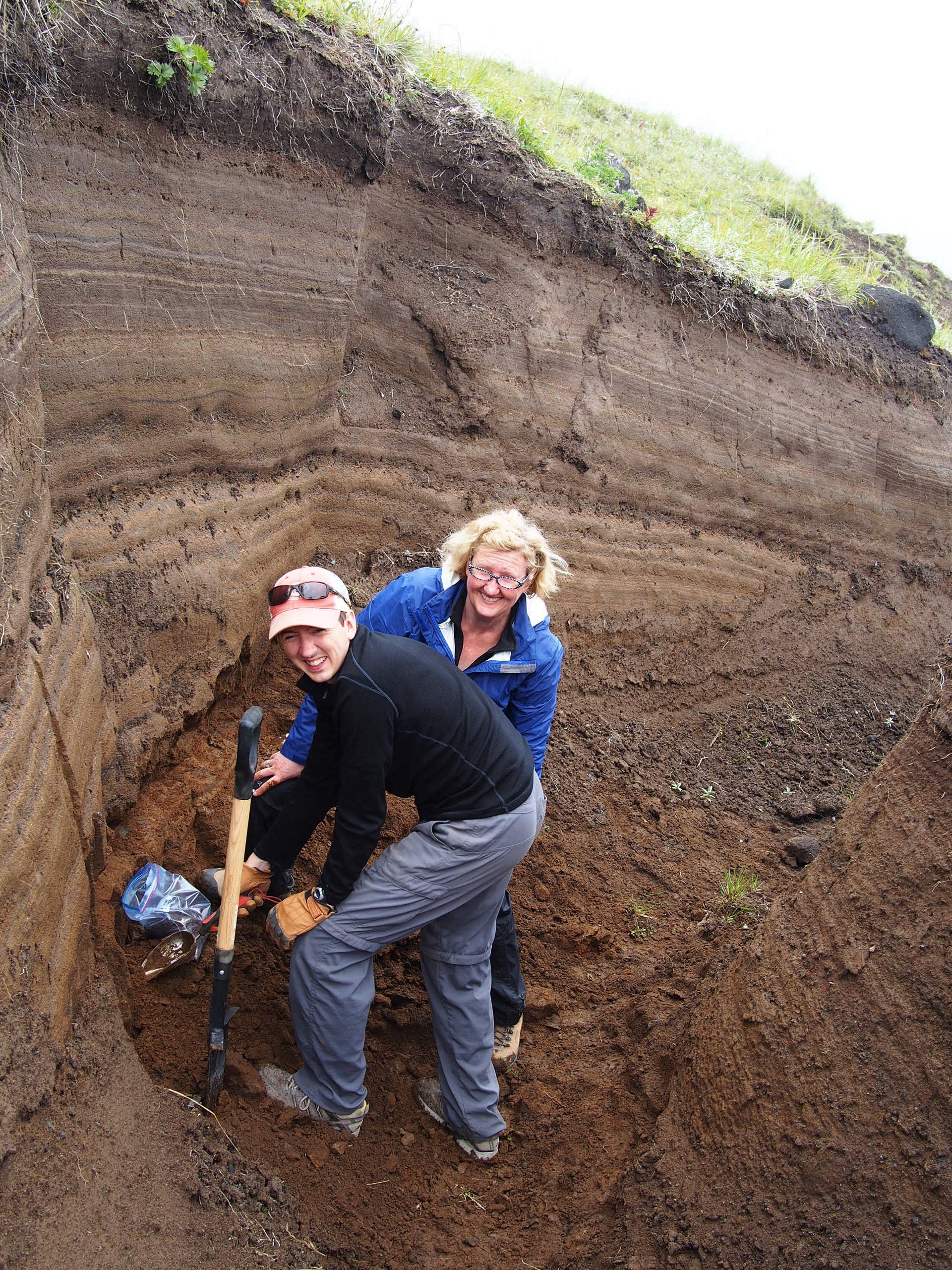
Dan Rasmussen and Terry Plank collect samples of volcanic ash
Media Photo/Video

March 10, 2022

Two people dig for volcanic ash in a ditch using a shovel
download Download dan_-_danterry.jpg

Dan Rasmussen, Peter Buck Fellow at the Smithsonian’s National Museum of Natural History, and Terry Plank, volcanologist at Columbia University’s Lamont-Doherty Earth Observatory, collect samples of volcanic ash from a narrow ravine created by a small stream on the flank of Cleveland Volcano in 2016. Layers on the ravine wall are the products of Cleveland’s individual eruptions. The layers are brown because they are breaking down to form dirt. Still, with enough effort, scientists can find some fresh volcanic material in these layers. The layers must be sampled individually, which is a tricky process. First, a flat surface at the interface between two layers is carved out; then, the layer that is exposed is scraped into a sample collection bag, exposing the next layer down and enabling its collection. These samples helped researchers to understand the water contents of Cleveland’s magmas.

A new study, published today, March 10, in the journal Science, finds that, for the world’s most common type of volcano, magma with higher water content tends to be stored deeper in the Earth’s crust. The finding identifies what some scientists expect is the most important factor controlling the depth at which magma is stored and may bring experts one step closer to accurately forecasting volcanic eruptions.

SI-98-2022

Tags
Research News

Tags

  • Research News

Related Media

Man kneels next to a volcano while collecting ash samples

Image

document

Dan Rasmussen collects volcanic ash samples

03.10.2022
Man kneels to collect volcanic ash on a scenic overlook of a volcano

Image

document

Dan Rasmussen collects volcanic ash

03.10.2022
Woman walks on side of volcano overlooking a body of water

Image

document

Geophysicist Diana Roman on the Cleveland Volcano

03.10.2022
Volcano overlooking green landscape and small bodies of water on a hazy day

Image

document

Fisher Caldera and the Shishaldin Volcano

03.10.2022
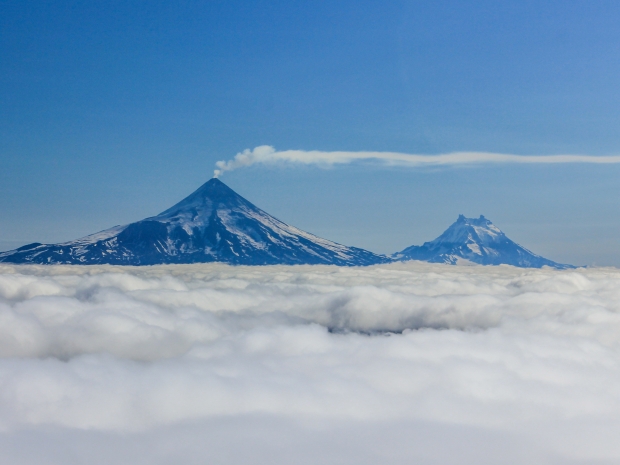
Two volcanoes, one with a stream of smoke coming out of the top, seen above a plume of clouds

Image

document

Shishaldin Volcano and Isanotski Volcano

03.10.2022

Related Content

  • Study Finds That Water Determines Magma Depth, A Key to Accurate Models of Volcanic Activity, Eruption

    Around the world, between 40 and 50 volcanoes are currently erupting or in states of unrest, and hundreds of millions of people are at risk of hazards posed by these potentially active volcanos.

    • March 10, 2022
    • News Release
    • Natural History Museum
    • Research News
arrow-up Back to top
Home
  • Facebook facebook
  • Instagram instagram
  • LinkedIn linkedin
  • YouTube youtube

  • Contact Us
  • Get Involved
  • Shop Online
  • Job Opportunities
  • Equal Opportunity
  • Inspector General
  • Records Requests
  • Accessibility
  • Host Your Event
  • Press Room
  • Privacy
  • Terms of Use