Skip to main content Skip to main navigation
heart-solid My Visit Donate
Home Smithsonian Institution IK development site for ODI
Press Enter to activate a submenu, down arrow to access the items and Escape to close the submenu.
    • Overview
    • Museums and Zoo
    • Entry and Guidelines
    • Museum Maps
    • Dine and Shop
    • Accessibility
    • Visiting with Kids
    • Group Visits
    • Overview
    • Exhibitions
    • Online Events
    • All Events
    • IMAX & Planetarium
    • Overview
    • Topics
    • Collections
    • Research Resources
    • Stories
    • Podcasts
    • Overview
    • For Caregivers
    • For Educators
    • For Students
    • For Academics
    • For Lifelong Learners
    • Overview
    • Become a Member
    • Renew Membership
    • Make a Gift
    • Volunteer
    • Overview
    • Our Organization
    • Our Leadership
    • Reports and Plans
    • Newsdesk
heart-solid My Visit Donate
  1. Home
  2. forward-slash
  3. About
  4. forward-slash
  5. Newsdesk
  6. forward-slash
  7. Photos and Video
  8. forward-slash
  9. Boots, piluguuk (“pair of skin boots”)

About

  • Overview
  • Our Organization
    • Board of Regents
    • Museums and Zoo
    • Research Centers
    • Cultural Centers
    • Education Centers
    • General Counsel
    • Office of Human Resources
    • Office of Equal Opportunity
    • Office of Sponsored Projects
    • Office of Protection Services
  • Our Leadership
  • Reports and Plans
    • Annual Reports
    • Strategic Plan
    • Smithsonian Dashboard
  • Newsdesk
    • News Releases
    • Media Contacts
    • Photos and Video
    • Media Kits
    • Fact Sheets
    • Visitor Stats
    • Secretary and Admin Bios
    • Filming Requests

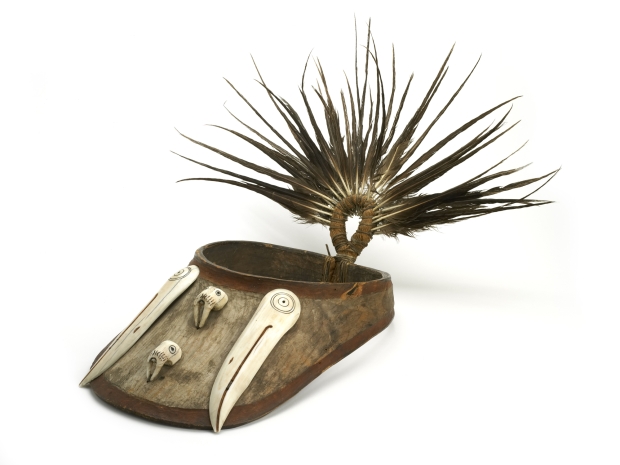
Boots, piluguuk (“pair of skin boots”)

Media Photo/Video

April 7, 2010

download Download e038871.jpg

We wore these all the time, year-round…except in the summertime, when we usually went barefoot or used short little boots. Mostly we used these caribou boots for warmth. - Neva Rivers, 2002

This pair of woman’s winter boots was made from the leg skins of a caribou. Fur from the backs of the caribou’s legs – which is usually in the best condition on a living animal – was used for the fronts of the boots. Bands of white caribou or reindeer fur encircle the tops, ornamented with stripes of brown beaver or bear fur and tassels of the same material. Caribou skin tassels, tufts of red yarn, and white hair decorate the legs. The soles of the boots are bearded seal hide.

Image courtesy of the National Museum of Natural History


Tags

  • Natural History Museum

Related Media

Image

document

Doll, inuguaq (“small wooden doll”)

04.07.2010

Image

document

Hunting visor, elqiaq (“bentwood visor”)

04.07.2010

Image

document

Parka, atkuk (“parka”)

04.07.2010

Image

document

Parka, atkuk (“parka”)

04.07.2010

Image

document

Snuff box, meluskarvik (“container for snuff”)

04.07.2010

Related Content

  • placeholder-logo

    Yup’ik Eskimo Exhibition Opens at the National Museum of Natural History
    The exhibition “Yuungnaqpiallerput (The Way We Genuinely Live): Masterworks of Yup’ik Science and Survival” presents 200 remarkable 19th- and early 20th-century tools, containers, weapons, watercraft and clothing that the Yup’ik people have used to survive for centuries in the sub-arctic tundra of the Bering Sea coast.
    • April 8, 2010
    • News Release
    • Natural History Museum
arrow-up Back to top
Home
  • Facebook facebook
  • Instagram instagram
  • LinkedIn linkedin
  • YouTube youtube

  • Contact Us
  • Get Involved
  • Shop Online
  • Job Opportunities
  • Equal Opportunity
  • Inspector General
  • Records Requests
  • Accessibility
  • Host Your Event
  • Press Room
  • Privacy
  • Terms of Use