Skip to main content Skip to main navigation
heart-solid My Visit Donate
Home Smithsonian Institution IK development site for ODI
Press Enter to activate a submenu, down arrow to access the items and Escape to close the submenu.
    • Overview
    • Museums and Zoo
    • Entry and Guidelines
    • Museum Maps
    • Dine and Shop
    • Accessibility
    • Visiting with Kids
    • Group Visits
    • Overview
    • Exhibitions
    • Online Events
    • All Events
    • IMAX & Planetarium
    • Overview
    • Topics
    • Collections
    • Research Resources
    • Stories
    • Podcasts
    • Overview
    • For Caregivers
    • For Educators
    • For Students
    • For Academics
    • For Lifelong Learners
    • Overview
    • Become a Member
    • Renew Membership
    • Make a Gift
    • Volunteer
    • Overview
    • Our Organization
    • Our Leadership
    • Reports and Plans
    • Newsdesk
heart-solid My Visit Donate
  1. Home
  2. forward-slash
  3. About
  4. forward-slash
  5. Newsdesk
  6. forward-slash
  7. Photos and Video
  8. forward-slash
  9. Ancient Corn DNA: Assortment of corn

About

  • Overview
  • Our Organization
    • Board of Regents
    • Museums and Zoo
    • Research Centers
    • Cultural Centers
    • Education Centers
    • General Counsel
    • Office of Human Resources
    • Office of Equal Opportunity
    • Office of Sponsored Projects
    • Office of Protection Services
  • Our Leadership
  • Reports and Plans
    • Annual Reports
    • Strategic Plan
    • Smithsonian Dashboard
  • Newsdesk
    • News Releases
    • Media Contacts
    • Photos and Video
    • Media Kits
    • Fact Sheets
    • Visitor Stats
    • Secretary and Admin Bios
    • Filming Requests

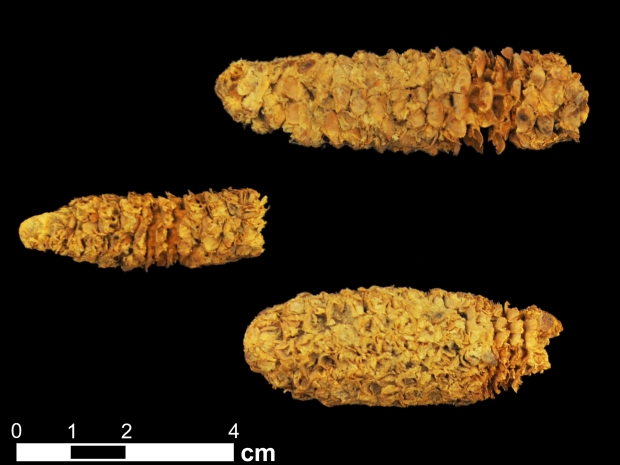
Ancient Corn DNA: Assortment of corn

Media Photo/Video

December 14, 2020

Five ancient corn of varying ages and sizes set against black background
download Download logan_kistler_-_2017.07.13-maize-cobs.jpg

An assortment of corn cobs of varying ages found at the El Gigante rock shelter site in Honduras.

After scientists first discovered the remnants of a fully domesticated and highly productive variety of 4,300-year-old corn at the El Gigante rock shelter, a team searched the archaeological strata surrounding the site for other cobs, kernels or anything else that might yield genetic material. They also started working toward sequencing some of the site’s 4,300-year-old corn samples—the oldest traces of the crop at El Gigante. Over two years, the team attempted to sequence 30 samples, but only three were of suitable quality to sequence a full genome. The three viable samples all came from the more recent layer of the rock shelter’s occupation—carbon dated between 2,300 and 1,900 years ago—revealing genetic overlap between the three samples from the Honduran rock shelter and corn varieties from South America.

In the Dec. 14 issue of the journal the Proceedings of the National Academy of Sciences, Logan Kistler, curator of archaeogenomics and archaeobotany at the Smithsonian’s National Museum of Natural History, and an international team of collaborators report the fully sequenced genomes of three roughly 2,000-year-old cobs from the El Gigante rock shelter in Honduras. Analysis of the three genomes reveals that these millennia-old varieties of Central American corn had South American ancestry and adds a new chapter in an emerging complex story of corn’s domestication history.

Tags
Research News

Tags

  • Natural History Museum
  • Research News

Related Media

Three ancient corn cobs on black background

Image

document

Ancient Corn DNA: 2,000-year-old cobs

12.14.2020
Three corn cobs of varying ages set against black background

Image

document

Ancient Corn DNA: Corn of varying ages

12.14.2020
Three dried corn cobs on black background

Image

document

Ancient Corn DNA: 2,000-year-old cobs

12.14.2020

Related Content

  • Three dried corn cobs on black background

    Ancient DNA Continues To Rewrite Corn’s 9,000-Year Society-Shaping History

    Some 9,000 years ago, corn as it is known today did not exist.

    • December 14, 2020
    • News Release
    • Natural History Museum
    • Research News
arrow-up Back to top
Home
  • Facebook facebook
  • Instagram instagram
  • LinkedIn linkedin
  • YouTube youtube

  • Contact Us
  • Get Involved
  • Shop Online
  • Job Opportunities
  • Equal Opportunity
  • Inspector General
  • Records Requests
  • Accessibility
  • Host Your Event
  • Press Room
  • Privacy
  • Terms of Use