Skip to main content Skip to main navigation
heart-solid My Visit Donate
Home Smithsonian Institution IK development site for ODI
Press Enter to activate a submenu, down arrow to access the items and Escape to close the submenu.
    • Overview
    • Museums and Zoo
    • Entry and Guidelines
    • Museum Maps
    • Dine and Shop
    • Accessibility
    • Visiting with Kids
    • Group Visits
    • Overview
    • Exhibitions
    • Online Events
    • All Events
    • IMAX & Planetarium
    • Overview
    • Topics
    • Collections
    • Research Resources
    • Stories
    • Podcasts
    • Overview
    • For Caregivers
    • For Educators
    • For Students
    • For Academics
    • For Lifelong Learners
    • Overview
    • Become a Member
    • Renew Membership
    • Make a Gift
    • Volunteer
    • Overview
    • Our Organization
    • Our Leadership
    • Reports and Plans
    • Newsdesk
heart-solid My Visit Donate
  1. Home
  2. forward-slash
  3. Explore
  4. forward-slash
  5. Collections
  6. forward-slash
  7. Smithsonian Snapshot
  8. forward-slash
  9. Hershey’s Tropical Chocolate Bar

Explore

  • Overview
  • Topics
    • Art & Design
    • History & Culture
    • Science & Nature
    • Tech & Innovation
  • Collections
    • Open Access
    • Smithsonian Snapshot
    • Collection Spotlights
  • Research Resources
    • Libraries
    • Archives
  • Stories
  • Podcasts
Smithsonian Snapshot

Hershey’s Tropical Chocolate Bar
September 11, 2012
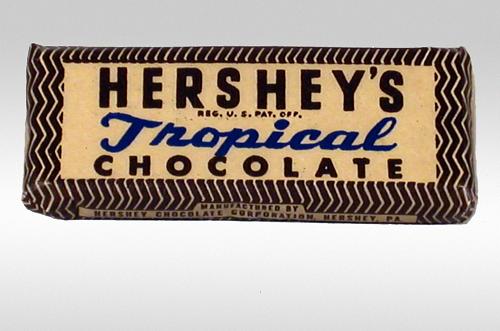
Hershey’s Tropical Chocolate Bar

Smithsonian’s National Museum of American History

Hershey’s Tropical Chocolate Bar, 1943

This Smithsonian Snapshot marks the Sept. 13, 1857, birthday of Milton S. Hershey, American confectioner, philanthropist and founder of the Hershey Chocolate Co.

In 1894, Hershey founded the Hershey Chocolate Co. and produced the first Hershey chocolate bar in 1900.

In 1905, Hershey opened the world’s largest chocolate manufacturing plant in Pennsylvania, about 30 miles outside Lancaster. The factory was located in the center of dairy farmland where Hershey had access to the large supplies of fresh milk needed to produce fine milk chocolate. Hershey’s milk chocolate quickly became the first nationally marketed candy in the U.S.

During World War II, the Procurement Division of the Army needed a ration bar for troops that weighed four ounces, would not melt at high temperatures and was high in food energy value. The Hershey chocolate technologists developed “Field Ration D,” which was so successful that approximately 24 million bars were produced every week by the end of 1945.

More successful still was Hershey’s Tropical Chocolate Bar, a heat-resistant bar with an improved flavor developed in 1943 and shown in this photograph.

To learn more about how wars have shaped the nation’s history, visit the National Museum of American History’s “Price of Freedom” exhibition website and read more about chocolate bars in the Second World War.

arrow-up Back to top
Home
  • Facebook facebook
  • Instagram instagram
  • LinkedIn linkedin
  • YouTube youtube

  • Contact Us
  • Get Involved
  • Shop Online
  • Job Opportunities
  • Equal Opportunity
  • Inspector General
  • Records Requests
  • Accessibility
  • Host Your Event
  • Press Room
  • Privacy
  • Terms of Use