Skip to main content Skip to main navigation
heart-solid My Visit Donate
Home Smithsonian Institution IK development site for ODI
Press Enter to activate a submenu, down arrow to access the items and Escape to close the submenu.
    • Overview
    • Museums and Zoo
    • Entry and Guidelines
    • Museum Maps
    • Dine and Shop
    • Accessibility
    • Visiting with Kids
    • Group Visits
    • Overview
    • Exhibitions
    • Online Events
    • All Events
    • IMAX & Planetarium
    • Overview
    • Topics
    • Collections
    • Research Resources
    • Stories
    • Podcasts
    • Overview
    • For Caregivers
    • For Educators
    • For Students
    • For Academics
    • For Lifelong Learners
    • Overview
    • Become a Member
    • Renew Membership
    • Make a Gift
    • Volunteer
    • Overview
    • Our Organization
    • Our Leadership
    • Reports and Plans
    • Newsdesk
heart-solid My Visit Donate
  1. Home
  2. forward-slash
  3. Explore
  4. forward-slash
  5. Collections
  6. forward-slash
  7. Smithsonian Snapshot
  8. forward-slash
  9. Crayola Crayons

Explore

  • Overview
  • Topics
    • Art & Design
    • History & Culture
    • Science & Nature
    • Tech & Innovation
  • Collections
    • Open Access
    • Smithsonian Snapshot
    • Collection Spotlights
  • Research Resources
    • Libraries
    • Archives
  • Stories
  • Podcasts
Smithsonian Snapshot

Crayola Crayons

August 20, 2012
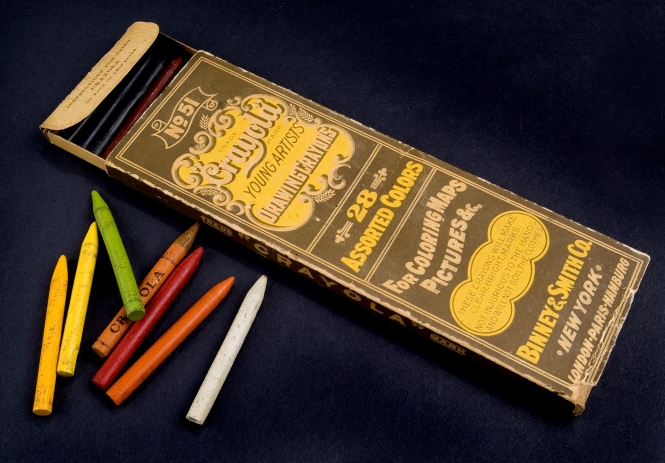
Crayola Crayons, 1903

Smithsonian’s National Museum of American History

Crayola Crayons, 1903

This Smithsonian Snapshot celebrates the back-to-school season with this original pack of Crayola Crayons.

Cherished by generations of children, Crayola Crayons were invented in 1903 by cousins Edwin Binney and C. Harold Smith, founders of the Binney & Smith Co. of Easton, Pa.

The company used paraffin wax and nontoxic pigments to produce a coloring stick that was safe, sturdy and affordable. The name "Crayola” was coined by Alice Binney, Binney’s wife and a former school teacher. It comes from "craie," French for "chalk," and "oleaginous" or "oily." This Crayola set for "young artists" was one of the earliest produced. Its 28 colors include celestial blue, golden ochre, rose pink and burnt sienna.

To learn more about this item, visit the National Museum of American History website.

arrow-up Back to top
Home
  • Facebook facebook
  • Instagram instagram
  • LinkedIn linkedin
  • YouTube youtube

  • Contact Us
  • Get Involved
  • Shop Online
  • Job Opportunities
  • Equal Opportunity
  • Inspector General
  • Records Requests
  • Accessibility
  • Host Your Event
  • Press Room
  • Privacy
  • Terms of Use