Skip to main content Skip to main navigation
heart-solid My Visit Donate
Home Smithsonian Institution IK development site for ODI
Press Enter to activate a submenu, down arrow to access the items and Escape to close the submenu.
    • Overview
    • Museums and Zoo
    • Entry and Guidelines
    • Museum Maps
    • Dine and Shop
    • Accessibility
    • Visiting with Kids
    • Group Visits
    • Overview
    • Exhibitions
    • Online Events
    • All Events
    • IMAX & Planetarium
    • Overview
    • Topics
    • Collections
    • Research Resources
    • Stories
    • Podcasts
    • Overview
    • For Caregivers
    • For Educators
    • For Students
    • For Academics
    • For Lifelong Learners
    • Overview
    • Become a Member
    • Renew Membership
    • Make a Gift
    • Volunteer
    • Overview
    • Our Organization
    • Our Leadership
    • Reports and Plans
    • Newsdesk
heart-solid My Visit Donate
  1. Home
  2. forward-slash
  3. Support Your Smithsonian
  4. forward-slash
  5. IMPACT
  6. forward-slash
  7. Age of AI

Life on Exoplanets

Smithsonian Astrophysical Observatory
exoplanet
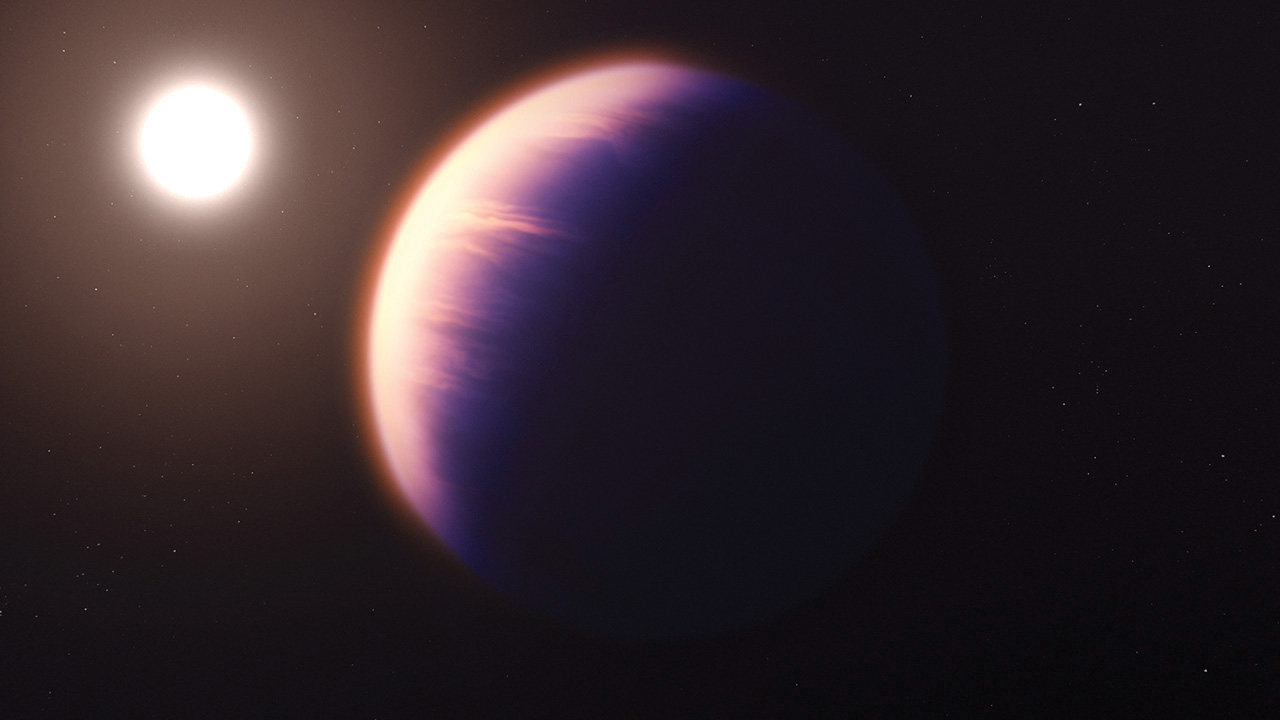
The AstroAI initiative, launched in 2023, uses AI to search for life on exoplanets, such as the exoplanet WASP-39 b imagined in this illustration. IMAGE NASA, ESA, CSA, Joseph Olmsted (STScI)

Could there be life on planets outside our solar system? For astrophysicists, it’s a big unanswered question, and one that AI technology can help investigate.

Under a new initiative called AstroAI, launched last year by the Smithsonian Astrophysical Observatory—part of the Center for Astrophysics I Harvard & Smithsonian—computer scientists and astrophysicists are using AI to mine previously unexamined stores of data to better understand the universe.

One AstroAI study completed in 2023 used AI tools to develop a first-of-its-kind model to assess the atmospheres of exoplanets, or planets orbiting stars other than the Sun. The model uses raw data from the James Webb Space Telescope and other sources to look for biomarkers on exoplanets, including water and carbon, which support life.

AI enables astrophysicists to explore a much greater volume of data, in different combinations and at a faster pace, said Cecilia Garraffo, founding director of AstroAI. “With traditional scientific methods, you generally find what you are looking for,” she said. “By applying AI, the data will tell you things you didn’t know were there.”


Published Winter 2024 in IMPACT Vol. 10. No 1

Click here to read more about how Smithsonian experts are applying artificial intelligence (AI) across diverse disciplines.

Your gift fuels innovation, inspiration and exploration for lifelong learners everywhere. Make a gift today.

Support Your Smithsonian

Support Your Smithsonian arrow-right

Read More Stories of Impact

Read More Stories of Impact arrow-right

Make a Gift

Make A Gift arrow-right

arrow-up Back to top
Home
  • Facebook facebook
  • Instagram instagram
  • LinkedIn linkedin
  • YouTube youtube

  • Contact Us
  • Get Involved
  • Shop Online
  • Job Opportunities
  • Equal Opportunity
  • Inspector General
  • Records Requests
  • Accessibility
  • Host Your Event
  • Press Room
  • Privacy
  • Terms of Use