Skip to main content Skip to main navigation
heart-solid My Visit Donate
Home Smithsonian Institution IK development site for ODI
Press Enter to activate a submenu, down arrow to access the items and Escape to close the submenu.
    • Overview
    • Museums and Zoo
    • Entry and Guidelines
    • Museum Maps
    • Dine and Shop
    • Accessibility
    • Visiting with Kids
    • Group Visits
    • Overview
    • Exhibitions
    • Online Events
    • All Events
    • IMAX & Planetarium
    • Overview
    • Topics
    • Collections
    • Research Resources
    • Stories
    • Podcasts
    • Overview
    • For Caregivers
    • For Educators
    • For Students
    • For Academics
    • For Lifelong Learners
    • Overview
    • Become a Member
    • Renew Membership
    • Make a Gift
    • Volunteer
    • Overview
    • Our Organization
    • Our Leadership
    • Reports and Plans
    • Newsdesk
heart-solid My Visit Donate
  1. Home
  2. forward-slash
  3. Explore
  4. forward-slash
  5. Stories
  6. forward-slash
  7. When Is a Blue Bird Not Blue?

Explore

  • Overview
  • Topics
    • Art & Design
    • History & Culture
    • Science & Nature
    • Tech & Innovation
  • Collections
    • Open Access
    • Smithsonian Snapshot
    • Collection Spotlights
  • Research Resources
    • Libraries
    • Archives
  • Stories
  • Podcasts
Smithsonian Story

When is a blue bird not blue?
April 28, 2016
John Gibbons
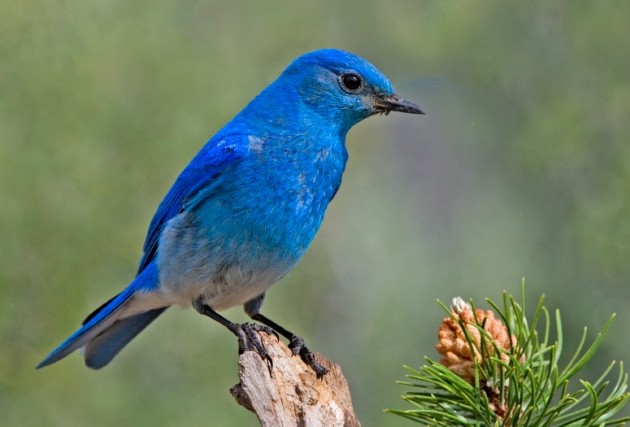
blue bird on a conifer.

Mountain Bluebird, Cabin Lake Viewing Blinds, Deschutes National Forest, Near Fort Rock, Oregon (Photo by Elaine R. Wilson)


When is a blue bird not blue? The answer to this question is always. There actually is no such thing as a blue bird. To find out why, Smithsonian asked Scott Sillett, a wildlife biologist at the Smithsonian Migratory Bird Center.

“Red and yellow feathers get their color from actual pigments, called carotenoids, that are in the foods birds eat,” Sillett explains. “Blue is different―no bird species can make blue from pigments. The color blue that we see on a bird is created by the way light waves interact with the feathers and their arrangement of protein molecules, called keratin. In other words, blue is a structural color. Different keratin structures reflect light in subtly different ways to produce different shades of what our eyes perceive as the color blue. A blue feather under ultraviolet light might look uniformly gray to human eyes.”

arrow-up Back to top
Home
  • Facebook facebook
  • Instagram instagram
  • LinkedIn linkedin
  • YouTube youtube

  • Contact Us
  • Get Involved
  • Shop Online
  • Job Opportunities
  • Equal Opportunity
  • Inspector General
  • Records Requests
  • Accessibility
  • Host Your Event
  • Press Room
  • Privacy
  • Terms of Use