Skip to main content Skip to main navigation
heart-solid My Visit Donate
Home Smithsonian Institution IK development site for ODI
Press Enter to activate a submenu, down arrow to access the items and Escape to close the submenu.
    • Overview
    • Museums and Zoo
    • Entry and Guidelines
    • Museum Maps
    • Dine and Shop
    • Accessibility
    • Visiting with Kids
    • Group Visits
    • Overview
    • Exhibitions
    • Online Events
    • All Events
    • IMAX & Planetarium
    • Overview
    • Topics
    • Collections
    • Research Resources
    • Stories
    • Podcasts
    • Overview
    • For Caregivers
    • For Educators
    • For Students
    • For Academics
    • For Lifelong Learners
    • Overview
    • Become a Member
    • Renew Membership
    • Make a Gift
    • Volunteer
    • Overview
    • Our Organization
    • Our Leadership
    • Reports and Plans
    • Newsdesk
heart-solid My Visit Donate
  1. Home
  2. forward-slash
  3. Explore
  4. forward-slash
  5. Stories
  6. forward-slash
  7. This Thanksgiving, Try the Fossil Turducken

Explore

  • Overview
  • Topics
    • Art & Design
    • History & Culture
    • Science & Nature
    • Tech & Innovation
  • Collections
    • Open Access
    • Smithsonian Snapshot
    • Collection Spotlights
  • Research Resources
    • Libraries
    • Archives
  • Stories
  • Podcasts
Smithsonian Story

This Thanksgiving, try the fossil turducken

November 22, 2021
Hannah S. Ostroff
Marine reptile with a long tail

Tylosaurus, Smithsonian’s National Museum of Natural History


Searching for a nontraditional recipe? Here's the fossil version of a turducken.

This 20-foot-long predatory marine reptile Tylosaurus in the Smithsonian’s National Museum of Natural History has its last meal in its stomach: a plesiosaur, or flippered marine reptile. The stomach ALSO contained the bones of the plesiosaur’s last meal of small fishes and invertebrates. These specimens provide a glimpse of an 81 to 85 million-year-old food web.
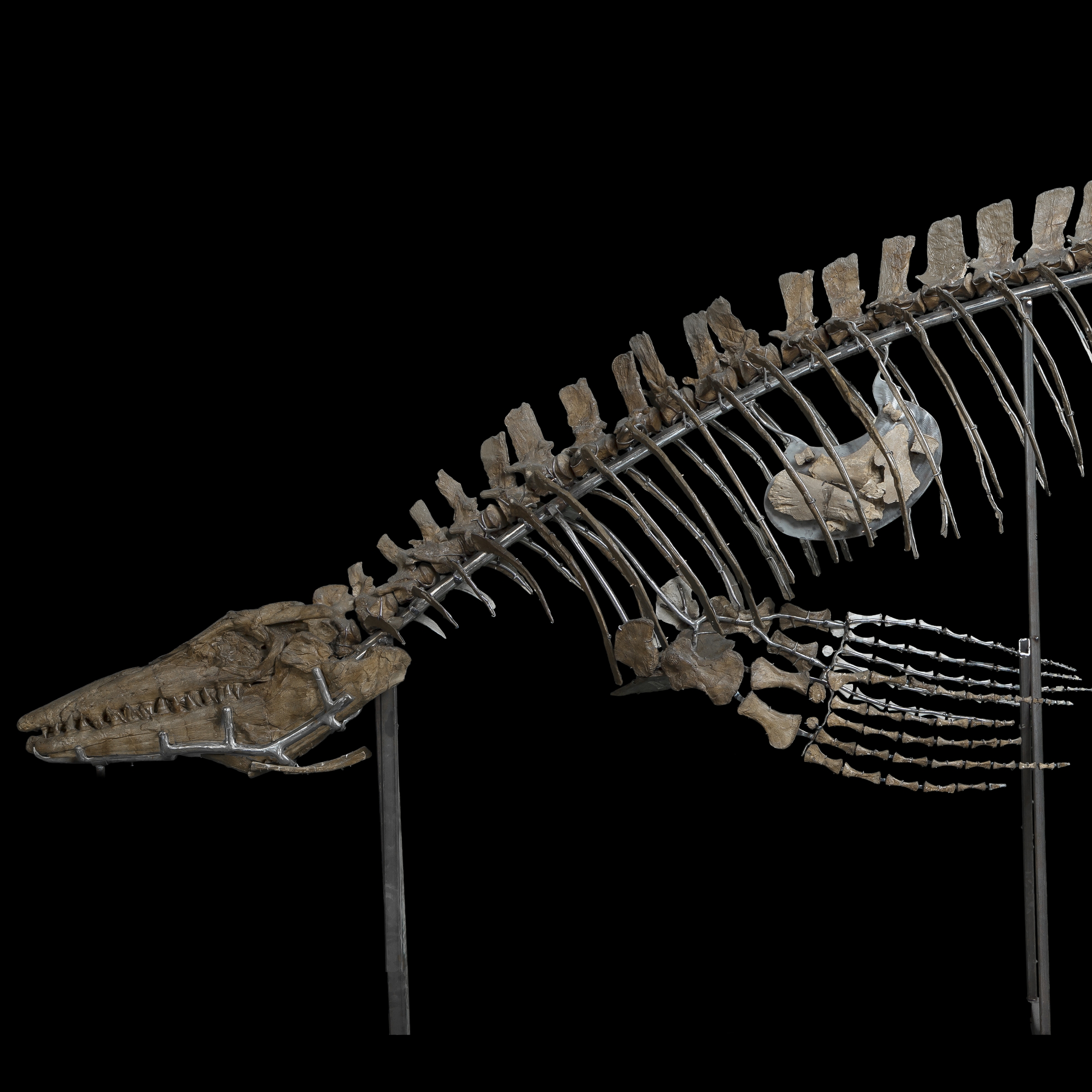
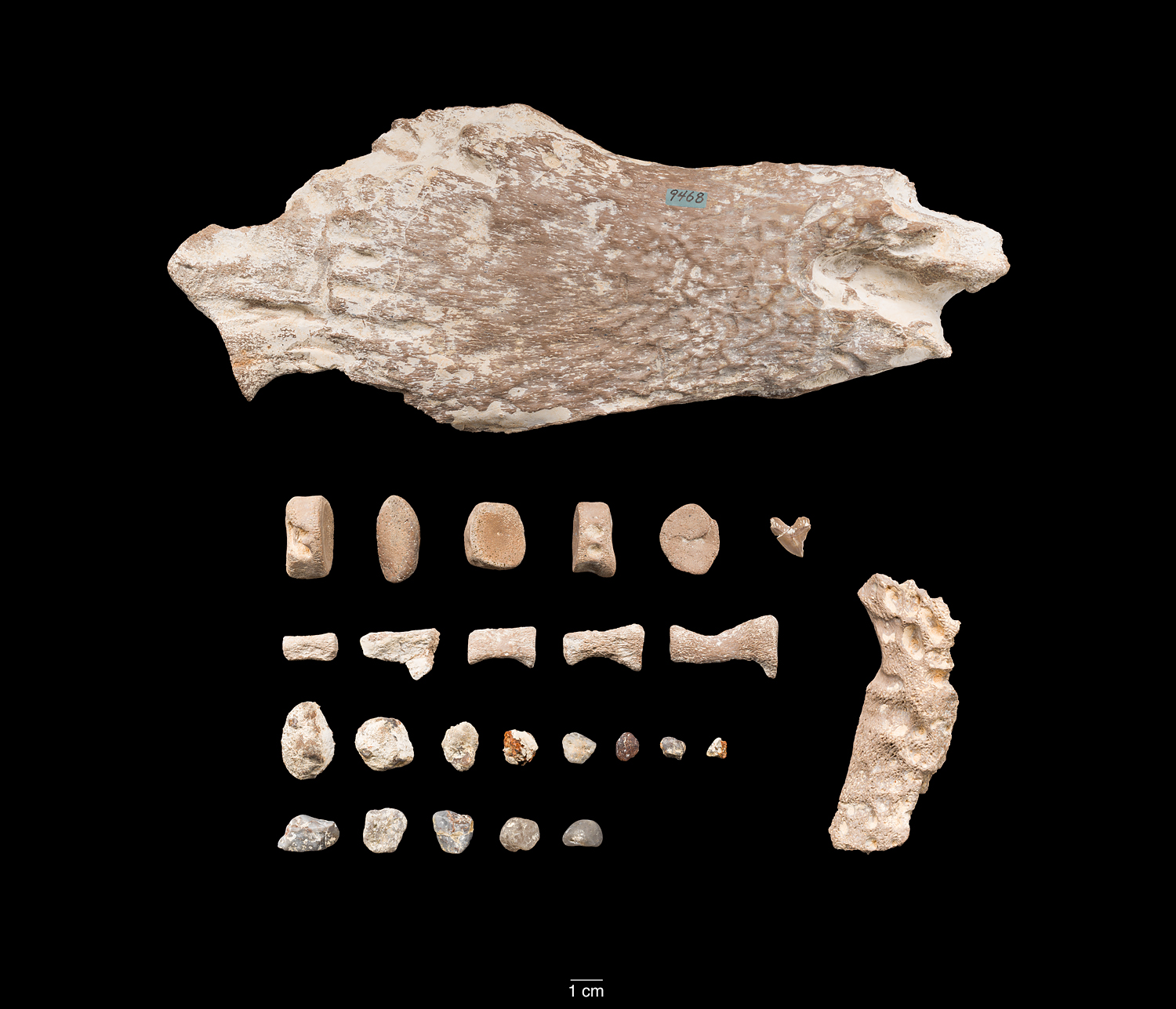
Upper half of a marine reptile with bones visible in its stomach

Tylosaurus, Smithsonian’s National Museum of Natural History

Small fossil fragments

Fossil stomach contents, Smithsonian’s National Museum of Natural History

Also, if your Thanksgiving meal includes turkey, then you're serving up some dinosaur. How? Because birds are dinosaurs. Even their hollow bones, feathers and stiff wrists come from their non-avian dinosaur ancestors.

See the fossil turducken and dinosaurs of all shapes and sizes at the “David H. Koch Hall of Fossils - Deep Time,” which covers 4.6 billion years of life on Earth.

arrow-up Back to top
Home
  • Facebook facebook
  • Instagram instagram
  • LinkedIn linkedin
  • YouTube youtube

  • Contact Us
  • Get Involved
  • Shop Online
  • Job Opportunities
  • Equal Opportunity
  • Inspector General
  • Records Requests
  • Accessibility
  • Host Your Event
  • Press Room
  • Privacy
  • Terms of Use