
This Shark Week, take a bite out of these species from the Smithsonian
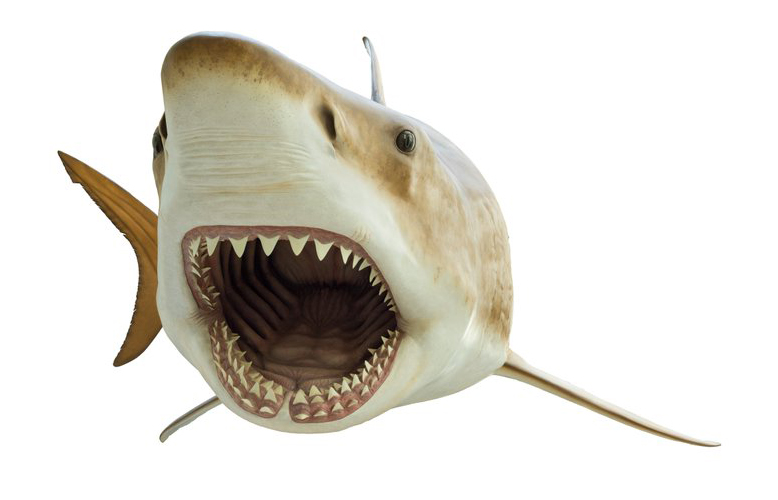
A life-size model of Carcharocles megalodon in the Smithsonian’s National Museum of Natural History
Every week is Shark Week for these creatures from the Smithsonian’s National Museum of Natural History. They range from the dainty dwarf lantern shark to the gigantic megalodon, plus the truly bizarre cookie-cutter shark.
Dwarf Lantern Shark
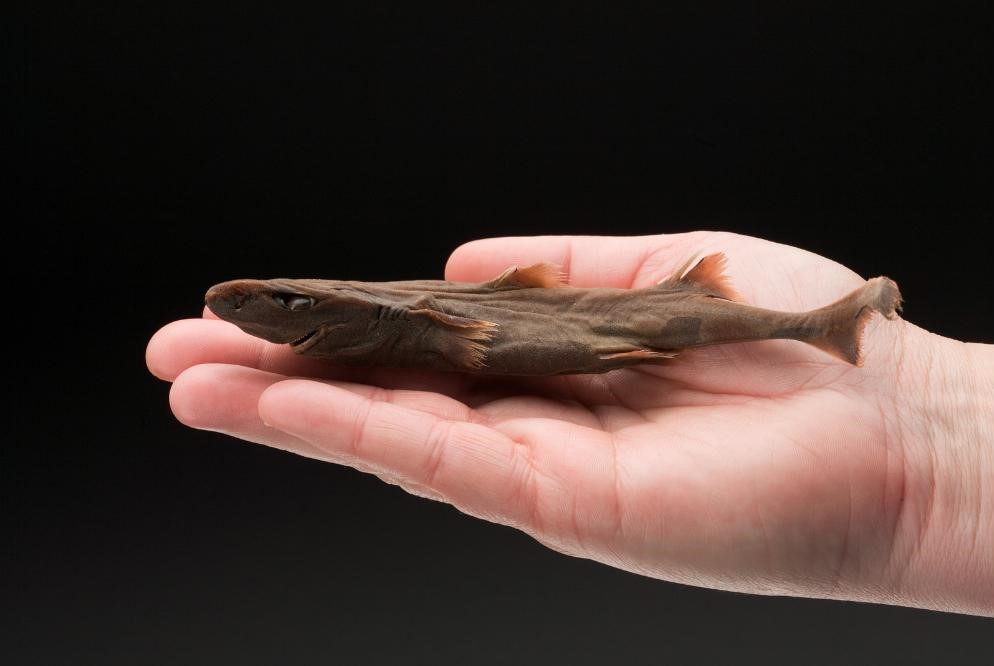
We’re going to need a smaller boat.
The dwarf lantern shark (Etmopterus perryi) is the smallest shark—it can fit in your hand—and has large, elongated eyes that allow it to see in almost complete darkness deep in the ocean.
Like other lantern sharks, the dwarf lantern shark has light-emitting organs called photophores along its belly and fins. They work as camouflage when the shark feeds in shallower water, as its body blends in with sunlight that filters into the ocean. In darker water, the light attracts smaller prey.
The mysterious species has only been spotted a few times off the northern tip of South America. This specimen comes from the Caribbean Sea off the coast of Colombia.
Megalodon
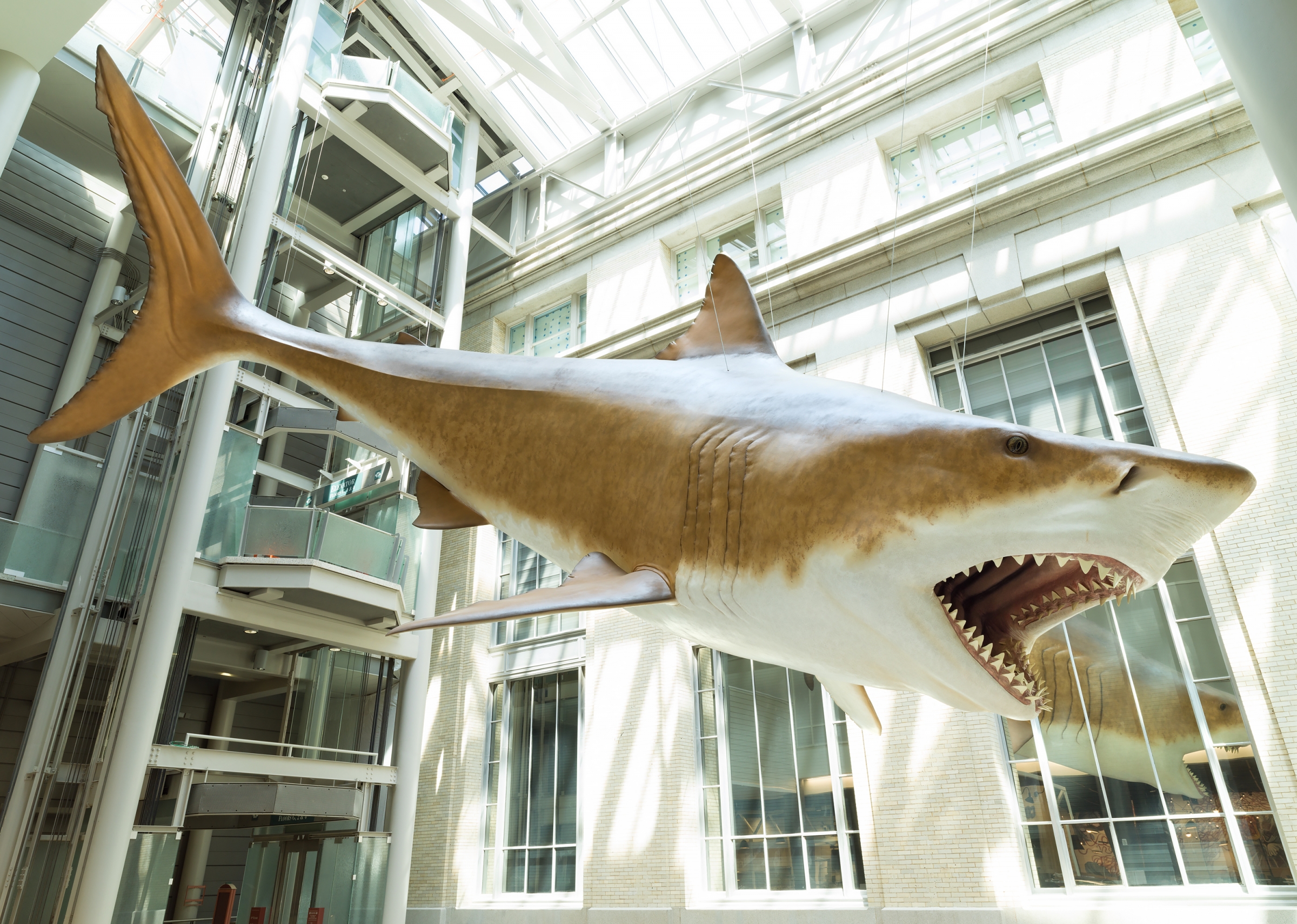
The ancient shark Carcharocles megalodon swam 23 to 3.6 million years ago.
At 52 feet long, this life-size model (which is suspended, mid-swim, in the museum’s café) is female. Males only grow to 47 feet and 68,000 pounds, while a female megalodon could weigh up to 120,000 pounds.
Megalodon was the top predator of its time, with serrated teeth that slashed through small whales, sea turtles, seals and large fish. Its teeth averaged 5 inches from base to tip, and the largest were about 7 inches long—so about the size of the entire dwarf lantern shark.
Cookie-Cutter Shark

Not for the faint of heart, the cookie-cutter shark (Isistius brasiliensis) is so named because it takes large, round, cookie-cutter-shaped bites out of animals such as tuna, whales, dolphins and seals.
At about 20 inches long, these creatures approach their prey from below, then latch on with their razor-sharp bottom teeth and powerful suction lips. They bite and twist, slicing out a circular chunk of flesh and leaving a round hole.
They’ve even been known to try to bite submarines.
Learn about other weird sharks from the museum’s Ocean Portal. Plus, learn why early astronaut survival kits included shark repellent (hint: it’s not sharks in space) from the Smithsonian’s National Air and Space Museum.