Skip to main content Skip to main navigation
heart-solid My Visit Donate
Home Smithsonian Institution IK development site for ODI
Press Enter to activate a submenu, down arrow to access the items and Escape to close the submenu.
    • Overview
    • Museums and Zoo
    • Entry and Guidelines
    • Museum Maps
    • Dine and Shop
    • Accessibility
    • Visiting with Kids
    • Group Visits
    • Overview
    • Exhibitions
    • Online Events
    • All Events
    • IMAX & Planetarium
    • Overview
    • Topics
    • Collections
    • Research Resources
    • Stories
    • Podcasts
    • Overview
    • For Caregivers
    • For Educators
    • For Students
    • For Academics
    • For Lifelong Learners
    • Overview
    • Become a Member
    • Renew Membership
    • Make a Gift
    • Volunteer
    • Overview
    • Our Organization
    • Our Leadership
    • Reports and Plans
    • Newsdesk
heart-solid My Visit Donate
  1. Home
  2. forward-slash
  3. Explore
  4. forward-slash
  5. Stories
  6. forward-slash
  7. Saucer Magnolias

Explore

  • Overview
  • Topics
    • Art & Design
    • History & Culture
    • Science & Nature
    • Tech & Innovation
  • Collections
    • Open Access
    • Smithsonian Snapshot
    • Collection Spotlights
  • Research Resources
    • Libraries
    • Archives
  • Stories
  • Podcasts
Smithsonian Story

The difference between cherry blossoms and saucer magnolias
March 15, 2021
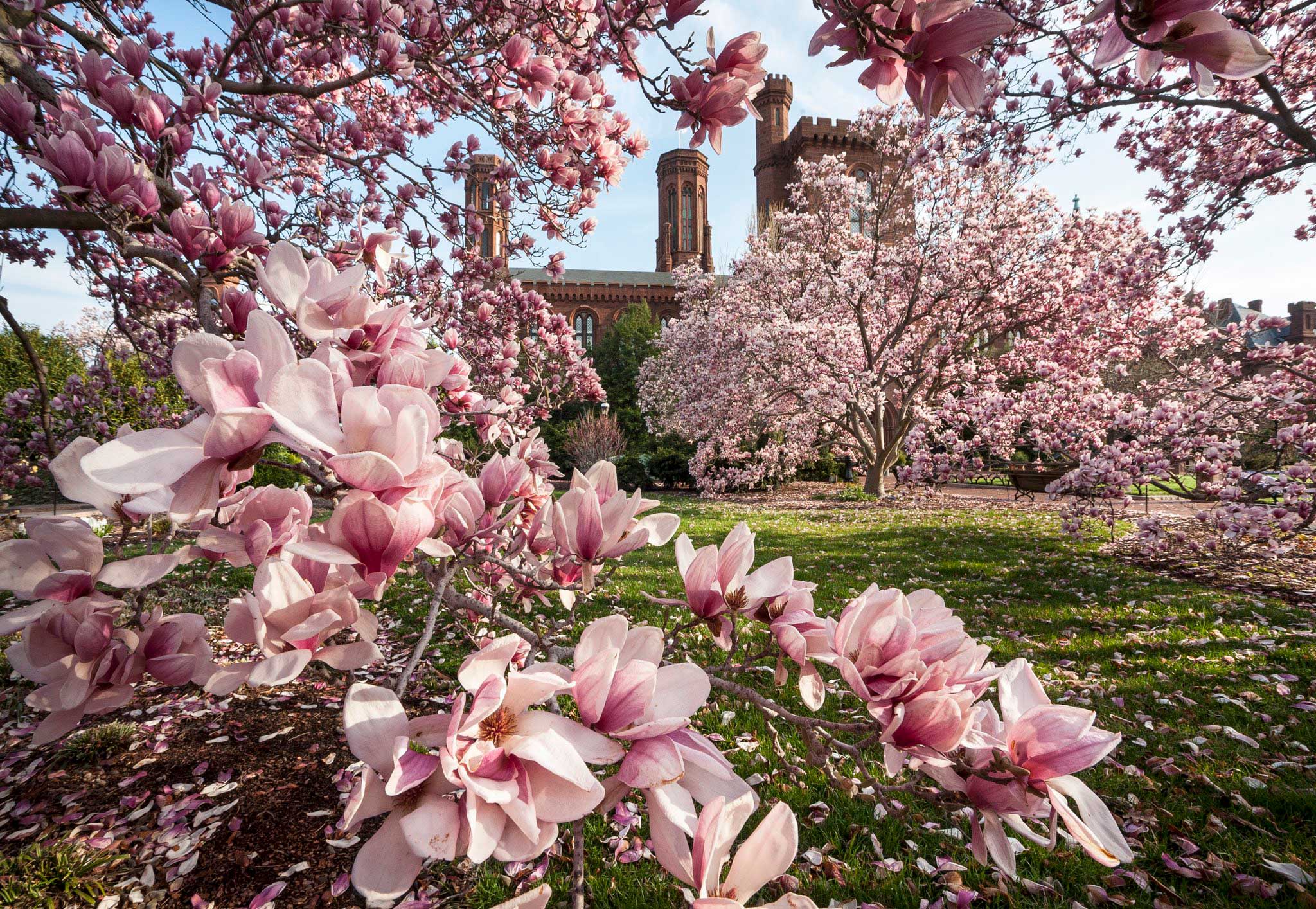
Saucer magnolia trees with pink flowers in front of the Smithsonian Castle building.

Saucer magnolias blooming in the Enid A. Haupt Garden behind the Smithsonian Castle in 2020


They’re both pink and bloom beautifully in Washington, D.C., in the spring. But don’t mistake saucer magnolias (Magnolia x soulangeana) for cherry trees.

The Smithsonian’s saucer magnolias are part of Smithsonian Gardens’ Tree Collection, which contains 1,800 accessioned specimens (including a dozen other varieties of magnolias) throughout the museum grounds and gardens surrounding the National Mall. In the Enid A. Haupt Garden behind the Smithsonian Castle, two rows of saucer magnolias surround a carefully manicured garden called the parterre—French for “on the ground.”

Saucer magnolia trees with pink flowers surrounding a green garden and sidewalks.

The Parterre in the Enid A. Haupt Garden in 2017

Most of the cherry trees planted around the city’s Tidal Basin are Yoshino cherry (Prunus x yedoensis), which have white-to-pink flowers that appear in clusters of three-to-six blossoms.

Saucer magnolias have cup-shaped flowers, with nine petals each, that are around 6 inches across. Their blooms are pinkish purple on the outside and white on the inside. Most trees are multi-stemmed, with more than one main trunk.
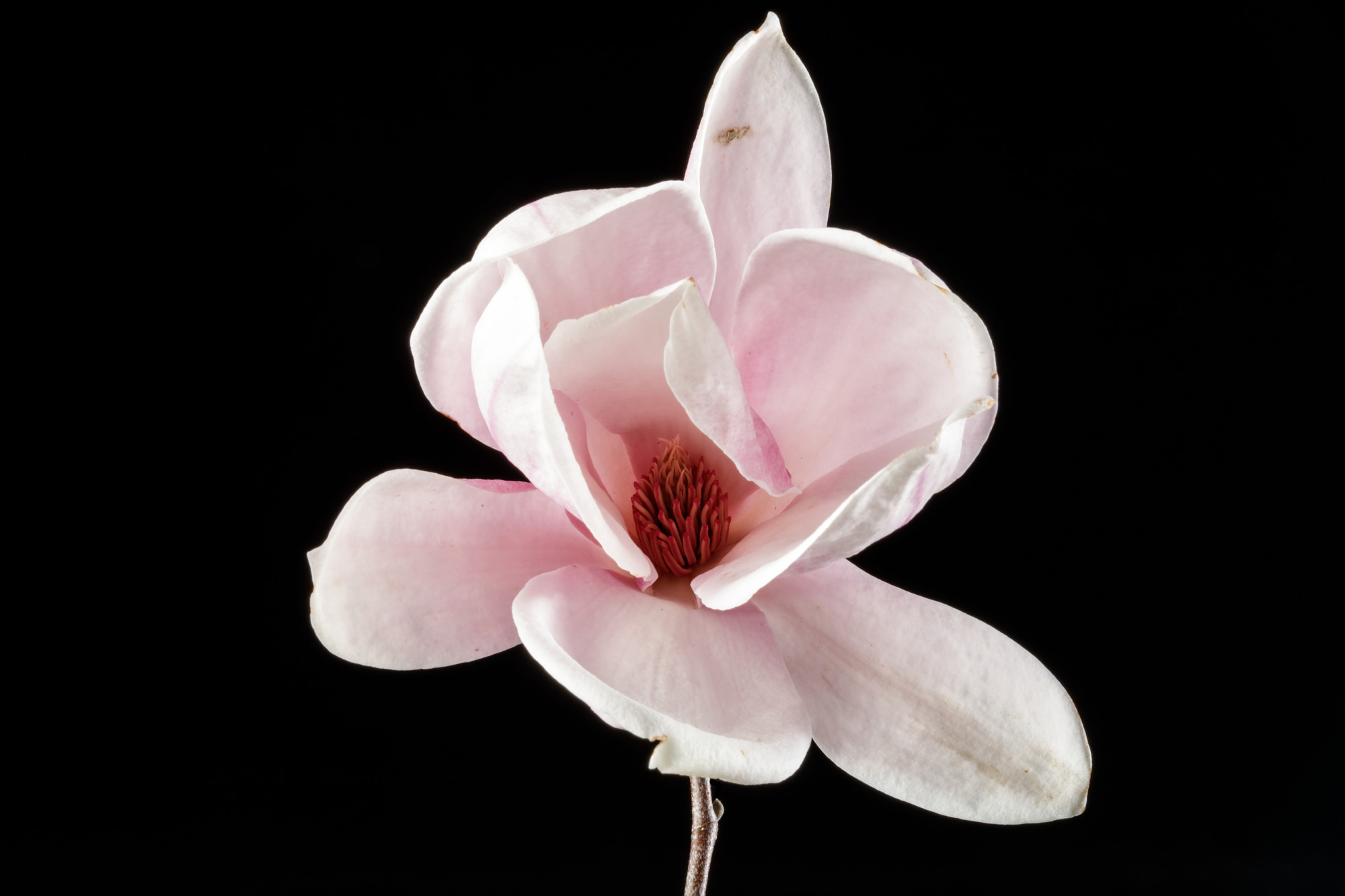
Pink saucer magnolia flower.

Magnolia × soulangeana

Cherry trees and saucer magnolias are considered precocious bloomers, meaning they flower before their leaves emerge. Saucer magnolia flowers tend to fully bloom in mid-to-late March, depending on temperatures, usually two or three weeks earlier than cherry blossoms saturate the scene. This magnolia can also have another sporadic bloom in the fall, though these flowers are typically less vibrant.

arrow-up Back to top
Home
  • Facebook facebook
  • Instagram instagram
  • LinkedIn linkedin
  • YouTube youtube

  • Contact Us
  • Get Involved
  • Shop Online
  • Job Opportunities
  • Equal Opportunity
  • Inspector General
  • Records Requests
  • Accessibility
  • Host Your Event
  • Press Room
  • Privacy
  • Terms of Use