Skip to main content Skip to main navigation
heart-solid My Visit Donate
Home Smithsonian Institution IK development site for ODI
Press Enter to activate a submenu, down arrow to access the items and Escape to close the submenu.
    • Overview
    • Museums and Zoo
    • Entry and Guidelines
    • Museum Maps
    • Dine and Shop
    • Accessibility
    • Visiting with Kids
    • Group Visits
    • Overview
    • Exhibitions
    • Online Events
    • All Events
    • IMAX & Planetarium
    • Overview
    • Topics
    • Collections
    • Research Resources
    • Stories
    • Podcasts
    • Overview
    • For Caregivers
    • For Educators
    • For Students
    • For Academics
    • For Lifelong Learners
    • Overview
    • Become a Member
    • Renew Membership
    • Make a Gift
    • Volunteer
    • Overview
    • Our Organization
    • Our Leadership
    • Reports and Plans
    • Newsdesk
heart-solid My Visit Donate
  1. Home
  2. forward-slash
  3. Explore
  4. forward-slash
  5. Stories
  6. forward-slash
  7. Making a Feathered Friend in Antarctica

Explore

  • Overview
  • Topics
    • Art & Design
    • History & Culture
    • Science & Nature
    • Tech & Innovation
  • Collections
    • Open Access
    • Smithsonian Snapshot
    • Collection Spotlights
  • Research Resources
    • Libraries
    • Archives
  • Stories
  • Podcasts
Smithsonian Story

Making a feathered friend in Antarctica
January 22, 2021
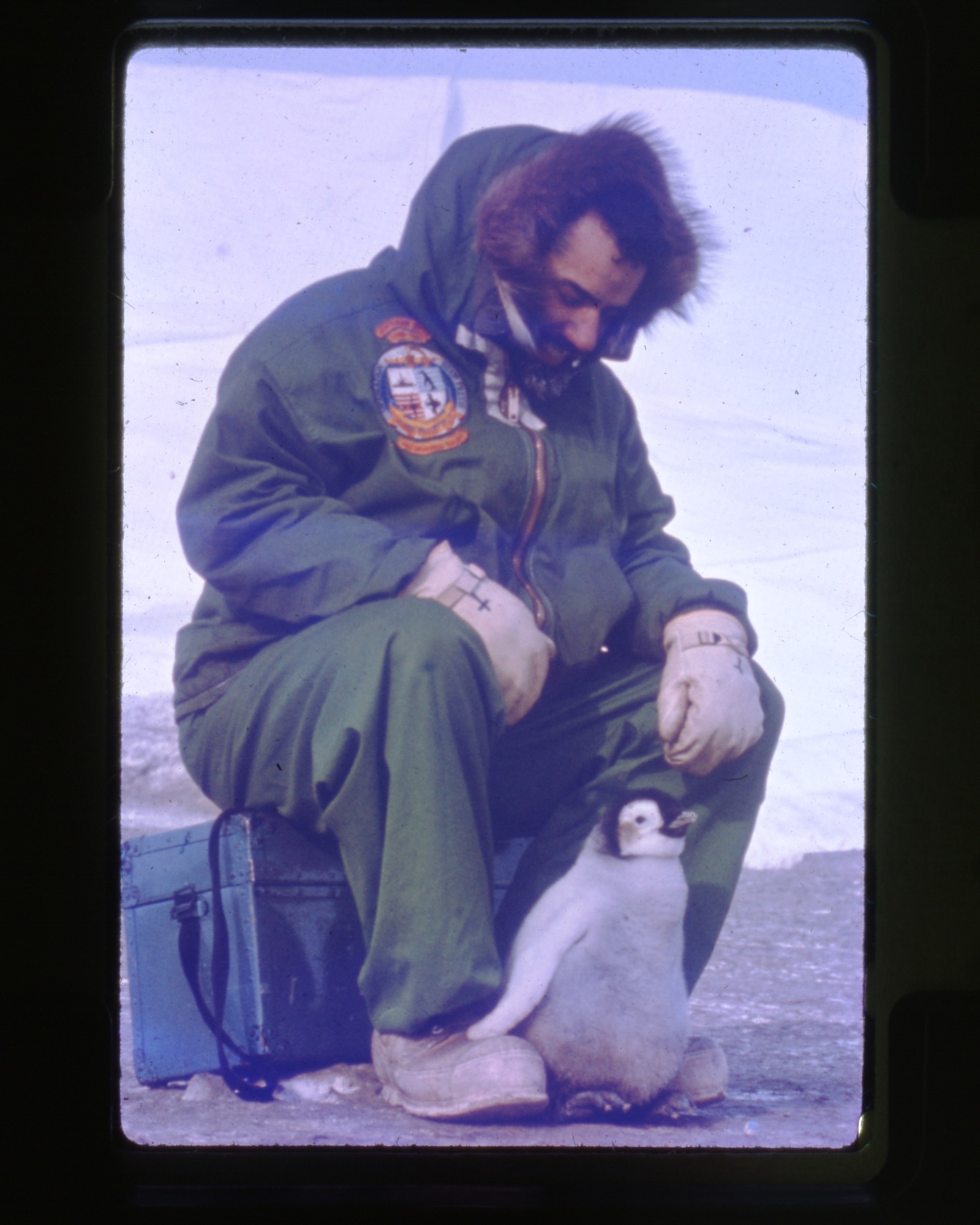
Small penguin standing between the feet of a man. He is sitting on a trunk, and wears a green snowsuit with a hood and gloves.

Participant sitting with a penguin on the Palmer Peninsula, Antarctica c. 1962. Smithsonian Libraries and Archives, Record Unit 7231, Waldo L. Schmitt Papers, Image No. SIA2012-0662


When braving the cold, be sure to bundle up and bring a friend. This pair comes from a photo in the Smithsonian Libraries and Archives, taken during the Palmer Peninsula Survey of 1962 and ’63.

Curator Waldo L. Schmitt led the Smithsonian team for the expedition in Antarctica. The group visited 26 locations, with a focus on the Palmer Peninsula and South Shetland Islands. During the expedition, they collected specimens and made observations covering plants, insects, birds, seals, and crustaceans.

You can read field books from the expedition that have been transcribed by volunteers with the Smithsonian Transcription Center.

arrow-up Back to top
Home
  • Facebook facebook
  • Instagram instagram
  • LinkedIn linkedin
  • YouTube youtube

  • Contact Us
  • Get Involved
  • Shop Online
  • Job Opportunities
  • Equal Opportunity
  • Inspector General
  • Records Requests
  • Accessibility
  • Host Your Event
  • Press Room
  • Privacy
  • Terms of Use