Skip to main content Skip to main navigation
heart-solid My Visit Donate
Home Smithsonian Institution IK development site for ODI
Press Enter to activate a submenu, down arrow to access the items and Escape to close the submenu.
    • Overview
    • Museums and Zoo
    • Entry and Guidelines
    • Museum Maps
    • Dine and Shop
    • Accessibility
    • Visiting with Kids
    • Group Visits
    • Overview
    • Exhibitions
    • Online Events
    • All Events
    • IMAX & Planetarium
    • Overview
    • Topics
    • Collections
    • Research Resources
    • Stories
    • Podcasts
    • Overview
    • For Caregivers
    • For Educators
    • For Students
    • For Academics
    • For Lifelong Learners
    • Overview
    • Become a Member
    • Renew Membership
    • Make a Gift
    • Volunteer
    • Overview
    • Our Organization
    • Our Leadership
    • Reports and Plans
    • Newsdesk
heart-solid My Visit Donate
  1. Home
  2. forward-slash
  3. Explore
  4. forward-slash
  5. Stories
  6. forward-slash
  7. This is How Much Marine Life Fits in One Cubic Foot

Explore

  • Overview
  • Topics
    • Art & Design
    • History & Culture
    • Science & Nature
    • Tech & Innovation
  • Collections
    • Open Access
    • Smithsonian Snapshot
    • Collection Spotlights
  • Research Resources
    • Libraries
    • Archives
  • Stories
  • Podcasts
Smithsonian Story

This is how much marine life fits in one cubic foot
April 5, 2023
Hannah S. Ostroff
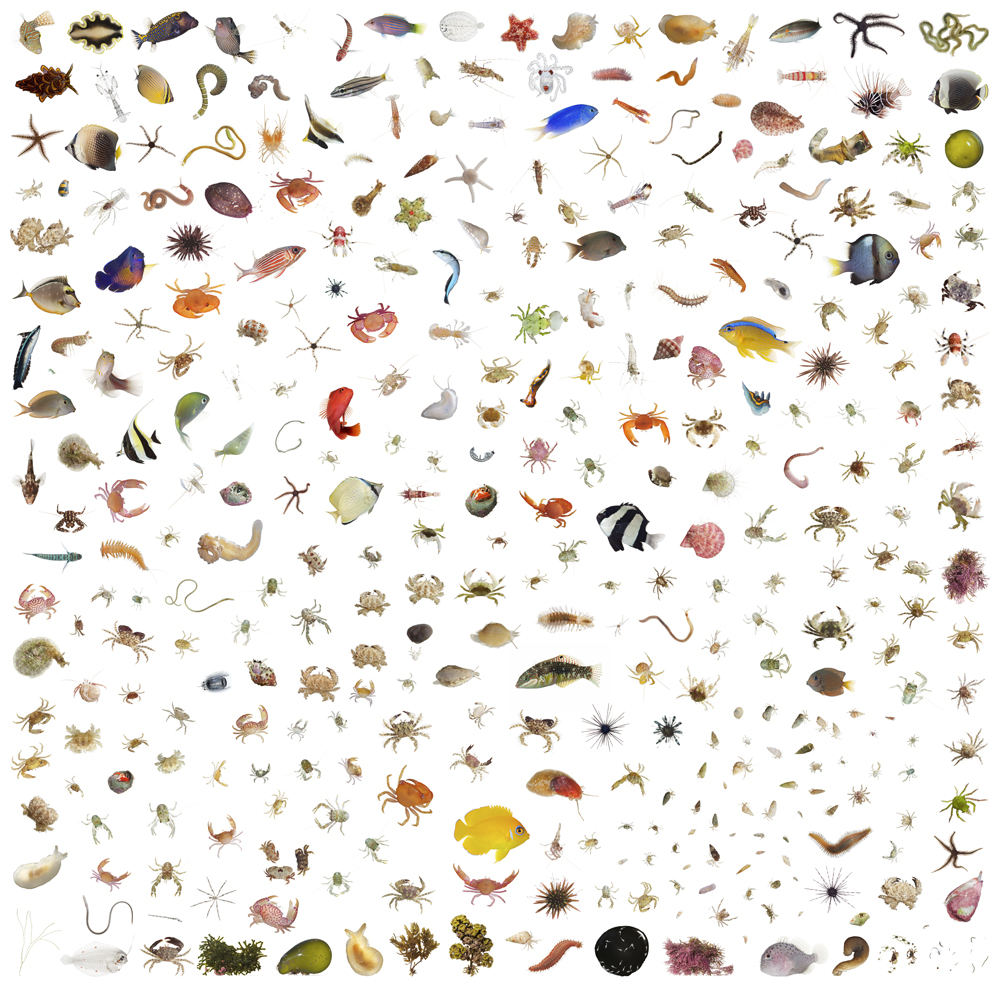
A grid of about 300 different marine animals on a white background. They include fish and shellfish.

A selection of reef creatures from Mo’orea, French Polynesia, revealed through inventorying one cubic foot from a reef off the coast of the Pacific island. Copyright David Liittschwager.


Picture a box. One foot on each side. Twelve inches. A petite cube.

Now imagine placing it outside, in your backyard or in a nature sanctuary or even on a reef in the Pacific Ocean.

How much wildlife would traverse that small space in 24 hours? It might be more than you think.

Off the coast of the island Mo’orea in French Polynesia, the results are both a stunning visual and an important tool for scientists.

A "biocube" is a 1-foot, green-framed cube that organisms can pass through. Studying what forms of life, both known and unknown, can be found in the cube in one day reveals the diversity of life on the planet. Biocube samples show enough variation to explore the complexity of entire ecosystems.
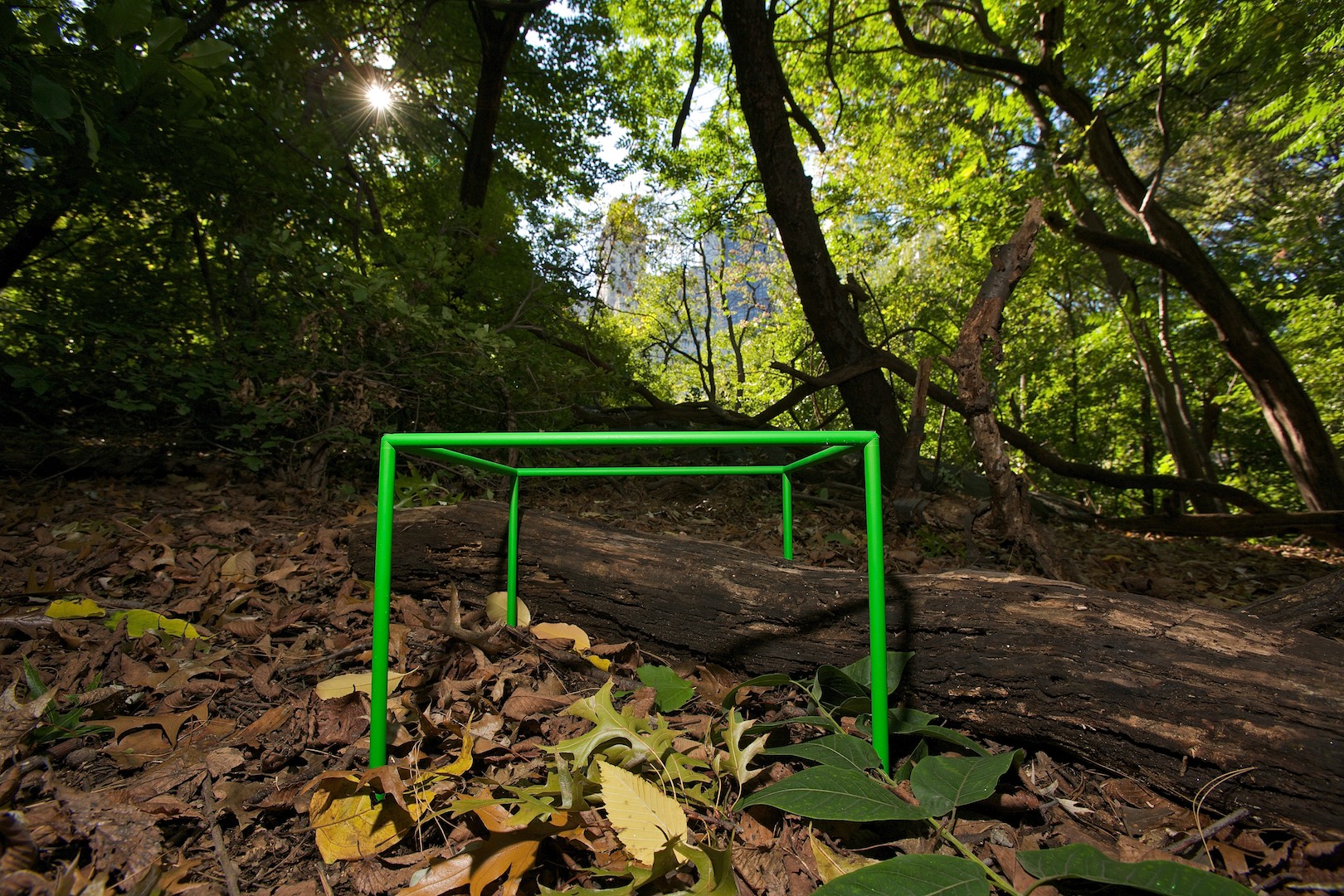
A hallow cube with green edges sits in a wooded park
A biocube in New York City’s Central Park. Photo by David Liittschwager.

Small and remote, Mo’orea is an ideal model ecosystem for documenting biodiversity, especially across its rich coral reef ecosystems.

"Life In One Cubic Foot"—an exhibition organized by the Smithsonian Institution Traveling Exhibition Service (SITES) in collaboration with the Smithsonian's National Museum of Natural History—tracks the work of scientists and a photographer to share the incredible variety of natural life around the world. Learn more about photographer David Liittschwager’s work from Smithsonian magazine.

Want to be a citizen-scientist? You can create and monitor your own biocube at home.

The exhibition is touring the nation. See the full SITES tour schedule.

arrow-up Back to top
Home
  • Facebook facebook
  • Instagram instagram
  • LinkedIn linkedin
  • YouTube youtube

  • Contact Us
  • Get Involved
  • Shop Online
  • Job Opportunities
  • Equal Opportunity
  • Inspector General
  • Records Requests
  • Accessibility
  • Host Your Event
  • Press Room
  • Privacy
  • Terms of Use