Skip to main content Skip to main navigation
heart-solid My Visit Donate
Home Smithsonian Institution IK development site for ODI
Press Enter to activate a submenu, down arrow to access the items and Escape to close the submenu.
    • Overview
    • Museums and Zoo
    • Entry and Guidelines
    • Museum Maps
    • Dine and Shop
    • Accessibility
    • Visiting with Kids
    • Group Visits
    • Overview
    • Exhibitions
    • Online Events
    • All Events
    • IMAX & Planetarium
    • Overview
    • Topics
    • Collections
    • Research Resources
    • Stories
    • Podcasts
    • Overview
    • For Caregivers
    • For Educators
    • For Students
    • For Academics
    • For Lifelong Learners
    • Overview
    • Become a Member
    • Renew Membership
    • Make a Gift
    • Volunteer
    • Overview
    • Our Organization
    • Our Leadership
    • Reports and Plans
    • Newsdesk
heart-solid My Visit Donate
  1. Home
  2. forward-slash
  3. Explore
  4. forward-slash
  5. Stories
  6. forward-slash
  7. The Groundhog’s Extinct, Horned Relative

Explore

  • Overview
  • Topics
    • Art & Design
    • History & Culture
    • Science & Nature
    • Tech & Innovation
  • Collections
    • Open Access
    • Smithsonian Snapshot
    • Collection Spotlights
  • Research Resources
    • Libraries
    • Archives
  • Stories
  • Podcasts
Smithsonian Story

The groundhog’s extinct, horned relative
February 1, 2021
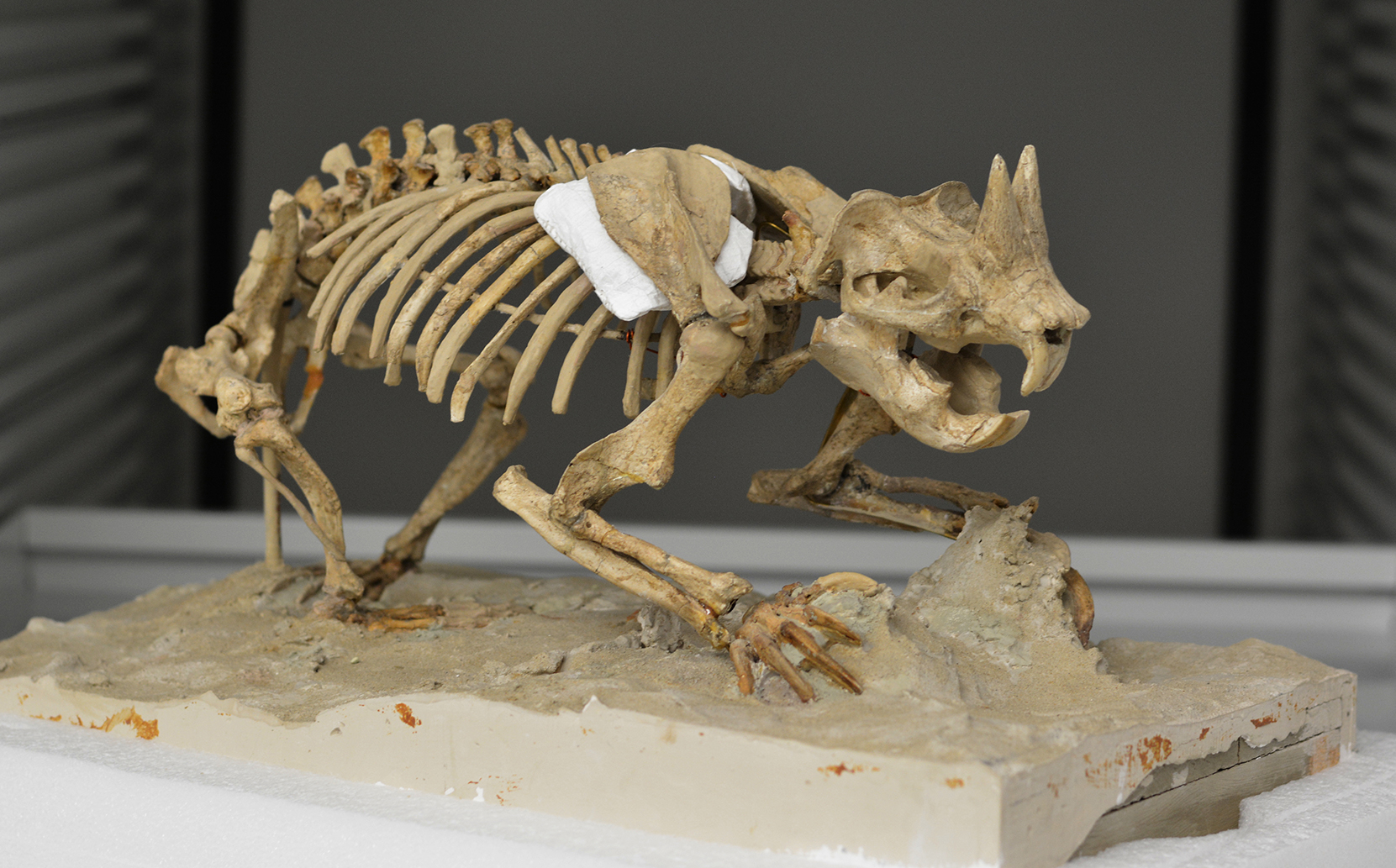
Small rodent fossil skeleton with pointy teeth and horns.

Ceratogaulus hatcheri, Smithsonian’s National Museum of Natural History


We don’t recommend pulling this little fella from its burrow to see if there’ll be six more weeks of winter. The small but fierce-looking Ceratogaulus hatcheri lived about 6 million years ago on the plains of what is now Kansas. It may have used those horns for self-defense.

The creature belongs to an extinct family of rodents called mylogaulids. Today, its closest living relative is the mountain beaver Aplodontia rufa. Both species reside with groundhogs, squirrels, prairie dogs, chipmunks and dormice in a group of rodents called the Sciuromorpha.

This specimen comes from the collection of the Smithsonian’s National Museum of Natural History.
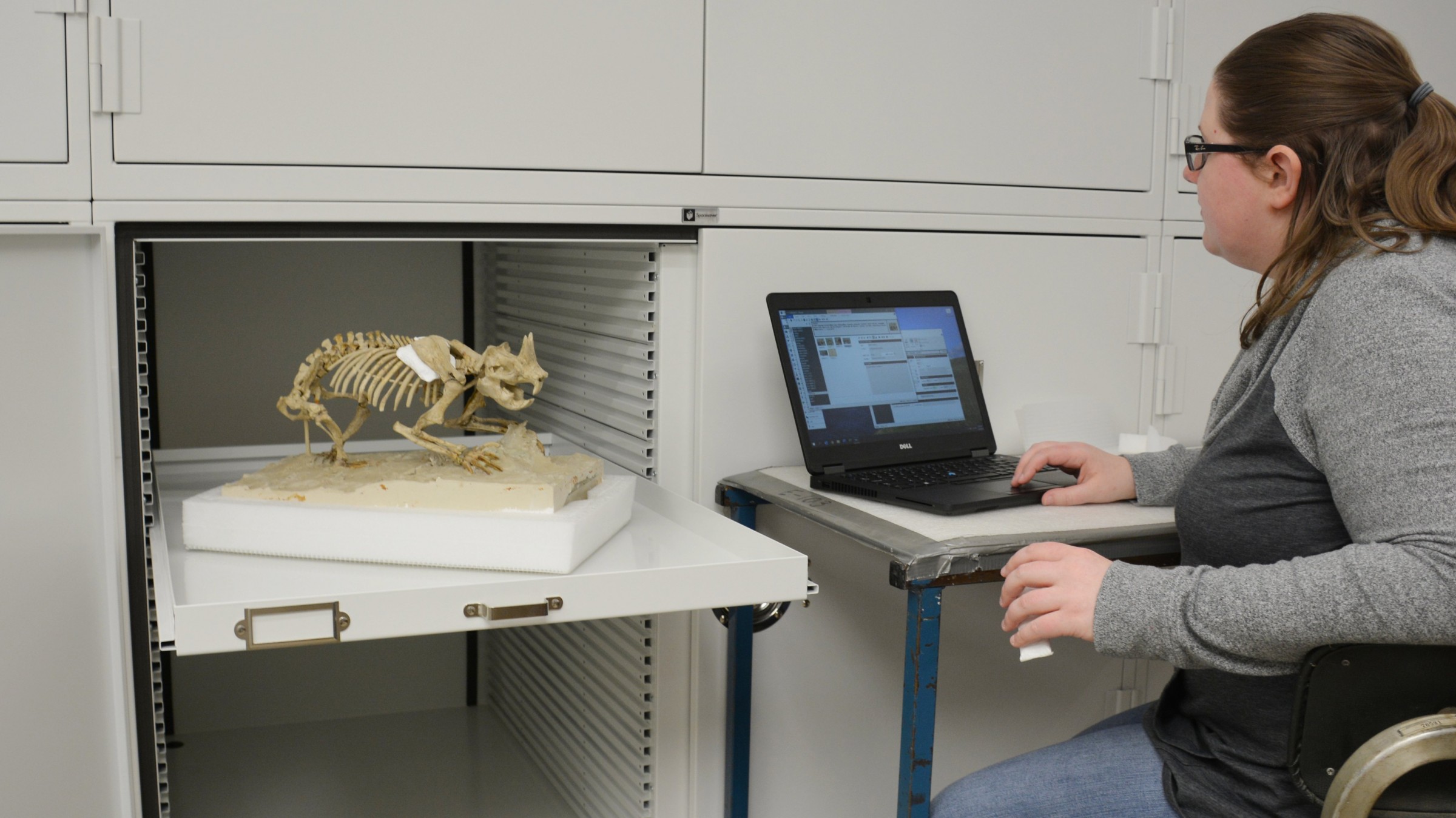
Small fossil rodent skeleton in a storage container. A woman sits nearby with an open laptop.

Ceratogaulus hatcheri in fossil collections storage with Amanda Millhouse, vertebrate paleontology collections manager at the Smithsonian’s National Museum of Natural History


arrow-up Back to top
Home
  • Facebook facebook
  • Instagram instagram
  • LinkedIn linkedin
  • YouTube youtube

  • Contact Us
  • Get Involved
  • Shop Online
  • Job Opportunities
  • Equal Opportunity
  • Inspector General
  • Records Requests
  • Accessibility
  • Host Your Event
  • Press Room
  • Privacy
  • Terms of Use