Skip to main content Skip to main navigation
heart-solid My Visit Donate
Home Smithsonian Institution IK development site for ODI
Press Enter to activate a submenu, down arrow to access the items and Escape to close the submenu.
    • Overview
    • Museums and Zoo
    • Entry and Guidelines
    • Museum Maps
    • Dine and Shop
    • Accessibility
    • Visiting with Kids
    • Group Visits
    • Overview
    • Exhibitions
    • Online Events
    • All Events
    • IMAX & Planetarium
    • Overview
    • Topics
    • Collections
    • Research Resources
    • Stories
    • Podcasts
    • Overview
    • For Caregivers
    • For Educators
    • For Students
    • For Academics
    • For Lifelong Learners
    • Overview
    • Become a Member
    • Renew Membership
    • Make a Gift
    • Volunteer
    • Overview
    • Our Organization
    • Our Leadership
    • Reports and Plans
    • Newsdesk
heart-solid My Visit Donate
  1. Home
  2. forward-slash
  3. Explore
  4. forward-slash
  5. Stories
  6. forward-slash
  7. Designing Easter Eggs

Explore

  • Overview
  • Topics
    • Art & Design
    • History & Culture
    • Science & Nature
    • Tech & Innovation
  • Collections
    • Open Access
    • Smithsonian Snapshot
    • Collection Spotlights
  • Research Resources
    • Libraries
    • Archives
  • Stories
  • Podcasts
Smithsonian Story

These intricate Easter egg designs are made using wax
April 1, 2021
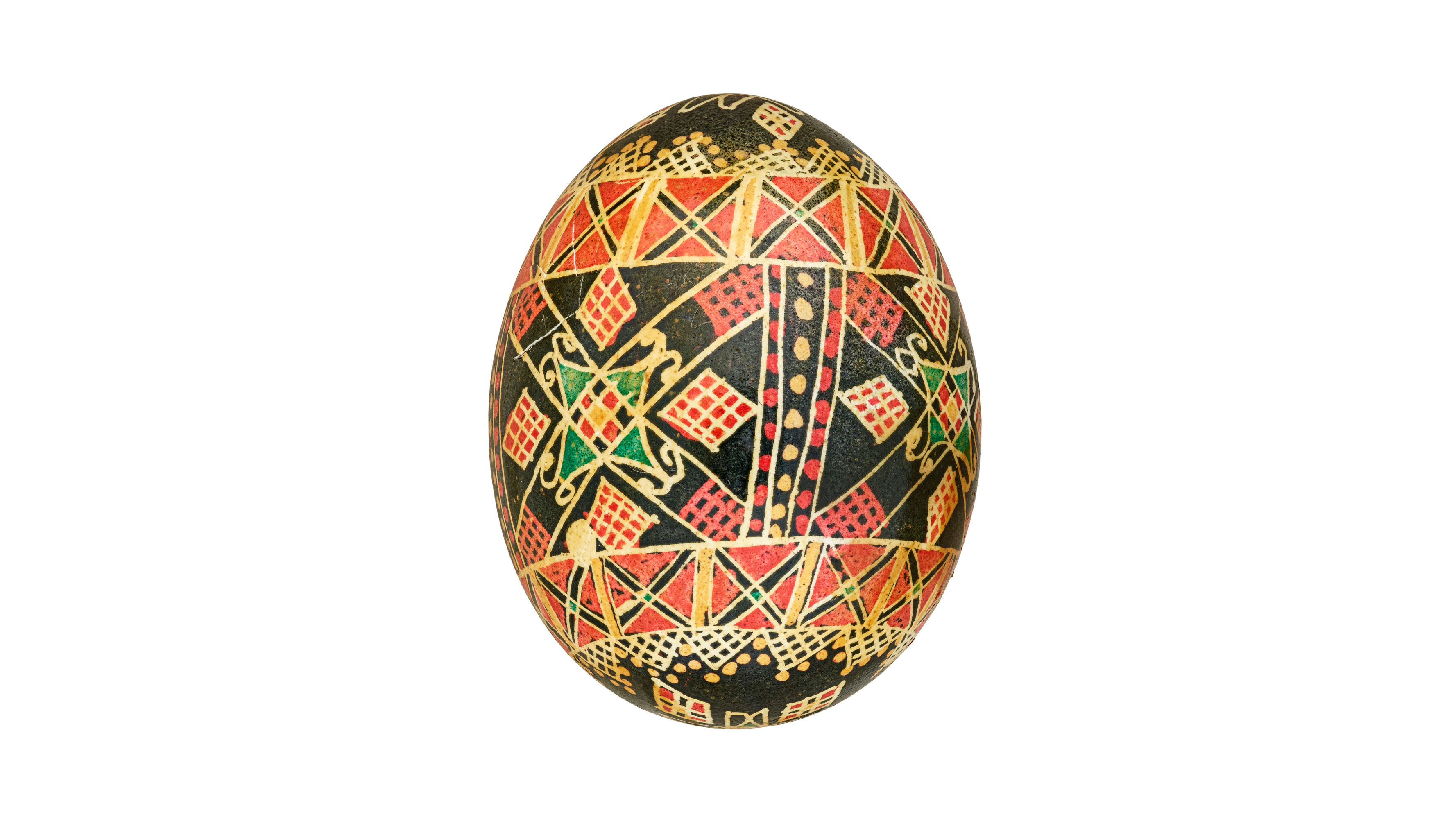
Egg covered in a geometric design with red, yellow, black and green.

Decorated Easter egg in the National Museum of American History’s collection


Hard-boiled and colored eggs are traditional for Easter in Poland, Russia and Ukraine. Many immigrants have brought these traditions with them to the U.S.

Called pisanka in Poland and pysanka in Ukraine, the eggs are decorated to be exchanged at Easter, symbolizing new life. According to a 1982 booklet on “Egg Art” in the American Folklife Center at the Library of Congress, it’s one of the most popular social and church traditions in Eastern European communities of Catholic faith.

Egg designs traditionally blend geometric symbols that represent fertility, protection and the natural world with emblems of Christianity.

Many are created using a wax-resist technique—similar to batik for clothing. First, wax is applied to the shell surface in a pattern, then the egg is dyed. Colors are traditionally used from lighter to darker shades. The colors in Ukrainian pysanka carry regional meanings: black is often considered a sacred color associated with the “other world,” and yellow can represent the harvest. When the wax is carefully removed, the colorful design remains.

Explore decorated Easter eggs in our collections, where no spoiled eggs have been reported.
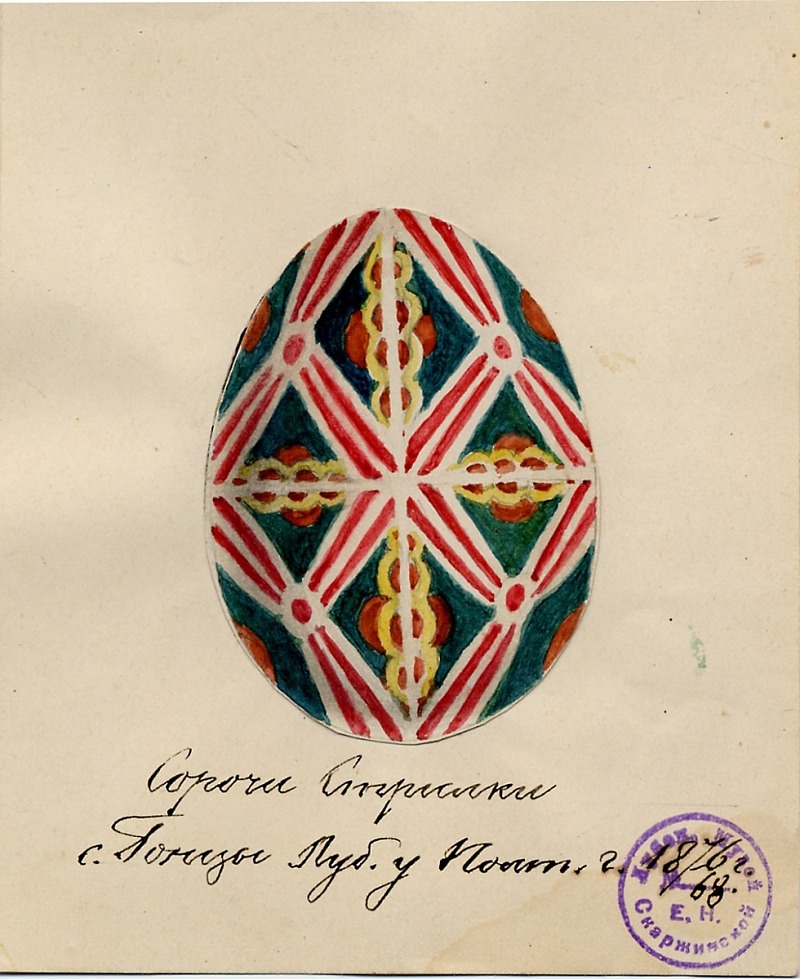
Drawing of a decorated Easter egg. It has a patterned shell with lines and circles in red, yellow and green.

Egg design from a collection of Russian Easter egg patterns, 1888-1896, in the  Archives Center, National Museum of American History
arrow-up Back to top
Home
  • Facebook facebook
  • Instagram instagram
  • LinkedIn linkedin
  • YouTube youtube

  • Contact Us
  • Get Involved
  • Shop Online
  • Job Opportunities
  • Equal Opportunity
  • Inspector General
  • Records Requests
  • Accessibility
  • Host Your Event
  • Press Room
  • Privacy
  • Terms of Use