Skip to main content Skip to main navigation
heart-solid My Visit Donate
Home Smithsonian Institution IK development site for ODI
Press Enter to activate a submenu, down arrow to access the items and Escape to close the submenu.
    • Overview
    • Museums and Zoo
    • Entry and Guidelines
    • Museum Maps
    • Dine and Shop
    • Accessibility
    • Visiting with Kids
    • Group Visits
    • Overview
    • Exhibitions
    • Online Events
    • All Events
    • IMAX & Planetarium
    • Overview
    • Topics
    • Collections
    • Research Resources
    • Stories
    • Podcasts
    • Overview
    • For Caregivers
    • For Educators
    • For Students
    • For Academics
    • For Lifelong Learners
    • Overview
    • Become a Member
    • Renew Membership
    • Make a Gift
    • Volunteer
    • Overview
    • Our Organization
    • Our Leadership
    • Reports and Plans
    • Newsdesk
heart-solid My Visit Donate

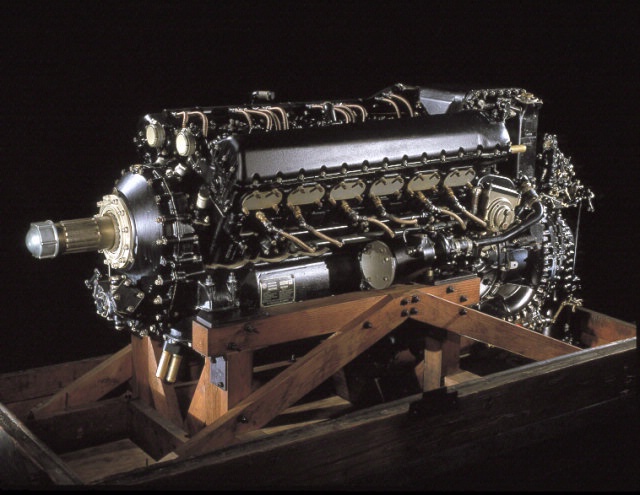
Wright Tornado T-3, V-12 Engine

Air and Space Museum

There are restrictions for re-using this image. For more information, visit the Smithsonian's Terms of Use page .
International media Interoperability Framework
IIIF provides researchers rich metadata and media viewing options for comparison of works across cultural heritage collections. Visit the IIIF page to learn more.
View manifest View in Mirador Viewer

    Object Details

    Manufacturer

    Wright Aeronautical

    Physical Description

    Type: Reciprocating, 12 cylinders, V-type, water-cooled
    Power rating: 447 kW (600 hp) at 1,800 rpm
    Displacement: 31.9 L (1947.48 cu in.)
    Bore and Stroke: 146 mm (5.75 in.) x 159 mm (6.25 in.)
    Weight): 526.2 kg (1,160 lb)

    Summary

    Wright Model T (for Tornado) development began in 1922 with a displacement of 32 liters (1947 cubic inches) and rated at 391 kW (525 shp); maintaining a reputation for many years as one of the most efficient water-cooled engines yet produced. T-3 development, produced in direct-drive and geared versions, began in 1923. It powered the Wright X0-3 Mohawk biplane, built for the 1924 Army competition for an experimental observation aircraft. However, proving to be overweight and under-powered for Army use, it failed to make the minimum required performance. Subsequently, for many years, this aircraft was used by Wright for engine flight testing.
    The T-3 was also installed in place of a Liberty engine in three Douglas DT-2 torpedo bombers redesignated as SDW-1A; and a variation known as the T-M successfully introduced for marine work. Application in the Pulitzer Prize Race and Schneider Cup Race was not particularly successful, with two accidents suffered in the latter.

    Credit Line

    Believed to have been transferred from the U.S. Navy

    Date

    Circa 1925

    Inventory Number

    A19660461000

    Restrictions & Rights

    Usage conditions apply

    Type

    PROPULSION-Reciprocating & Rotary

    Materials

    Rubber, Steel, Paint, Plastic, Aluminum, Textile, Brass, Copper

    Dimensions

    Height 108 cm (42.5 in.), Width 78.7 cm (31 in.), Depth 172.7 cm (68in.)

    Country of Origin

    United States of America

    See more items in

    National Air and Space Museum Collection

    Data Source

    National Air and Space Museum

    Metadata Usage

    Not determined

    Link to Original Record

    http://n2t.net/ark:/65665/nv9e871a317-f131-41c8-93bb-f1a24177ea31

    Record ID

    nasm_A19660461000

    Discover More

    Image of Packard Merlin V-1650-7 engine

    Propulsion

    Image of Packard Merlin V-1650-7 engine

    Propulsion

    arrow-up Back to top
    Home
    • Facebook facebook
    • Instagram instagram
    • LinkedIn linkedin
    • YouTube youtube

    • Contact Us
    • Get Involved
    • Shop Online
    • Job Opportunities
    • Equal Opportunity
    • Inspector General
    • Records Requests
    • Accessibility
    • Host Your Event
    • Press Room
    • Privacy
    • Terms of Use