Skip to main content Skip to main navigation
heart-solid My Visit Donate
Home Smithsonian Institution IK development site for ODI
Press Enter to activate a submenu, down arrow to access the items and Escape to close the submenu.
    • Overview
    • Museums and Zoo
    • Entry and Guidelines
    • Museum Maps
    • Dine and Shop
    • Accessibility
    • Visiting with Kids
    • Group Visits
    • Overview
    • Exhibitions
    • Online Events
    • All Events
    • IMAX & Planetarium
    • Overview
    • Topics
    • Collections
    • Research Resources
    • Stories
    • Podcasts
    • Overview
    • For Caregivers
    • For Educators
    • For Students
    • For Academics
    • For Lifelong Learners
    • Overview
    • Become a Member
    • Renew Membership
    • Make a Gift
    • Volunteer
    • Overview
    • Our Organization
    • Our Leadership
    • Reports and Plans
    • Newsdesk
heart-solid My Visit Donate

Wright brothers propeller, fixed-pitch, 1903 Wright Flyer

Air and Space Museum

This media is in the public domain (free of copyright restrictions). You can copy, modify, and distribute this work without contacting the Smithsonian. For more information, visit the Smithsonian's Open Access page.
International media Interoperability Framework
IIIF provides researchers rich metadata and media viewing options for comparison of works across cultural heritage collections. Visit the IIIF page to learn more.
View manifest View in Mirador Viewer
  • Full view of a two blade wooden propeller with faded silver paint and visible damage on the top right blade.
  • Full view of a two blade wooden propeller with faded silver paint. There is a small hole in the center.

    Object Details

    Manufacturer

    Wright Brothers, Dayton, Ohio

    Physical Description

    Type: Two-Blade, Fixed-Pitch, Wood
    Diameter: 259.1 cm (102 in.)
    Chord: 19.2 cm (7.6 in.)
    Engine Application: Four-Cylinder, Horizontal Inline, Water-Cooled, 9 kw (12 hp)

    Summary

    The Wright brothers designed and constructed the world's first practical fixed-pitch propeller and developed the aerodynamic theory to calculate its performance during the process of creating their historic 1903 Flyer. Conceptualizing the propeller as a rotating, twisted wing moving in a helical path, the brothers used airfoil data obtained from their wind tunnel to design blades able to convert power from their small engine into thrust.
    Believing that "the propeller should in every case be designed to meet the particular conditions of the machine to which it is applied," the Wrights designed their propellers (they used two on the airplane) for one specific performance regime. Using a drawknife and hatchets, they shaped the propellers from two laminated pieces of spruce, covered the tips with linen, and sealed them with aluminum powder suspended in varnish. Overall, these two propellers produced 66 percent efficiency, enough to get off the ground at Kitty Hawk.
    This original propeller was used on the 1903 Wright Flyer on December 17, 1903, during its first flight.

    Credit Line

    Gift of Harold & Ivonette Miller and others

    Date

    1903

    Inventory Number

    A19830381000

    Restrictions & Rights

    CC0

    Type

    PROPULSION-Propellers & Impellers

    Materials

    Kiln-dried spruce in two pieces
    Silver coating

    Dimensions

    Rotor/Propeller: 259.1 x 19.2 x 8.9cm (102 x 7 9/16 x 3 1/2 in.)

    Country of Origin

    United States of America

    See more items in

    National Air and Space Museum Collection

    Location

    National Air and Space Museum in Washington, DC

    Exhibition

    Wright Brothers & The Invention of the Aerial Age

    Data Source

    National Air and Space Museum

    Metadata Usage

    CC0

    Link to Original Record

    http://n2t.net/ark:/65665/nv9625ca406-5869-4a73-93ac-e5dd98eeab88

    Record ID

    nasm_A19830381000

    Discover More

    The 1903 Wright Flyer biplane against a black background.

    The Wright Brothers & The Invention of the Aerial Age

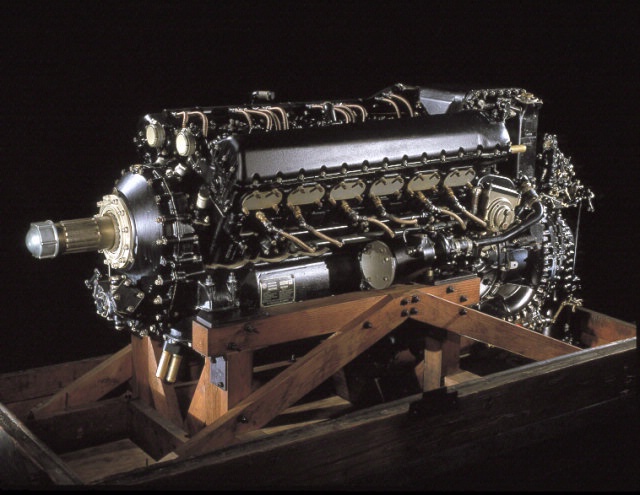
    Image of Packard Merlin V-1650-7 engine

    Propulsion

    Image of Packard Merlin V-1650-7 engine

    Propulsion

    arrow-up Back to top
    Home
    • Facebook facebook
    • Instagram instagram
    • LinkedIn linkedin
    • YouTube youtube

    • Contact Us
    • Get Involved
    • Shop Online
    • Job Opportunities
    • Equal Opportunity
    • Inspector General
    • Records Requests
    • Accessibility
    • Host Your Event
    • Press Room
    • Privacy
    • Terms of Use