
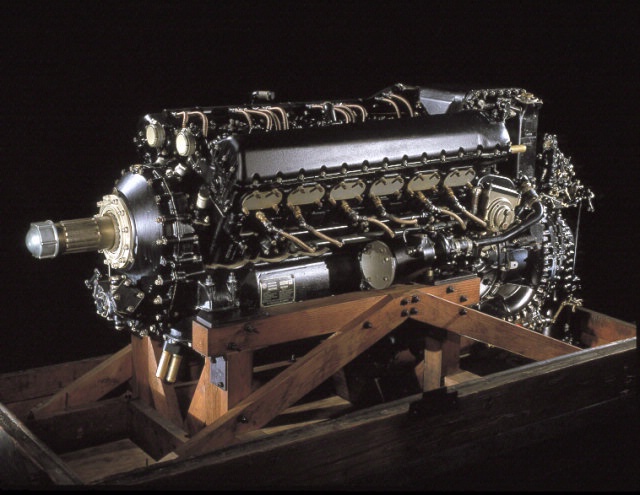
Object Details
Manufacturer
Wright Aeronautical
Physical Description
Type: Reciprocating, Inverted in-line, rotary, 2 rotors, liquid cooled
Power rating: 134-186 kw (180-250 hp) at 5,000 rpm
Displacement: 1 L (60 cu in)
Bore and Stroke: Not available
Weight: 108 kg (237 lb)
Summary
German engineer Felix Wankel conceived his rotary engine in 1924 and patented it in 1936. It featured a triangular cam connected to the drive shaft that acted like the pistons in a four-stroke cycle engine. Wankel submitted his designs to the German automobile company NSU. Wankel and NSU built and tested the first rotary in early 1957. The engine saw its greatest success in Mazda automobiles, but has also been used in motorcycles, go-karts, air-conditioner systems, and aircraft.
Wright Aeronautical adapted three RC2-60 automobile engines for flight testing in 1970. The one displayed here was probably the first Wankel engine to power an airplane, a Cessna Cardinal. Another powered a Lockheed Q-Star to demonstrate feasibility, performance, and quiet flight. The third powered a Hughes TH-55 helicopter.
Economic considerations (e.g. fuel burn, emissions) seem to have greatly diminished interest in the Wankel concept more recently.
Credit Line
Gift of the Paterson Museum
Date
1970
Inventory Number
A19870228000
Restrictions & Rights
Usage conditions apply
Type
PROPULSION-Reciprocating & Rotary
Country of Origin
United States of America
See more items in
National Air and Space Museum Collection
Location
Steven F. Udvar-Hazy Center in Chantilly, VA
Hangar
Boeing Aviation Hangar
Data Source
National Air and Space Museum
Link to Original Record
Record ID
nasm_A19870228000