
Object Details
Manufacturer
General Electric Aircraft Engines
Physical Description
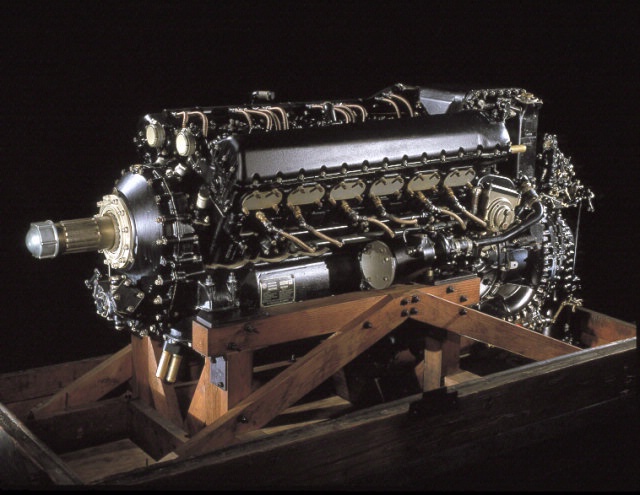
Cutaway turbojet engine with a quarter of its exterior paneling removed so that the insides are revealed. The middle exterior panel is green.
Type: Turbojet, single-shaft
Thrust: 12,680 N (2,850lb) at 16,500 rpm
Compressor: 8-stage axial
Combustor: Annular
Turbine: 2-stage axial
Weight: 181 kg (398 lb)
Summary
In late 1953, General Electric began a design study of a high thrust-to-weight ratio turbojet engine. The prototype J85 engine ran in January 1956, the first flight was in August 1958 as the power plant of the McDonnell GAM-72 missile, and in September 1958 the prototype North American T-39 Sabreliner flew for the first time powered by the first man-rated J85 engines.
The J85 was the first U.S. small turbine engine to go into production with an afterburner. The most important applications were the Northrop T-38 Talon, the first supersonic trainer, and Northrop F-5 Freedom Fighter, a low-cost fighter used by many nations from the 1960s through the 1980s. The non-afterburning J85-GE-17A powered the Cessna A-37A/B attack aircraft. The J85 had the highest thrust-to-weight ratio of production engines built for its time (up to 7.3:1 on the J85-GE-21). GE built more than 12,000 J85 engines before production ended in 1988.
Credit Line
Transferred from the 175th Tactical Fighter Group, Maryland Air National Guard
Date
1966
Inventory Number
A19800072000
Restrictions & Rights
Usage conditions apply
Type
PROPULSION-Turbines (Jet)
Materials
Metal alloys, aluminum alloys, iron alloys, copper alloys, plastic, fabric, rubber
Dimensions
3-D (Do not include stand or crank): 114.3 × 66 × 58.4cm (3 ft. 9 in. × 2 ft. 2 in. × 1 ft. 11 in.)
Overall (Includes stand): 114.3 × 132.1 × 81.9cm (3 ft. 9 in. × 4 ft. 4 in. × 2 ft. 8 1/4 in.)
Country of Origin
United States of America
See more items in
National Air and Space Museum Collection
Data Source
National Air and Space Museum
Link to Original Record
Record ID
nasm_A19800072000