Skip to main content Skip to main navigation
heart-solid My Visit Donate
Home Smithsonian Institution IK development site for ODI
Press Enter to activate a submenu, down arrow to access the items and Escape to close the submenu.
    • Overview
    • Museums and Zoo
    • Entry and Guidelines
    • Museum Maps
    • Dine and Shop
    • Accessibility
    • Visiting with Kids
    • Group Visits
    • Overview
    • Exhibitions
    • Online Events
    • All Events
    • IMAX & Planetarium
    • Overview
    • Topics
    • Collections
    • Research Resources
    • Stories
    • Podcasts
    • Overview
    • For Caregivers
    • For Educators
    • For Students
    • For Academics
    • For Lifelong Learners
    • Overview
    • Become a Member
    • Renew Membership
    • Make a Gift
    • Volunteer
    • Overview
    • Our Organization
    • Our Leadership
    • Reports and Plans
    • Newsdesk
heart-solid My Visit Donate

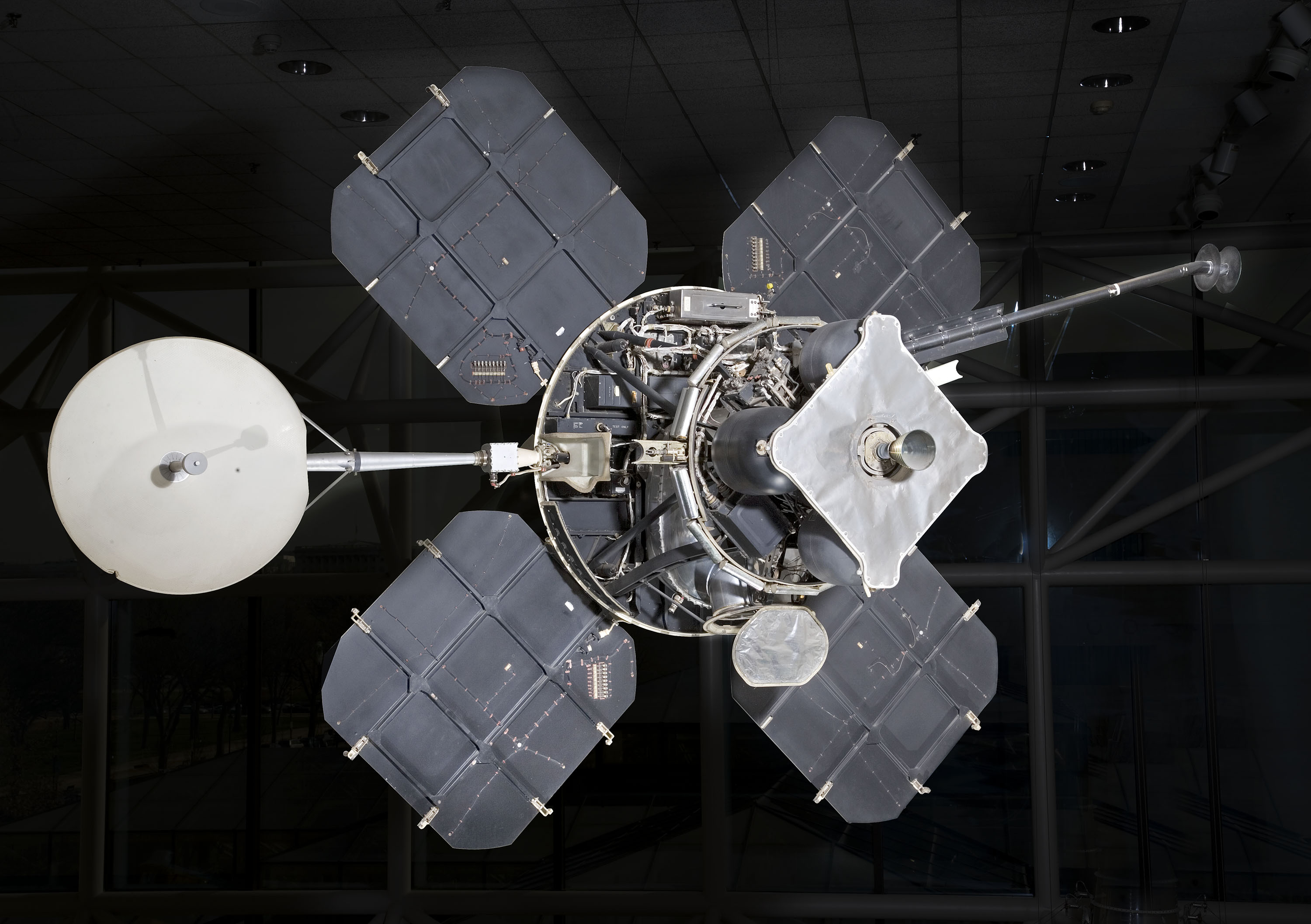
Telescope Module, Hopkins Ultraviolet Telescope

Air and Space Museum

This media is in the public domain (free of copyright restrictions). You can copy, modify, and distribute this work without contacting the Smithsonian. For more information, visit the Smithsonian's Open Access page.
International media Interoperability Framework
IIIF provides researchers rich metadata and media viewing options for comparison of works across cultural heritage collections. Visit the IIIF page to learn more.
View manifest View in Mirador Viewer
  • Side view of Hopkins Ultraviolet Telescope Module
  • Side view of inside of Hopkins Ultraviolet Telescope Module
  • Top view into Hopkins Ultraviolet Telescope Module

    Object Details

    Manufacturer

    Johns Hopkins University, Applied Physics Laboratory

    Summary

    Original 36-inch reflecting telescope that flew on the Shuttle twice as part of the ASTRO mission. It employs a medium dispersion spectrometer at a modified prime focus. It was designed to observe faint celestial objects in the ultraviolet region of the spectrum. On the first mission in December 1990 the instrument observed over 75 astronomical sources including active galactic nuclei, quasars, variable stars and supernova remnants. After this successful mission it was modified to concentrate on the relatively unknown far-ultraviolet region and flown on Astro-2 in March 1995. Observations from this second flight provided a wealth of data including the first clear detection of the distribution of intergalactic helium left over from the Big Bang. Its calculated distribution in the pre-galaxy formation Universe fits the bubble and void geometry seen in the earliest and present universe. The telescope was manufactured by the Center for Astrophysical Sciences and the Applied Physics Lab of Johns Hopkins University. It was transferred by NASA in 2001.

    Credit Line

    Transferred from the National Aeronautics and Space Administration

    Inventory Number

    A20010307000

    Restrictions & Rights

    CC0

    Type

    INSTRUMENTS-Scientific

    Materials

    Mixed metals, glass optics, electronics
    Glass optics
    Electronics

    Dimensions

    3-D: 370 x 111.8cm, 787.4kg (12 ft. 1 11/16 in. x 44 in., 1736lb.)

    Country of Origin

    United States of America

    See more items in

    National Air and Space Museum Collection

    Data Source

    National Air and Space Museum

    Metadata Usage

    CC0

    Link to Original Record

    http://n2t.net/ark:/65665/nv90f5230d4-4c99-44da-8729-03fd13062406

    Record ID

    nasm_A20010307000

    Discover More

    Lunar orbiter on display

    Space Science

    Lunar orbiter on display

    Space Science

    arrow-up Back to top
    Home
    • Facebook facebook
    • Instagram instagram
    • LinkedIn linkedin
    • YouTube youtube

    • Contact Us
    • Get Involved
    • Shop Online
    • Job Opportunities
    • Equal Opportunity
    • Inspector General
    • Records Requests
    • Accessibility
    • Host Your Event
    • Press Room
    • Privacy
    • Terms of Use