Skip to main content Skip to main navigation
heart-solid My Visit Donate
Home Smithsonian Institution IK development site for ODI
Press Enter to activate a submenu, down arrow to access the items and Escape to close the submenu.
    • Overview
    • Museums and Zoo
    • Entry and Guidelines
    • Museum Maps
    • Dine and Shop
    • Accessibility
    • Visiting with Kids
    • Group Visits
    • Overview
    • Exhibitions
    • Online Events
    • All Events
    • IMAX & Planetarium
    • Overview
    • Topics
    • Collections
    • Research Resources
    • Stories
    • Podcasts
    • Overview
    • For Caregivers
    • For Educators
    • For Students
    • For Academics
    • For Lifelong Learners
    • Overview
    • Become a Member
    • Renew Membership
    • Make a Gift
    • Volunteer
    • Overview
    • Our Organization
    • Our Leadership
    • Reports and Plans
    • Newsdesk
heart-solid My Visit Donate

Spectrometer Grating Element, Extreme Ultraviolet, U.S. Air Force

Air and Space Museum

There are restrictions for re-using this image. For more information, visit the Smithsonian's Terms of Use page .
International media Interoperability Framework
IIIF provides researchers rich metadata and media viewing options for comparison of works across cultural heritage collections. Visit the IIIF page to learn more.
View manifest View in Mirador Viewer

    Object Details

    Manufacturer

    U.S. Air Force, Geophysics Laboratory

    Summary

    Grazing incidence grating from the Extreme Ultraviolet scanning spectrometer. Part of the detector system for this series of monochrometers flown on sounding rockets by the Air Force in the late 1950s through the 1970s. This instrument obtained the spectrum as an electrical signal in contrast to the earlier spectrometers that recorded spectra on photographic film. It was designed to acquire the extreme ultraviolet part of the spectrum of the sun by scanning the solar spectrum that had been dispersed from a diffraction grating. A special high-work-function photocathode scanned the spectral region from 250 to 1300 Angstroms, and the signal was amplified in the tube by a cascade amplifier, whose design was intermediate between dynodes and the later chaneltrons. This spectrometer (serial number 53) dates back to 1971 and was built by the Air Force Geophysics Laboratory under the direction of Hans Hintereggar. This is an actual flight instrument that may have flown on an Aerobee rocket. The U.S. Air Force transferred this to NASM in 1990.

    Credit Line

    Transferred from the United States Air Force

    Inventory Number

    A19930088002

    Restrictions & Rights

    Usage conditions apply

    Type

    INSTRUMENTS-Scientific

    Materials

    magnesium, aluminum, glass, gold film

    Dimensions

    3-D: 4.4 x 1.9 x 3.2cm (1 3/4 x 3/4 x 1 1/4 in.)

    Country of Origin

    United States of America

    See more items in

    National Air and Space Museum Collection

    Location

    Steven F. Udvar-Hazy Center in Chantilly, VA

    Hangar

    Boeing Aviation Hangar

    Data Source

    National Air and Space Museum

    Metadata Usage

    Not determined

    Link to Original Record

    http://n2t.net/ark:/65665/nv9384f1ad6-63e9-4102-a3a1-e3ba64dc9a28

    Record ID

    nasm_A19930088002

    Discover More

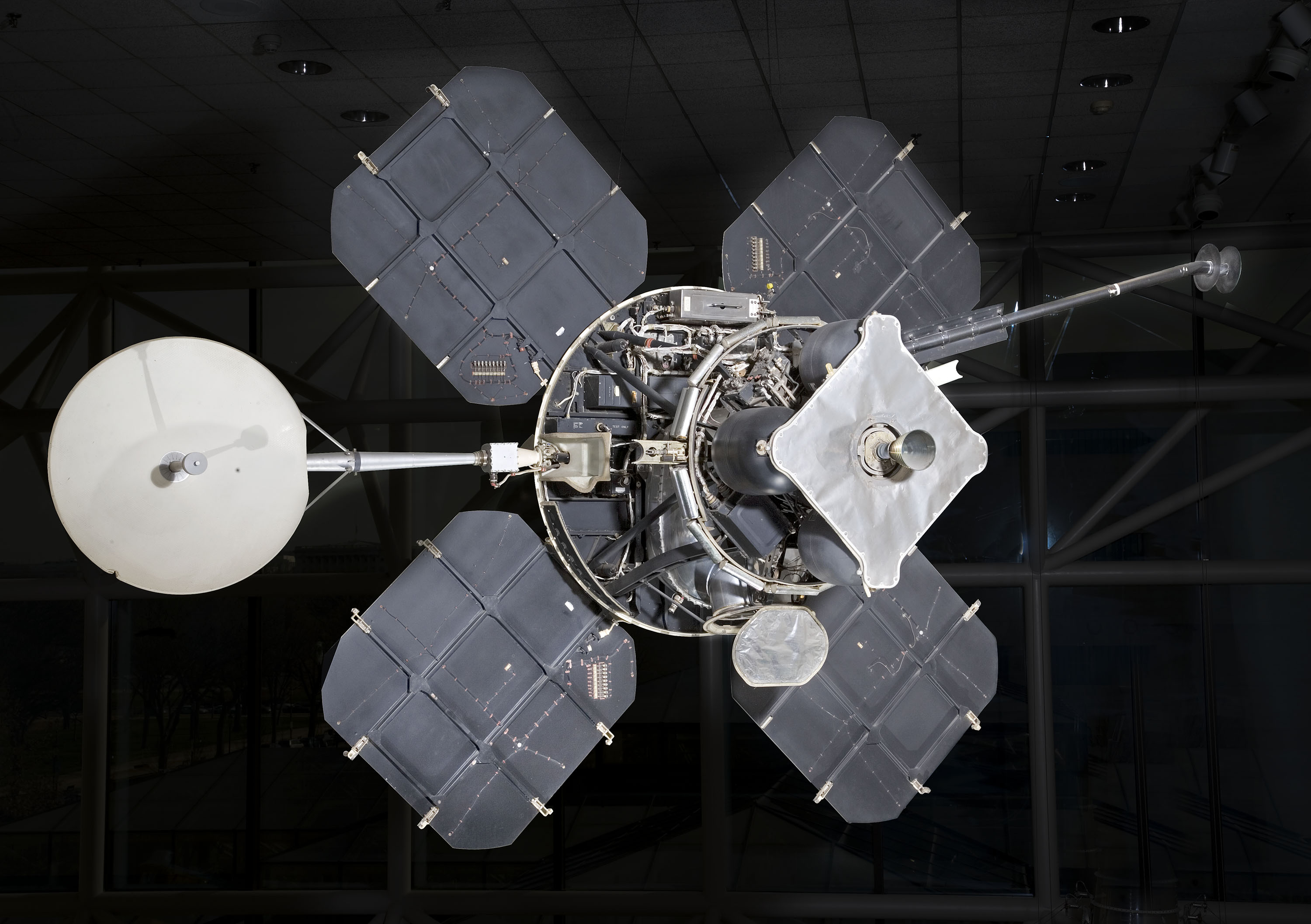
    Lunar orbiter on display

    Space Science

    Lunar orbiter on display

    Space Science

    arrow-up Back to top
    Home
    • Facebook facebook
    • Instagram instagram
    • LinkedIn linkedin
    • YouTube youtube

    • Contact Us
    • Get Involved
    • Shop Online
    • Job Opportunities
    • Equal Opportunity
    • Inspector General
    • Records Requests
    • Accessibility
    • Host Your Event
    • Press Room
    • Privacy
    • Terms of Use