Skip to main content Skip to main navigation
heart-solid My Visit Donate
Home Smithsonian Institution IK development site for ODI
Press Enter to activate a submenu, down arrow to access the items and Escape to close the submenu.
    • Overview
    • Museums and Zoo
    • Entry and Guidelines
    • Museum Maps
    • Dine and Shop
    • Accessibility
    • Visiting with Kids
    • Group Visits
    • Overview
    • Exhibitions
    • Online Events
    • All Events
    • IMAX & Planetarium
    • Overview
    • Topics
    • Collections
    • Research Resources
    • Stories
    • Podcasts
    • Overview
    • For Caregivers
    • For Educators
    • For Students
    • For Academics
    • For Lifelong Learners
    • Overview
    • Become a Member
    • Renew Membership
    • Make a Gift
    • Volunteer
    • Overview
    • Our Organization
    • Our Leadership
    • Reports and Plans
    • Newsdesk
heart-solid My Visit Donate

Spark Plugs, Lockheed Sirius "Tingmissartoq", Lindbergh

Air and Space Museum

There are restrictions for re-using this image. For more information, visit the Smithsonian's Terms of Use page .
International media Interoperability Framework
IIIF provides researchers rich metadata and media viewing options for comparison of works across cultural heritage collections. Visit the IIIF page to learn more.
View manifest View in Mirador Viewer

Object Details

Physical Description

Four spark plugs. A conical black metal piece with a round brass cap at the smaller end.

Summary

Charles A. Lindbergh and his wife, Anne Morrow Lindbergh, flew in their Lockheed Sirius aircraft on two significant missions, one in 1931 and the other in 1933. The first flight in 1931 was to the Orient. This flight successfully proved the viability of using the great circle to navigate from the West to the East via the North. In 1933 the Lindberghs again flew the Sirius across the Atlantic, this time on survey flights to gather valuable information for planning commercial air transport routes for the North and South Atlantic.
Upon returning in late 1933, Charles Lindbergh donated the aircraft and the material support items to the American Museum of Natural History in New York City where they were displayed in the Hall of Ocean Life. When the museum deaccessioned the collection it was sent to the United States Air Force Museum. In 1959 it was decided that the aircraft did not represent the Air Force and the collection was then transferred to the Smithsonian Institution's Air Museum. Every possible space of the aircraft was utilized to carry supplies during the flights.
The objects in this collection are representative of these mission support and personal items carried. These objects serve to illustrate the essential equipment that would have been taken on international exploratory flights during the 1920s and 1930s.

Credit Line

Transferred from the USAF Museum

Date

1931-1933

Inventory Number

A20030083003

Restrictions & Rights

Usage conditions apply

Type

PROPULSION-Components (Engine Parts)

Materials

Ferrous Alloy
Copper Alloy (Brass)
Paper
Ink
Coating

Dimensions

Overall: 2 x 7/8in., 0.5lb. (5.08 x 2.22cm, 0.2kg)

See more items in

National Air and Space Museum Collection

Data Source

National Air and Space Museum

Metadata Usage

Not determined

Link to Original Record

http://n2t.net/ark:/65665/nv943b3bc6f-f424-46b7-b055-a967f8c8623e

Record ID

nasm_A20030083003

Discover More

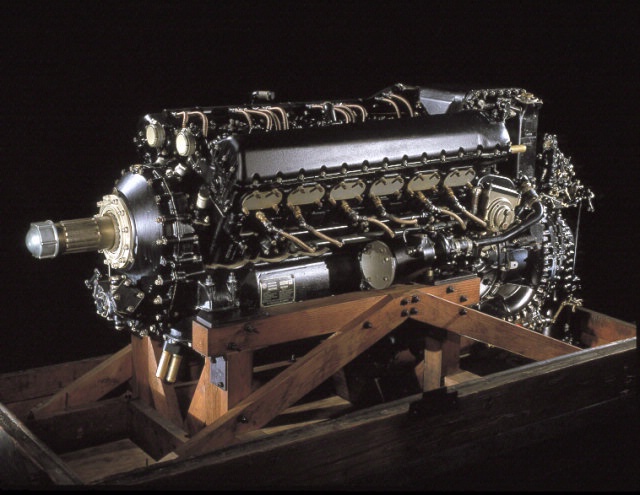
Image of Packard Merlin V-1650-7 engine

Propulsion

Image of Packard Merlin V-1650-7 engine

Propulsion

arrow-up Back to top
Home
  • Facebook facebook
  • Instagram instagram
  • LinkedIn linkedin
  • YouTube youtube

  • Contact Us
  • Get Involved
  • Shop Online
  • Job Opportunities
  • Equal Opportunity
  • Inspector General
  • Records Requests
  • Accessibility
  • Host Your Event
  • Press Room
  • Privacy
  • Terms of Use