Skip to main content Skip to main navigation
heart-solid My Visit Donate
Home Smithsonian Institution IK development site for ODI
Press Enter to activate a submenu, down arrow to access the items and Escape to close the submenu.
    • Overview
    • Museums and Zoo
    • Entry and Guidelines
    • Museum Maps
    • Dine and Shop
    • Accessibility
    • Visiting with Kids
    • Group Visits
    • Overview
    • Exhibitions
    • Online Events
    • All Events
    • IMAX & Planetarium
    • Overview
    • Topics
    • Collections
    • Research Resources
    • Stories
    • Podcasts
    • Overview
    • For Caregivers
    • For Educators
    • For Students
    • For Academics
    • For Lifelong Learners
    • Overview
    • Become a Member
    • Renew Membership
    • Make a Gift
    • Volunteer
    • Overview
    • Our Organization
    • Our Leadership
    • Reports and Plans
    • Newsdesk
heart-solid My Visit Donate

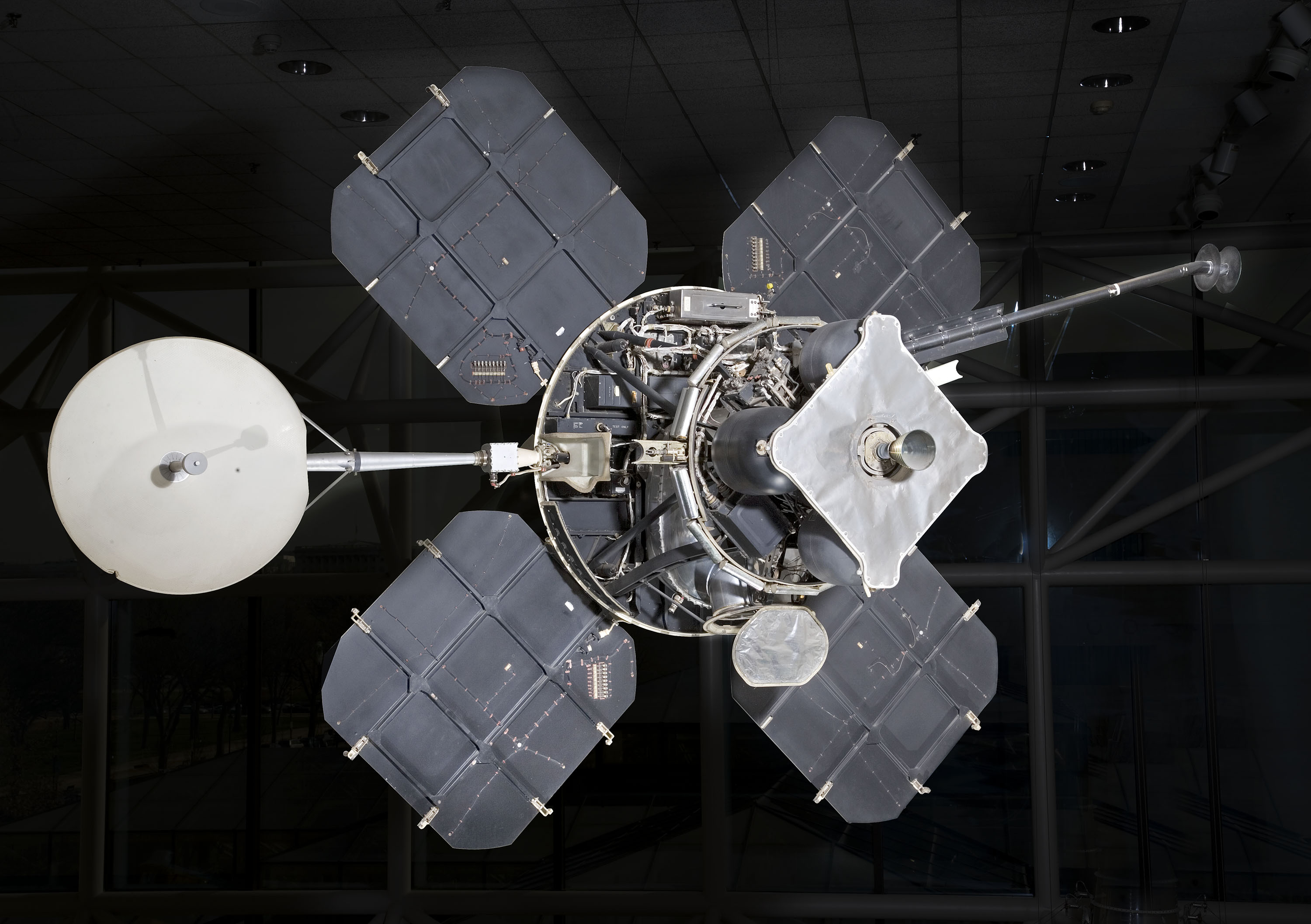
Spacecraft, New Horizons, Mock-up, model

Air and Space Museum

This media is in the public domain (free of copyright restrictions). You can copy, modify, and distribute this work without contacting the Smithsonian. For more information, visit the Smithsonian's Open Access page.
International media Interoperability Framework
IIIF provides researchers rich metadata and media viewing options for comparison of works across cultural heritage collections. Visit the IIIF page to learn more.
View manifest View in Mirador Viewer
  • New Horizons Spacecraft Mock-up Model hanging in museum
  • Bottom of New Horizons Spacecraft Mock-up Model hanging in museum
  • New Horizons Spacecraft Mock-up Model hanging in museum

    Object Details

    Summary

    New Horizons will be the first spacecraft to visit Pluto and the Kuiper Belt in the outer solar system. It was launched aboard an Atlas V rocket from Cape Canaveral Air Force Base, Florida, on January 19, 2006, and conducted a Jupiter flyby 13 months later to gain further acceleration. New Horizons will make its closest approach to Pluto on July 14, 2015.
    The half-ton spacecraft contains scientific instruments to map the surface geology and composition of Pluto and its three moons, investigate Pluto's atmosphere, measure the solar wind, and assess interplanetary dust and other particles. After it passes Pluto, controllers plan to fly the spacecraft by one or two Kuiper Belt objects. New Horizons carries several souvenirs from Earth, including some of the remains of Clyde Tombaugh (1906-1997), discoverer of Pluto, and a piece of SpaceShipOne.
    The Johns Hopkins University Applied Physics Laboratory donated this to the Museum in 2008.

    Alternate Name

    New Horizons (Full-Scale Model)

    Key Accomplishment(s)

    First Spacecraft to Explore Pluto

    Brief Description

    New Horizons is the first spacecraft to explore Pluto, its moons, and the icy bodies of the Kuiper Belt. It launched in 2006 and arrived at Pluto in the summer of 2015.

    Credit Line

    Gift of John Hopkins University, Applied Physics Laboratory

    Inventory Number

    A20080394000

    Restrictions & Rights

    CC0

    Type

    MODELS-Uncrewed Spacecraft & Parts

    Materials

    Wood, mylar, and plastics

    Dimensions

    3-D: 274.3 × 213.4 × 198.1cm, 210.9kg (9 ft. × 7 ft. × 6 ft. 6 in., 465lb.)

    Country of Origin

    United States of America

    See more items in

    National Air and Space Museum Collection

    Data Source

    National Air and Space Museum

    Metadata Usage

    CC0

    Link to Original Record

    http://n2t.net/ark:/65665/nv92bb90afa-2dc6-460a-99d2-d19d4f0dd93d

    Record ID

    nasm_A20080394000

    Discover More

    Lunar orbiter on display

    Space Science

    Lunar orbiter on display

    Space Science

    arrow-up Back to top
    Home
    • Facebook facebook
    • Instagram instagram
    • LinkedIn linkedin
    • YouTube youtube

    • Contact Us
    • Get Involved
    • Shop Online
    • Job Opportunities
    • Equal Opportunity
    • Inspector General
    • Records Requests
    • Accessibility
    • Host Your Event
    • Press Room
    • Privacy
    • Terms of Use