Skip to main content Skip to main navigation
heart-solid My Visit Donate
Home Smithsonian Institution IK development site for ODI
Press Enter to activate a submenu, down arrow to access the items and Escape to close the submenu.
    • Overview
    • Museums and Zoo
    • Entry and Guidelines
    • Museum Maps
    • Dine and Shop
    • Accessibility
    • Visiting with Kids
    • Group Visits
    • Overview
    • Exhibitions
    • Online Events
    • All Events
    • IMAX & Planetarium
    • Overview
    • Topics
    • Collections
    • Research Resources
    • Stories
    • Podcasts
    • Overview
    • For Caregivers
    • For Educators
    • For Students
    • For Academics
    • For Lifelong Learners
    • Overview
    • Become a Member
    • Renew Membership
    • Make a Gift
    • Volunteer
    • Overview
    • Our Organization
    • Our Leadership
    • Reports and Plans
    • Newsdesk
heart-solid My Visit Donate

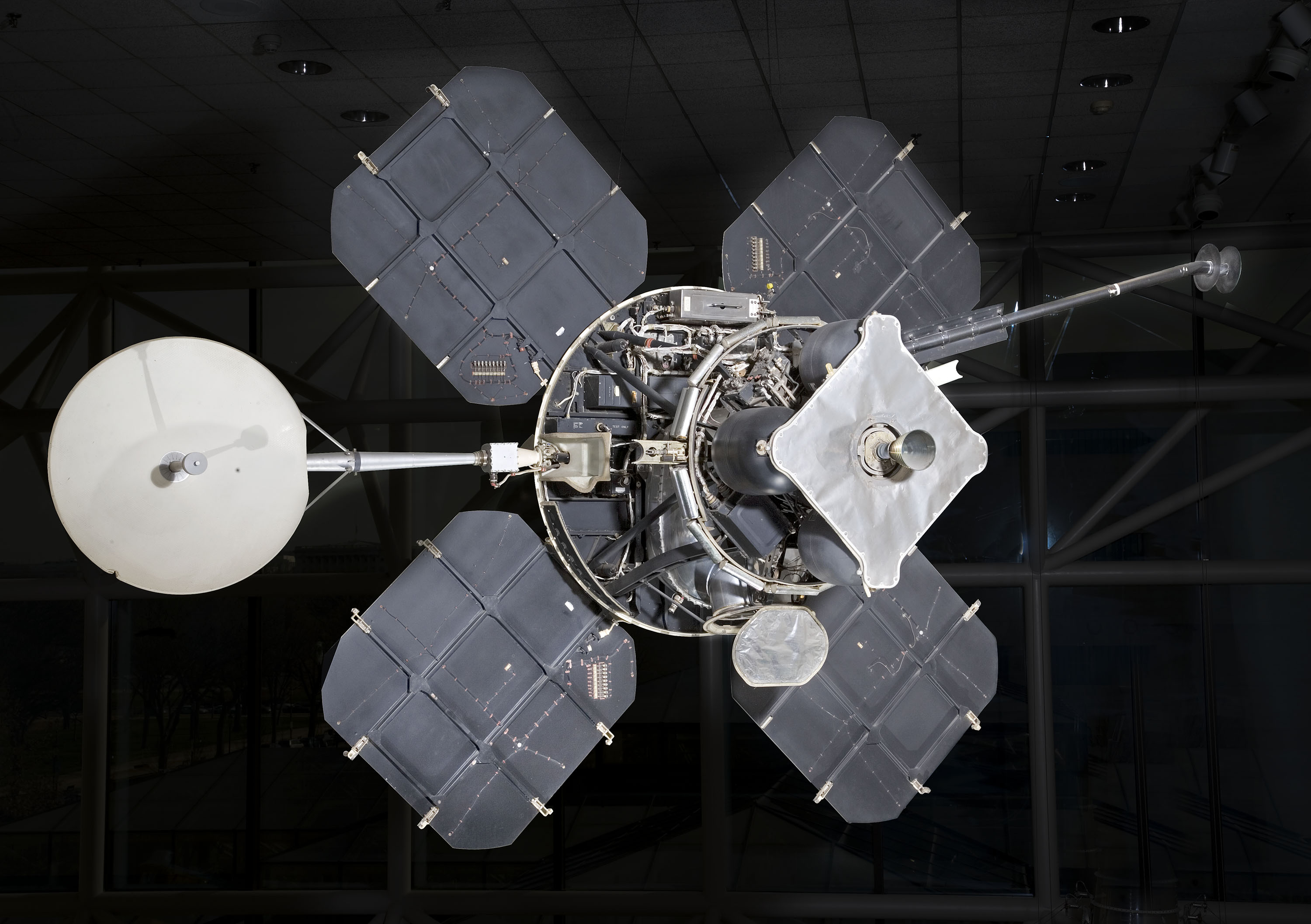
Seismic Packages, Lunar Probe, Ranger, Block II Payload

Air and Space Museum

There are restrictions for re-using this image. For more information, visit the Smithsonian's Terms of Use page .
International media Interoperability Framework
IIIF provides researchers rich metadata and media viewing options for comparison of works across cultural heritage collections. Visit the IIIF page to learn more.
View manifest View in Mirador Viewer

Object Details

Manufacturer

NASA Marshall Space Flight Center

Summary

The Block II of Ranger’s seismic packages represented scientists’ earliest attempts to measure the seismic properties of the Moon. Rangers 3, 4, and 5 hoisted a seismometer within a balsawood impact-limiter at their apex, a device designed at the California Institute of Technology. During Ranger’s flight, the lunar seismometer was programmed to separate from the main capsule, with the seismometer breaking free from the rocket as it approached close enough to the Moon to be pulled in by gravity. The balsawood case would strike the surface at 150 MPH, at which point the seismometer could begin its measurements. The device floated in an oil film within the balsawood shield and was meant to transmit data for 30 days. Though it was designed to withstand a 200 MPH impact, all three attempts to crash on the Moon with a functioning seismic device failed. Rangers 3 and 5 missed the Moon due a guidance systems and electrical failure, respectively; Ranger 4 successfully hit the Moon but the computer-timer failed, thus preventing any data collection.
NASA's Marshall Space Flight Center transferred this to the Museum in 1972.

Credit Line

Transferred from the National Aeronautics and Space Administration

Inventory Number

A19731641000

Restrictions & Rights

Usage conditions apply

Type

SPACECRAFT-Uncrewed-Guidance & Control

Materials

HAZMAT: Cadmium Plating, Magnesium
Aluminum, Steel, Stainless Steel, Rubber (silicone), Gold Plating, Plastic, Nylon, Silver, Epoxy

Dimensions

Storage: 45.72 x 187.96 x 44.45cm (1ft 6in. x 6ft 2in. x 1ft 5 1/2in.)

Country of Origin

United States of America

See more items in

National Air and Space Museum Collection

Data Source

National Air and Space Museum

Metadata Usage

Not determined

Link to Original Record

http://n2t.net/ark:/65665/nv92ebd5a31-5f0f-48c0-91c9-34a4ebcf439a

Record ID

nasm_A19731641000

Discover More

Lunar orbiter on display

Space Science

Lunar orbiter on display

Space Science

arrow-up Back to top
Home
  • Facebook facebook
  • Instagram instagram
  • LinkedIn linkedin
  • YouTube youtube

  • Contact Us
  • Get Involved
  • Shop Online
  • Job Opportunities
  • Equal Opportunity
  • Inspector General
  • Records Requests
  • Accessibility
  • Host Your Event
  • Press Room
  • Privacy
  • Terms of Use